Key takeaways
- 500–750 watts: small bathroom, entryway, home office, or supplemental heat near a desk.
- 1,000 watts: roughly 70–100 square feet in average conditions.
- 1,500 watts: roughly 100–150 square feet, depending on insulation and climate.
- 2,000 watts and above: larger or poorly insulated rooms, usually requiring a dedicated 240-volt circuit.
The best electric wall heaters are usually a 1,500-watt fan-forced heater for fast, affordable room heating, a quiet 1,000–1,500-watt convection panel for bedrooms, or a compact 500–1,000-watt unit when you need supplemental heat rather than whole-room heating.
Our top picks


As an Amazon Associate we earn from qualifying purchases at no extra cost to you. Ratings are shown as listed on Amazon.
Best electric wall heaters by situation
| Situation | Best heater type | Useful target | Why it fits |
|---|---|---|---|
| 10 × 12 ft bedroom | Quiet convection panel | 1,000–1,500 watts | No fan noise; steady overnight warmth |
| Small apartment or office | Compact fan-forced wall heater | 750–1,500 watts | Fast warm-up and modest wall footprint |
| Bathroom or damp area | Listed fan-forced heater with appropriate controls | 1,000–1,500 watts | Rapid heat, but installation must follow local electrical rules |
| Kids and pets | Low-surface-temperature convection panel | 1,000–1,500 watts | Fewer exposed hot grilles and no fan intake at floor level |
| Renter or occasional use | Plug-in wall-mounted panel or compact portable wall heater | 500–1,500 watts | Little or no permanent wiring, subject to lease rules |
| Cold workshop or garage room | Heavy-duty fan-forced heater | 1,500–4,000 watts | Higher output and stronger airflow for heat loss |
How much wattage do you need?
A practical starting point is about 10 watts per square foot in a reasonably insulated room with an average ceiling. That means a 10 × 12 ft room, or 120 square feet, commonly needs around 1,200 watts. A 1,500-watt heater gives useful headroom for an exterior corner, older windows, or a colder climate.
Use approximately 12–15 watts per square foot for drafty rooms, rooms with two exterior walls, or ceilings above 8 feet. A well-insulated interior room may need less. These figures are sizing estimates, not a substitute for a heat-loss calculation, particularly in very cold regions.
- 500–750 watts: small bathroom, entryway, home office, or supplemental heat near a desk.
- 1,000 watts: roughly 70–100 square feet in average conditions.
- 1,500 watts: roughly 100–150 square feet, depending on insulation and climate.
- 2,000 watts and above: larger or poorly insulated rooms, usually requiring a dedicated 240-volt circuit.
Voltage matters as much as wattage. A 1,500-watt heater draws about 12.5 amps at 120 volts, but only about 6.25 amps at 240 volts. Never exceed the circuit rating, and have hardwired heaters installed by a qualified electrician. A 240-volt heater cannot simply be connected to an ordinary 120-volt receptacle.
Head-to-head: the main wall-heater designs
Fan-forced wall heaters: fastest warm-up
Fan-forced heaters, including products such as the Cadet Com-Pak and King Electric PAW series, pull room air across an electric element and return heated air through a grille. They warm a chilly room quickly and can fit in a relatively small wall opening.
The trade-off is sound. Many operate around the level of a quiet conversation or computer fan, while some are noticeably louder when the blower starts. Dust also accumulates on the intake and element, reducing airflow and creating an odor when heating begins after a long break. Choose a model with a removable grille and accessible filter or interior for cleaning.
Convection panels: quietest operation
Convection heaters use natural air movement instead of a blower. Stiebel Eltron CNS wall-mounted convection heaters are a well-known example of this category. They are generally quiet enough for a bedroom and distribute heat gradually, but they take longer to make a cold room comfortable.
Convection panels can have a larger vertical profile than fan-forced units. Check the stated installation depth before buying: a slim model may project only a few inches, while a more substantial panel can occupy valuable hallway or furniture space. The surface still becomes hot, so do not treat “fanless” as “touch-safe.”
Infrared wall panels: directional comfort
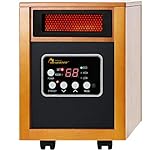
Infrared panels heat people and surfaces more directly than they heat the room air. They can work well in a home office, reading area, or intermittently occupied room. They are not automatically cheaper to run: a 700-watt infrared panel uses 0.7 kilowatt-hours for every hour it operates, just as any other 700-watt electric resistance heater does. Savings come from heating only the occupied area or using a lower thermostat setting, not from a special conversion of electricity into heat.
Thermostat accuracy and controls
A built-in thermostat is convenient, but the sensor may be near the heater and therefore read warmer than the rest of the room. For a bedroom or nursery, look for a digital control with a stated temperature range, a separate wall thermostat option, or compatibility with a properly rated line-voltage thermostat. A thermostat that cycles within roughly 1–2 degrees Fahrenheit of its setting is more useful than one with a decorative display but an imprecise sensor.
Electronic controls usually provide scheduling, open-window detection, and more precise setpoints. Mechanical thermostats are simpler and can last a long time, but their temperature swing may be wider. Smart control is worthwhile only if the heater can be safely switched by a thermostat or relay rated for its voltage and amperage; a standard low-voltage smart thermostat is not automatically compatible with a line-voltage heater.
Installation depth, clearances, and furniture placement
Measure the wall cavity, trim, and nearby furniture before choosing a unit. Recessed fan-forced heaters can leave a clean appearance but require cutting into the wall and confirming that no plumbing, wiring, or structural framing is in the way. Surface-mounted convection panels avoid that work but project farther into the room.
- Keep furniture, curtains, bedding, and storage boxes at least 12 inches from the heater unless the manufacturer specifies a greater distance.
- Allow approximately 36 inches of clear space in front of the discharge grille so air can circulate safely.
- Do not install a heater behind a sofa, below a desk where fabric can block airflow, or beneath a shelf that traps rising heat.
- For a bathroom, use a model specifically listed and approved for the proposed location; clearance and ground-fault protection requirements vary by jurisdiction.
- Check the unit’s actual depth and width, not just its wattage. A heater that projects 4 inches can interfere with a narrow hallway, while a 2-inch panel may fit comfortably behind a door swing.
A wall heater should also be placed where its heat reaches the occupied zone. A desk chair positioned directly in the discharge path may feel uncomfortably hot, whereas mounting the heater on a nearby exterior wall can reduce the cold-draft effect.
Noise, safety, and durability
Prioritize a thermal cutoff, overheat protection, a grounded metal enclosure where applicable, and a grille that resists accidental contact with the heating element. Tip-over protection is mainly relevant to portable units; a permanently mounted heater should instead have secure mounting and properly sized wiring.
For children and pets, a convection panel with a lower operating surface temperature is often preferable to a small fan heater with a hot, accessible grille. Keep pet hair away from fan intakes and vacuum the grille with the power disconnected. The first heating cycle can produce a temporary manufacturing odor, but persistent burning smells, discoloration, crackling, or repeated cutoff events require immediate shutoff and inspection.
The parts most likely to wear first are fan bearings, blower motors, thermostats, and dust-clogged elements. A fan-free panel has fewer moving parts, while a fan-forced model may deliver more heat from a smaller enclosure. This is the central durability trade-off: quiet simplicity versus compact, rapid output.
Running costs: compare watt-hours, not marketing claims
Electric resistance heaters convert virtually all consumed electricity into heat at the point of use, so running cost depends mainly on wattage, runtime, and your electricity rate. Use this formula:
Cost per hour = watts ÷ 1,000 × electricity price per kilowatt-hour.
At $0.18 per kilowatt-hour, a 1,500-watt heater costs about $0.27 per hour while continuously heating. Running six hours would cost approximately $1.62 before thermostat cycling. A 750-watt heater costs about $0.14 per hour at the same rate. A more accurate thermostat can reduce runtime, but it cannot make a 1,500-watt heater consume less than 1,500 watts while its element is energized.
If low operating cost is the priority, improve weatherstripping and insulation before buying a higher-output heater. Use the heater to warm only occupied rooms, close doors to unused areas, and avoid placing the thermostat in direct sunlight or in the heater’s hot airflow.
Bottom line
Choose a 1,500-watt fan-forced heater when quick recovery and compact size matter most; choose a convection panel when bedroom silence and fewer moving parts matter more; and choose infrared when you need targeted comfort in an intermittently occupied space. Before purchasing, verify room-size coverage, circuit requirements, thermostat type, installation depth, clearances, noise information, and safety certifications. The best model is the one correctly sized for the room and installed where air can move freely—not simply the heater with the highest wattage.