Key takeaways
- 48-inch standard length suits many existing baseboard wall runs.
- Published 240V and 208V outputs prevent a voltage-sizing surprise.
- Cadet lists an automatic high-temperature shutoff in F-Series documentation.
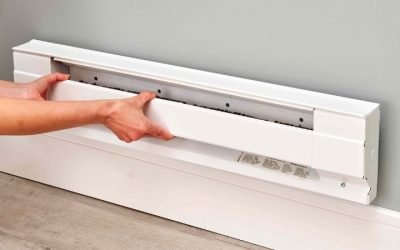
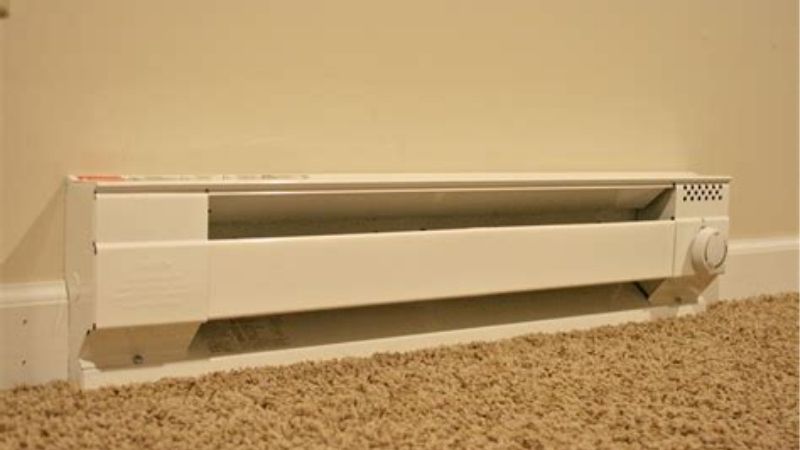
A permanently installed electric baseboard heater is usually chosen to warm one room or replace an existing unit, not to move from outlet to outlet. The decision begins at the electrical panel: a 120V baseboard cannot substitute for a 240V model simply because both fit beneath the same window. Six documented choices below cover short 500W sections, medium 1,000W units, and longer 1,500W to 2,000W runs. All six require fixed wiring and suitable controls, not a plug-in outlet.
Quick Verdict: The Cadet 4F1000W is our Best Overall choice for a typical existing 240V baseboard replacement: it delivers 1,000W at 240V in a standard 48-inch enclosure, with an integral high-temperature limit. For a short 120V run, consider the King Electric 2K1205-BW instead. These are editorial selections from published product documents as of October 2026, not hands-on tests. Check the current price and confirm circuit voltage and available wall length before ordering.
As an Amazon Associate we earn from qualifying purchases.
By DIY Ideas 4 Home Editorial Team
The Best Electric Baseboard Heaters Reviewed
We selected specific US-market catalog numbers using Cadet, King Electric, Fahrenheat and Stelpro product sheets, followed by model-matched American retail listings checked in October 2026. Baseboard elements convert electric resistance into heat; a 1,000W conventional element and a 1,000W hydronic unit do not create different amounts of total heat while drawing that power. What changes is installation length, heat distribution and cooldown. Listed hardware prices here span about $72 to $304 for these six listings, before tax, delivery, thermostat and licensed electrical labor. The US Consumer Product Safety Commission’s fixed-heater fire investigations reinforce a basic rule: keep bedding and furniture away from the heater and never cover the air path.
| Product | Best For | Key Spec | Listed Price (as of October 2026) | Watch Out For |
|---|---|---|---|---|
| Cadet 4F1000W | Best Overall: standard 240V replacements | 1,000W at 240V; 48 in. | $71.98, Home Depot | At 208V output falls to 750W; thermostat extra |
| King Electric 2K1205-BW | Best For Short 120V Walls | 500W at 120V; 27 in. | $94.49, WebstaurantStore | Limited heat for larger rooms |
| Fahrenheat PLF1004 | Best For Gentle Hydronic Heat | 1,000W at 240V; 46 in. | $145.00, Home Depot | 15-lb shipping weight; delayed thermal response |
| Stelpro Prima ASPRL1502W | Best For Shorter 1,500W Runs | 1,500W at 240V; 63 11/16 in. | $142.86, Home Depot | Needs suitable 240V circuit and compatible controls |
| Cadet 6F1500W | Best Value: long 240V baseboards | 1,500W at 240V; 72 in. | $86.98, Home Depot | Six feet of unobstructed wall required |
| King Electric 8K2420-BW | Best For Wide Exterior Walls | 2,000W at 240V; 96 in. | $303.93, Crescent Electric | Eight-foot body and dedicated electrical sizing |
Cadet 4F1000W: Best Overall
Best For: Homeowners replacing an ordinary four-foot 240V baseboard who prefer a widely stocked, straightforward convection unit.
The case for this Cadet is practical rather than glamorous: it offers a standard replacement length, a well-documented electrical rating and uncomplicated wiring access without demanding a premium for electronic features. It is a sensible midpoint between the King 500W mini-run and the six-foot Cadet 6F1500W. Unlike the hydronic Fahrenheat below, it warms its finned element directly and cools down relatively promptly after the thermostat opens. That behavior fits a room needing predictable scheduled heat instead of lingering residual warmth.
Cadet’s specification sheet for the F-Series Electric Baseboard identifies catalog number 09954 as the 4F1000W, rated 1,000W and about 4.2A at 240V; at 208V it is rated 750W. Home Depot listed the white model for $71.98 in October 2026, a useful hardware-price benchmark rather than an installed price. The published sheet describes a high-temperature cutout and requires a thermostat, which is not included. The manufacturer recommends locating the unit along an exterior wall when the room layout allows the convection airflow.
Its 48-inch-long body weighs roughly 9 lb in Cadet’s model chart, with a 6-3/4-inch housing height and 2-1/2-inch depth. Those dimensions matter when a door swing, low receptacle or trim interferes with placement; swapping an existing baseboard still calls for an electrical check before connecting the leads. The steel-sheathed element has a manufacturer-described lifetime element warranty, not a promise that paint, junction boxes and controls will last indefinitely. Keep dust from the fins after disconnecting power and allowing a full cooldown.
Pros:
- 48-inch standard length suits many existing baseboard wall runs.
- Published 240V and 208V outputs prevent a voltage-sizing surprise.
- Cadet lists an automatic high-temperature shutoff in F-Series documentation.
Cons:
- No included thermostat; budget for an appropriate line-voltage control.
- Only 750W when supplied from a 208V branch circuit.
Who Should Buy It: Choose this when an electrician confirms 240V and four feet of clear wall; choose King Electric 2K1205-BW for a genuinely short 120V replacement.
King Electric 2K1205-BW: Best For Short 120V Walls
Best For: Small enclosed rooms with an existing 120V hardwired heating circuit and less than thirty inches of wall space.
This is a deliberately restrained choice, not a disguised whole-room powerhouse. Many 120V rooms have no suitable 240V heating supply, and opening walls to install one can cost more than a small heater. The King 2K1205-BW offers a compact standard steel enclosure where a 1,000W model would be longer or more heat than the space needs. Its fanless ribbon-fin construction is appropriate for reading nooks or modest entry areas, though actual comfort depends heavily on insulation and drafts.
King Electric’s product page for the K Series lists the 2K1205-BW at 500W, 120V and 4.2A with a full-length safety cutout, the SureStop overtemperature limit and a separate line-voltage thermostat requirement. WebstaurantStore offered the exact white 27-inch 2K1205BW for $94.49 as of October 2026. King states cULus listing for the K Series, but buyers should check the current product label and installation sheet for their precise unit. If supplied from 120V, a 500W heater produces about one-third of the maximum wattage of a typical 1,500W plug-in space heater.
The maker gives a 27-inch overall length and 6.5-lb shipping weight. Its short steel body can fit where a typical 48-inch unit cannot, but it still requires the free space specified in King’s installation instructions above the grille, in front of furniture and at adjacent outlets. The K Series carries a one-year limited warranty; the separate controller remains its own purchase and service item. For an aging unit that stopped heating, diagnose the thermostat and breaker before assuming the element has failed.
Pros:
- 27-inch body makes better use of constrained wall segments.
- 120V, 4.2A rating matches an appropriately sized 120V circuit.
- Manufacturer specifies a full-length cutout and SureStop protective limit.
Cons:
- 500W may be insufficient for a drafty, larger room.
- One-year limited warranty is shorter than several element warranties.
Who Should Buy It: Specify this for a small 120V zone; use Cadet 4F1000W if a 240V circuit and four-foot run are already available.
Fahrenheat PLF1004: Best For Gentle Hydronic Heat
Best For: People who prefer a fan-free heater with some residual warmth after a heating cycle ends.
The PLF1004 is worth considering when the feel of the heating cycle matters more than a trim housing or the lowest sticker price. Its sealed heat-transfer fluid stores some warmth after electric power switches off, tending to smooth short cycling. That does not make the element magically more efficient: at the same electrical input it produces essentially the same quantity of heat as a resistance baseboard. It also reacts more slowly when a cold room first calls for heat, a real disadvantage in an intermittently used office.
Fahrenheat’s specification sheet for the PLF Hydronic Electric Baseboard names PLF1004 as 1,000W at 240V or 750W at 208V, approximately 4.2A at the higher voltage. Home Depot listed the 46-inch PLF1004 at $145.00 during the October 2026 review, placing it above a basic Cadet 4F1000W. The PLF design uses a sealed hydronic heating element, a louvered grille and a built-in thermal cutoff. Since it contains heat-transfer liquid in a sealed system, owners should not attempt to drain or refill the element.
Fahrenheat’s selection chart specifies a 46-inch length and 15-lb shipping weight; the assembly is noticeably heavier than a plain fin-tube unit of similar wattage. Its dense body and liquid-filled element favor a firm permanent attachment over repeated relocation. A compatible line-voltage thermostat is still needed, and a licensed electrician should handle any 240V conversion or connection. Inspect for damage, leakage or unusual odors after installation rather than assuming its extra thermal mass removes the ordinary clearance rules.
Pros:
- Sealed hydronic element continues releasing stored warmth after power stops.
- Published 1,000W/750W dual ratings support accurate 240V/208V selection.
- Built-in thermal cutoff addresses abnormal overheating in fixed installations.
Cons:
- Stored warmth also means slower response to thermostat setbacks.
- Higher purchase price than the 48-inch Cadet conventional model.
Who Should Buy It: Choose PLF1004 for a steadily occupied zone; pick Stelpro Prima ASPRL1502W if you need 1,500W in a shorter wall run.
Stelpro Prima ASPRL1502W: Best For Shorter 1,500W Runs
Best For: Renovators with roughly five and a half feet of usable wall who need 1,500W on 240V.
A long baseboard can be difficult to fit between doors and furniture even when the wattage is correct. Stelpro’s Prima ASPRL1502W is a compelling alternative to a six-foot 1,500W Cadet because it provides the same nominal power in a shorter enclosure. Its 225W-per-linear-foot configuration is a meaningful layout difference, not evidence that it extracts extra heat from the same electricity. The trade-off is cost and the need to double-check how high-density elements may affect safe placement around nearby surfaces.
Stelpro’s US Prima ASPR technical sheet lists catalog ASPRL1502W at 1,500W and about 5,119 BTU/h on 240V, falling to 1,125W at 208V. Home Depot’s US listing displayed $142.86 in October 2026 for the exact ASPRL1502W. The manufacturer offers optional built-in electronic thermostat accessories, but the heater itself should be purchased with a controller that matches the circuit and wiring plan. The Prima uses natural convection rather than a fan, so there are no fan blades or replaceable air filters to service.
The official US specification gives a total length of 63 11/16 inches and 11.7 lb listed weight, appreciably shorter than Cadet’s 72-inch 6F1500W. The case drawing shows a depth near 2-5/8 inches; that helps with a wall projection but does not relax minimum clearances for upholstery or curtains. Stelpro’s installation instructions govern mounting, allowable wiring routes and the location of an optional control. If the finished room has continuous baseboard molding, map the actual cutout and backing surface before buying.
Pros:
- 1,500W rated output fits inside a 63 11/16-inch run.
- US Prima specification documents separate 240V and 208V performance.
- Optional built-in electronic controller can reduce separate wall-control clutter.
Cons:
- Costs considerably more than the longer Cadet 6F1500W.
- Optional thermostat hardware needs a separate compatibility decision.
Who Should Buy It: Choose this where length is tight but 1,500W is justified; choose Cadet 6F1500W when a full six-foot span is open.
Cadet 6F1500W: Best Value For Six-Foot Runs
Best For: Budget-conscious buyers with an existing 240V branch circuit and six continuous feet of unobstructed wall.
The 6F1500W makes a different argument from our 48-inch overall winner: it gives substantially more heat for a relatively small increase in hardware price, provided the wall is long enough. In a larger room, that difference can be more useful than paying for a premium enclosure that produces no more watts. This is our Best Value selection rather than the least expensive heater because the 1,500W output costs only modestly more than the listed 1,000W Cadet, while the 72-inch format rules it out for many smaller rooms.
Cadet’s Electric Baseboard F-Series product sheet identifies the 6F1500W with 1,500W and 6.3A on 240V, or 1,125W on 208V. Home Depot’s model-specific 6F1500W listing showed $86.98 in October 2026, compared with $71.98 for the smaller 4F1000W. The steel-sheathed heating element, universal left-or-right end wiring and automatic high-temperature safeguard are common to the F Series. Neither a wall thermostat nor the labor to extend a cable run is included in that heater price.
At 72 inches long and roughly 12 lb in the manufacturer’s chart, this Cadet can intercept drafts across a wider window or exterior wall. The body is approximately 6-3/4 inches tall and 2-1/2 inches deep, so do not assume its low profile permits a sofa to be pushed up against the intake or hot outlet. Its element warranty applies to the heating element rather than providing unlimited coverage for cosmetic rust or damaged electrical connections. If an electrician advises a shorter pair of heaters rather than one long unit, ask about circuit loading and control zoning before deciding.
Pros:
- 1,500W at 240V for the listed $86.98 hardware price.
- 72-inch run distributes convection heat beneath wider exterior windows.
- Published high-temperature limit accompanies left-or-right wiring access.
Cons:
- Physical six-foot length blocks placement near closely spaced doorways.
- Power rating drops to 1,125W on a 208V supply.
Who Should Buy It: Buy for a long, affordable 240V perimeter heater; switch to King Electric 8K2420-BW for documented 2,000W output over eight feet.
King Electric 8K2420-BW: Best For Wide Exterior Walls
Best For: Large perimeter walls where an electrician specifies 2,000W and there is room for an eight-foot enclosure.
This long King unit suits a different problem from a bedroom-sized baseboard: a broad exterior wall with considerable heat loss. Rather than concentrate the same wattage in a smaller box, it spreads the finned element across an extended section and provides the highest nominal 240V wattage in this six-model comparison. That advantage disappears if the available circuit or building load calculation supports less wattage, and an eight-foot heater should never be chosen solely because the room is described as large on a retailer page.
The King Electric K Series specification page records the 8K2420-BW as 2,000W and 8.3A at 240V; the output becomes 1,500W when connected to 208V. Crescent Electric Supply displayed $303.93 for the identified 8K2420BW in October 2026, making this the most expensive listed hardware in the comparison. King’s manufacturer documentation describes the crush-resistant ribbon-fin element, full-length safety cutout and required separate thermostat. The published K Series cULus listing does not remove the need to follow the model’s wiring and installation instructions.
King’s product chart calls the cabinet eight feet long and lists 19 lb shipping weight; a supplier’s dimensional listing gives an approximately 96-inch heater body. That long body may need a route around stud layouts, wall outlets and built-in cabinetry, with enough free air space along the grille. The manufacturer’s one-year limited warranty differs from Cadet’s longer element-focused warranty. A single thermostat may control multiple compatible fixed heaters only when the total switched load, breaker and wiring comply with the selected controls and applicable code.
Pros:
- 2,000W at 240V leads this comparison in rated wattage.
- Full eight-foot length covers a broad uninterrupted exterior wall.
- K Series SureStop limit protects against abnormal overheating conditions.
Cons:
- $303.93 listed hardware cost is highest among these selections.
- Long cabinet complicates installation around openings and fixed furniture.
Who Should Buy It: Use this for a purpose-designed high-output 240V run; Cadet 6F1500W is more economical when 1,500W satisfies the room load.
How to Choose an Electric Baseboard Heater
Choosing a fixed heater is closer to planning a small electrical installation than shopping for a portable appliance. Start by identifying the existing circuit and the calculated room heat loss, then measure the precise stretch of wall that can remain clear. Standard resistance baseboards are typically quiet because they use natural convection, but they can still make expansion noises as the metal changes temperature. A contractor’s estimate should list heater hardware, controls, breakers or cable changes, required permits and labor separately.
Match the Voltage Before Comparing Wattage
Many US residential baseboards operate at 240V, but 120V models are also used for smaller dedicated heating runs, and some multifamily buildings have 208V supplies. The distinction is not cosmetic. According to Cadet’s F-Series product sheet, the 4F1000W has a 1,000W rating on 240V yet produces 750W at 208V. King’s K Series chart reports an analogous drop for its dual-rated 8K2420-BW. Do not buy a 240V unit hoping to wire it into a 120V outlet or panel circuit; these models are permanently hardwired.
Have a licensed electrician check circuit voltage, conductor size, grounding, breaker rating and any other heaters already on the circuit. A 1,500W 120V baseboard draws about 12.5A at nameplate load, while a 1,500W 240V unit draws approximately 6.25A. That does not mean the 240V heater consumes half the energy: both require the same 1.5 kilowatt-hours for one hour of full-on operation. Applicable code requirements for continuous loads and thermostat switching determine a safe design.
Calculate Heat Demand, Then Measure Wall Length
A room’s square footage is only a rough screening number. Its insulation, ceiling height, window area, outdoor temperature and whether this heat is primary or supplemental determine the actual required wattage. Published square-foot claims often use unstated assumptions. For example, Cadet lists a 72-inch 6F1500W and a shorter 48-inch 4F1000W, but the right choice should follow a heat-loss calculation rather than choosing the largest wattage available. For a poorly insulated room, sealing drafts and insulating first may reduce the installed heating load.
Measure to the nearest inch, not just from corner to corner. King Electric’s catalog lists the 2K1205-BW at 27 inches, whereas its 8K2420-BW occupies a roughly 96-inch span; trim, outlet boxes and curtains can render otherwise empty wall unusable. Confirm the manufacturer’s required clearance above, in front of and beside the cabinet as well as whether installation over a particular floor surface is allowed. The CPSC’s fixed-position electric-heater investigations describe fires involving furniture or bedding close to baseboards, even when people believed the units were off.
Choose a Control That Matches the Heater
Most of these six heaters need a line-voltage thermostat purchased separately; Stelpro’s Prima and Cadet’s F Series have optional manufacturer control accessories. A familiar 24V furnace thermostat is not a drop-in substitute for a directly switched 120V or 240V heater. Ask whether the control is single-pole or double-pole, has a definite OFF position, supports programmable setbacks and is rated for the combined watts on its controlled circuit. An electrician can explain when a relay and low-voltage control interface are appropriate.
A digital thermostat may maintain a more consistent room temperature than a basic mechanical dial and may reduce unnecessary on-time, but it does not multiply the heat available from an element. Likewise, sealed hydronic models can feel less abrupt between cycles without creating free heat. When pairing an older heater with a new controller, verify both the heater’s nameplate voltage and thermostat contact rating; combining several baseboards on one wall control requires particular attention to the aggregate amperage.
Budget for Labor and Long-Term Ownership
Hardware price is only part of a fixed-heating purchase. At October 2026 US listings, the Cadet 4F1000W appeared at $71.98 and the larger Cadet 6F1500W at $86.98, while the Fahrenheat PLF1004 was $145.00 and the King 8K2420BW listing was $303.93. Those retail amounts are not estimates for permitting, a new 240V circuit, thermostat, breaker or professional installation. Replacing like-for-like can be simpler than cutting new wall openings, but never infer the existing cable’s suitability from paint color or heater length.
For operating cost, a 1,000W unit draws 1 kWh for each hour its element is energized; a 2,000W model draws 2 kWh over that same full-power hour. Actual monthly usage depends on thermostat cycling, weather and the electricity rate charged by the local utility. Clean dust only after disconnecting power, check mounting integrity during the heating season and keep household storage out of the heat plume. Element warranties, such as Cadet’s lifetime element provision and King’s one-year limited coverage, describe different components and should not be compared as if they were identical whole-unit guarantees.
Frequently Asked Questions
Several questions arise after the wattage and wall location are chosen. These details affect ownership, maintenance and whether the installation should proceed at all.
Can an electric baseboard heater produce carbon monoxide?
No. A purely electric resistance baseboard has no fuel combustion, so it does not itself generate carbon monoxide during normal operation. That does not make it free from fire or shock risk: poor electrical connections, obstructed air openings or nearby combustibles can still create hazards. Keep functioning smoke and carbon monoxide alarms in the home for risks originating from other equipment, following local requirements and each alarm manufacturer’s placement instructions.
Is it safe to paint the cover to match the wall?
Only when the manufacturer specifically permits refinishing and provides a compatible coating method. Baseboard covers operate at elevated temperatures, and ordinary household paint may discolor, smell or alter airflow if it bridges grille openings. Disconnect the circuit and let the cabinet cool before any cleaning or permitted refinishing. For an older heater with peeling finish, a factory replacement cover may be a better answer than applying an unapproved product.
Why does a baseboard make clicking noises when heating?
Often because the steel enclosure and metal heating element expand as they warm and contract during cooldown. That type of occasional movement noise differs from sustained electrical buzzing, arcing, sparking or repeated breaker trips, which should prompt a shutdown and professional inspection. Loose mounting fasteners or trim touching the housing may amplify ordinary expansion sounds. Do not open a live heater or bend its element in an attempt to make it quieter.
What should I do if the breaker trips when heat starts?
Turn the heater off and arrange for a qualified electrician to check the circuit. Repeated trips can indicate overload, a damaged element, a wiring fault or an incompatible control, and the underlying cause cannot be confirmed just from the heater’s age. Do not increase the breaker rating to stop nuisance tripping or bypass the manufacturer’s thermal cutoff. Record the model number, circuit voltage and when the trip occurs so the technician has useful starting information.
Final Thoughts
The Cadet 4F1000W remains the clearest Best Overall purchase for a standard four-foot 240V replacement, provided an electrician confirms the circuit and calculated heat requirement. Where wall length is abundant and 1,500W is justified, the Cadet 6F1500W offers a stronger price-to-output proposition; for a short 120V location, the King Electric 2K1205-BW avoids a needless voltage mismatch. Before buying, photograph the old unit’s rating label and measure the uninterrupted wall span, then compare those facts with the proposed model’s installation manual and the electrician’s quote. Check current model availability, thermostat requirements and final delivered price rather than relying on the bare heater price alone.