Key takeaways
- Broad 19-inch face gives lower legs a defined warming area.
- Manufacturer identifies ETL zero-clearance suitability for this particular panel.
- 150-watt input keeps electrical demand below the 750-watt fan options.
A cold home-office floor can make a workday uncomfortable even when the room thermostat is set normally. Choosing an under desk heater is less about finding the highest wattage and more about matching the warmth to your knees, ankles, or feet without compromising clearance around furniture and cables. Radiant panels, heated footrests, and compact fan heaters solve different problems. A small fan heater is not automatically safe to push below a desk, and a 105-watt footrest will not replace a room heater.
Quick Verdict: For most seated workers who want quiet lower-leg warmth, the Cozy Products Cozy Legs CP-LEGS is our Best Overall choice: its dedicated 150-watt panel, compact 19-inch width, and manufacturer-stated ETL zero-clearance design address the specific task. Choose the Vornado VH204 for moving warm air toward an open leg area. These recommendations use published specifications as of October 2026, not in-house testing. Check the live price and installation instructions before purchasing.
As an Amazon Associate we earn from qualifying purchases.
By DIY Ideas 4 Home Editorial Team
6 Best Under Desk Heaters Reviewed
We selected six identifiable U.S. models using manufacturers’ product pages, dimensional specifications, safety claims, manuals, and their listed October 2026 prices. The lineup deliberately separates stationary radiant warmth from moving hot air. Manufacturer-listed prices span $24.99 to $285.95, but the lowest-priced model in this comparison is for tabletop use, not a shortcut around floor-heater clearance rules. The U.S. Consumer Product Safety Commission’s 2026 heater guidance says ordinary portable heaters should remain at least 3 feet from combustible materials, plug directly into wall outlets, and be turned off when unattended. Follow the specific listed installation and clearance instructions for purpose-built desk-mounted or foot-contact devices.
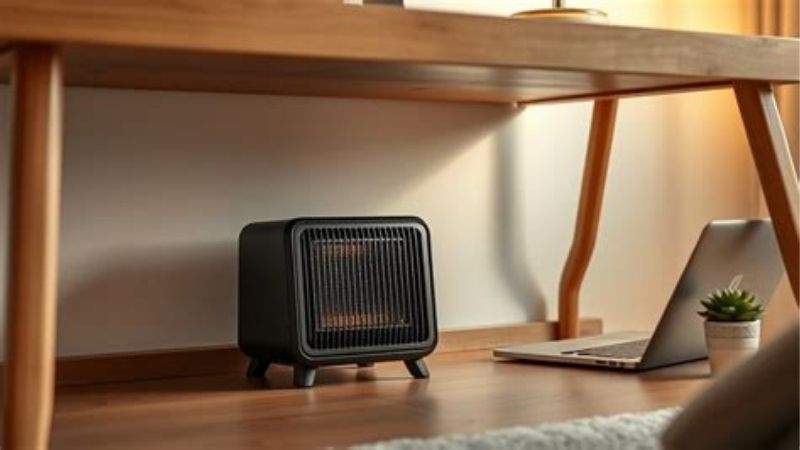
| Product | Best For | Key Spec | Listed Price (October 2026) | Watch Out For |
|---|---|---|---|---|
| Cozy Products Cozy Legs CP-LEGS | Best Overall: quiet knee and shin warmth | 150 W; 19 x 8 x 5 in with feet | $64.99 | Radiant zone rather than whole-room heating |
| Vornado VH204 | Directing warm air beneath an open desk | 750 W high; tip-over protection | $29.99 | Air path and ordinary portable-heater clearances |
| Cozy Products Toasty Toes TT | Adjustable heated footrest | 105 W; three footrest positions | $99.99 | Foot contact and stated surface temperatures |
| ENERJOY 22PH-4AL-UDH | Permanent panel on desk modesty board | 200 W; 23.75 x 23.75 in panel | $285.95 | Mounting space and much higher upfront cost |
| Cozy Products Eco-Save ESH | Thermostat-controlled personal airflow | 750 W; 11-in tall ceramic unit | $59.99 | Needs free air space, not a crowded footwell |
| Lasko MyHeat 101 | Desktop option when floor placement fails | 200 W; 6.1-in tall tabletop heater | $24.99 | No maker-documented tip-over shutoff |
Cozy Legs CP-LEGS: Best Overall
Best For: A seated worker with cold shins who can position a dedicated flat panel beside the legs.
Unlike a little fan that must push hot air around chair legs and bags, this panel warms a fairly broad area next to your knees without a stream of air. That makes it a better starting point when the room is tolerable but your lower legs feel chilly. Its relatively modest power is an intentional trade-off: you can improve the comfort of the person at the desk without expecting the device to heat an entire office.
Cozy Products’ product page for the CP-LEGS specifies a 150-watt, 120-volt panel and lists ETL zero-clearance suitability, along with a built-in in-cord high/low/off control. The manufacturer shows $64.99 as its product price in October 2026. The certification language matters for a desk environment, but it is model-specific: inspect the supplied instructions and mounting arrangement rather than interpreting the phrase as permission to cover the heating surface with papers or clothing.
With feet attached it measures 19 inches wide, 8 inches high and 5 inches deep; the maker lists a 6-foot cord and a 3.2-pound weight. That footprint works along the side of a desk knee space but needs a reasonably stable, undisturbed spot. The Cozy Products manufacturer’s warranty page states six months for electronic products, shorter than the fan-heater warranties in this lineup; confirm coverage before paying, especially if you plan to use it through multiple winters.
Pros:
- Broad 19-inch face gives lower legs a defined warming area.
- Manufacturer identifies ETL zero-clearance suitability for this particular panel.
- 150-watt input keeps electrical demand below the 750-watt fan options.
Cons:
- Little help for someone needing air circulation across a whole cubicle.
- Six-month electronics warranty is shorter than several competing policies.
Who Should Buy It: Choose CP-LEGS for quiet knee-level warmth; select Vornado VH204 if a clear footwell needs moving warm air instead.
Vornado VH204: Best for Directed Airflow
Best For: Someone with an uncluttered, roomy work area who wants heat to reach both feet without touching a panel.
The VH204 offers a more immediate airflow sensation than the radiant units, making it useful when you move your feet frequently or occasionally stand up. Vornado explicitly markets this model for desktop, tabletop, and under-desk personal heating. But a promotional picture never replaces safety spacing: if the heater would aim at loose cable bundles, a cloth organizer, or an upholstered chair at close range, the panel-style alternatives make more sense.
Vornado’s VH204 Personal Space Heater product page lists a starting price of $29.99 in October 2026, two heat selections, fan-only operation, tip-over protection and heat-overload shutdown. A Vornado manufacturer reply on the Target VH204 listing identifies 750 watts on high and explains that its small size is deliberate, rather than suitable for whole-room heating. The stated safety systems are useful but do not justify obstructing the hot-air exit or making the floor space inaccessible.
Vornado’s published response also gives dimensions of approximately 7.85 by 7.82 by 7.05 inches. A model this squat can fit beside a chair wheel, but chair wheels and swinging feet are exactly why a stable location outside their travel path matters. The fan adds a moving part and requires keeping the grille free of dust; listen for any new grinding or vibration rather than running an impaired heater. Verify which color configuration and warranty terms apply on the page you check out from.
Pros:
- 750-watt maximum makes this a stronger personal-air option than 150-watt panels.
- Vornado specifically describes under-desk placement as an intended application.
- Tip-over protection and fan-only function address different everyday uses.
Cons:
- Moving air can disturb papers and be more noticeable than silent radiant warmth.
- A cluttered knee space can make safe airflow and clearance impractical.
Who Should Buy It: Pick the VH204 for directed warmth in an open desk bay; choose Cozy Products Toasty Toes TT for footrest-style comfort without a fan.
Toasty Toes TT: Best for Heated Footrest
Best For: A desk worker whose cold soles coincide with a need for a stable, adjustable place to rest feet.
This is the most furniture-like option of the six: it combines a supporting footrest surface with a built-in heater. Rather than finding clearance for a separate heater aimed at your shoes, you can adjust the position of your feet over the warming panel. The benefit is highly localized comfort, not additional heating capacity for the room; buyers who frequently shift from sitting to standing may not get the same value from its footrest geometry.
Cozy’s product page for the Toasty Toes TT lists two heat settings, three usable positions, a 105-watt electrical rating at 120 volts, and an October 2026 product price of $99.99. The maker describes the model as ETL Listed. It also states approximately 120°F in footrest use and 140°F as a panel, figures that deserve attention if you use thin socks or have reduced temperature sensation. Follow the manufacturer’s usage warnings rather than treating any heated contact surface as safe for every person.
The TT measures approximately 18.03 by 12.41 by 1.77 inches, weighs 5 pounds and carries a 6-foot-6-inch cord. That is a noticeably different floor-space commitment from a small fan heater: first check the natural place where your heels land, then verify whether a chair’s casters will reach the rest. The maker’s standard electronics warranty runs six months, so long-term value depends on whether you genuinely need the adjustable foot support as well as heat.
Pros:
- Three positions combine an ergonomic rest with a heated contact zone.
- 105-watt rating suits a small area rather than heating unused room volume.
- Cozy lists an ETL mark and two selectable heat levels.
Cons:
- Its $99.99 list price is high for a highly localized warmer.
- Specified surface temperatures require careful attention to direct foot contact.
Who Should Buy It: Buy TT when a footrest is already part of your setup; consider ENERJOY 22PH-4AL-UDH if you want the heater entirely off the floor.
ENERJOY 22PH-4AL-UDH: Best for Fixed Desk Panels
Best For: A receptionist or office manager with a stationary desk and a suitable front modesty panel for mounting.
ENERJOY takes another approach to a crowded desk: mount a radiant heater against the modesty board facing the user’s legs, rather than setting an appliance near chair wheels. This removes a loose heater from the walking surface and distributes radiant warmth across a wider face. It is sensible for a workstation used all winter and less appealing for a rental desk or a setup that changes height and location regularly.
Solid State Heating Corporation’s product page for the specific 22PH-4AL-UDH lists 200 watts at 120 volts, 1.7 amps, a claimed UL listing and $285.95 as the October 2026 manufacturer’s price. Its installation guidance says to fasten through the provided frame holes, never puncture the panel, and keep the front face unobstructed. A separate stand is optional; do not assume it comes with the base SKU. That premium price reflects a specialized fixed-use arrangement, not evidence it creates more heat per watt.
This ENERJOY panel measures about 23.75 by 23.75 by 1.125 inches and the model-specific product page lists an 8-pound weight. Check both the width of your modesty board and cable routing before ordering. The manufacturer specifies a one-year warranty, and access to mounting hardware matters more here than a carry handle. Avoid attaching the heating face toward storage pockets or soft backing that could interfere with heat distribution.
Pros:
- 23.75-inch square format warms a much wider portion of leg space.
- Fixed modesty-panel mounting keeps the floor clear of heater housings.
- Manufacturer lists 200 watts, 120 volts and a one-year warranty.
Cons:
- Its $285.95 price greatly exceeds the portable personal heaters here.
- Mounting requirements make it inappropriate for frequently rearranged workstations.
Who Should Buy It: Choose 22PH-4AL-UDH for a permanent desk installation; the Cozy Products Cozy Legs CP-LEGS is easier to relocate.
Cozy Eco-Save ESH: Best for Adjustable Heat
Best For: An office worker wanting a thermostat knob and stronger airflow while retaining a compact personal heater.
The ESH serves a different buyer from the low-temperature-contact footrest: someone who wants to warm the air around their legs and then ease the output as the workspace feels comfortable. Its adjustable thermostat distinguishes it from the simple single-output mini heater. That control does not mean it uses less electricity when the element is energized at the same rated power; it means the heater may cycle rather than stay continuously on.
Cozy’s product page for the Eco-Save ESH quotes a 750-watt rating at 120 volts, $59.99 in October 2026, an adjustable thermostat, a fan-only mode, automatic tip-over shutoff, and an ETL listing as manufacturer-described features. Cozy specifically includes under-desk locations among the intended uses, but its own safety claims do not authorize piling cords or handbags beside the airflow grille. Treat its moving air and floor-placement needs much as you would those of the Vornado VH204.
At 11 inches high and 7.5 inches in diameter, with a listed weight of 5 pounds, the ESH is the tallest cylindrical choice here. The round base could consume more shin room than its diameter first suggests if placed directly between your ankles. Regularly clear lint from accessible air openings according to the supplied instructions. Cozy’s six-month electronic-product warranty is a practical drawback compared with some other fan heaters; factor that into the $59.99 decision.
Pros:
- Thermostat adjustment can stop 750-watt heating after the local air warms.
- Tip-over shutoff is listed for this specific ESH design.
- Fan-only mode keeps the unit useful without energizing the heater.
Cons:
- An 11-inch upright housing may interfere with knees beneath shallow desks.
- Six-month warranty offers less long-term coverage than the Lasko alternative.
Who Should Buy It: Choose ESH for a dial-controlled personal heater where clearances permit; pick Lasko MyHeat 101 for a smaller tabletop footprint.
Lasko MyHeat 101: Best for Desktop Warmth
Best For: Someone whose desk has no safe space for a heater on the floor but has an uncluttered tabletop.
The 101 earns a place here as the alternative to forcing an appliance under the desk at all. When computer cables, storage baskets, and a rolling chair prevent safe placement by your feet, a tiny heater on a suitable clear desk surface can send limited warm air toward your seated position. Lasko markets this model for desks and tabletops rather than specifically for floor placement; its product information does not document a tip-over shutoff, so we would not treat it as a floor-level footwell pick.
Lasko’s product page for MyHeat 101 in white lists 200 watts at 120 volts, about 2 amps of current, ETL listing and overheat protection, with a current listed price of $24.99 as of October 2026. There is one heating setting, no adjustable thermostat, and no timer. These are not minor omissions if you want unattended automation; the correct approach is to turn the heater off every time you walk away. A cool-touch housing does not make the outlet grille safe to cover.
The model measures about 6.1 inches tall, 4.3 inches wide and 3.8 inches deep, and Lasko lists a 6-foot power cord and a 2.8-pound weight. Such a small rectangle is convenient beside a monitor only when it does not aim into papers, monitor wiring, or hanging fabric. Its three-year warranty is a notably longer published term than Cozy’s standard electronics coverage. If you must heat the floor-level area specifically, buy a purpose-designed product like Cozy Products Toasty Toes TT instead.
Pros:
- $24.99 official price is the lowest listed among six picks.
- 6.1-inch height leaves room on many otherwise clear desktops.
- Three-year manufacturer warranty contrasts with Cozy’s shorter electronics coverage.
Cons:
- No documented tip-over shutoff rules out our floor-level recommendation.
- Fixed 200-watt output offers neither thermostat nor timed shutoff.
Who Should Buy It: Buy MyHeat 101 for a safe desk-top location; select Vornado VH204 if you have an actually clear under-desk area.
How to Choose an Under-Desk Heater
Begin by identifying which part of the workstation stays cold and where a device can legally and physically operate. An office may feel chilly because cold air enters around your ankles, because the floor itself is cold, or because the room is below a comfortable temperature. Those situations lead to different purchases. Four comparisons matter most: the maker-approved installation, the type and amount of heat, the control and protection package, and the practical cost of placing a device into your current layout.
Check Clearance and Intended Placement
The first decision is a safety decision, not a price decision. The CPSC’s 2026 winter heating guidance calls for a 3-foot distance between ordinary portable space heaters and combustible materials. Many small desks cannot provide that much clearance around a fan heater, especially beside upholstery, paper files and hanging coats. A tip-over cutoff is helpful, but it does not cancel that distance. Plug directly into a wall receptacle, not a power strip, and keep cords out from under rugs and chair casters. Check the model instructions for a specially listed desk-mounted or zero-clearance panel rather than extending its clearance exception to other appliances.
If you work at a shared office, verify the site’s heater policy and the circuit available at your seat. A 750-watt appliance on 120 volts draws approximately 6.25 amps while energized, whereas a 150-watt panel draws approximately 1.25 amps. Those figures help assess demand, not whether a damaged outlet is acceptable. Stop using equipment with hot plugs, frayed cords, irregular shutting off or unusual smells, and check the exact model on the CPSC recall database before use.
Match Wattage to the Actual Cold Spot
Wattage measures electrical input and broadly the rate at which an electric resistance heater releases heat. The 105-watt Toasty Toes TT and 150-watt Cozy Legs CP-LEGS deliberately warm a person at close range; neither should be purchased to raise the temperature of a drafty 200-square-foot office. A 750-watt fan heater sends more heat into the surrounding air, but it can cost more to run and demands open air intake and exhaust space. A heated footrest is better for cold shoes; a vertical radiant panel is more relevant when the fronts of both legs are cold.
Do not read a lower watt rating as evidence of greater electrical conversion efficiency. A smaller device uses less electricity per hour because it produces less total heat. The possible financial benefit comes from heating only where you need it, perhaps while the main home thermostat is set lower, rather than comparing claims that one 750-watt resistance element somehow makes much more total heat than another 750-watt element.
Compare Controls and Safety Functions
With feet moving beneath furniture, the specific shutoff mechanism is important. The Vornado VH204 and Cozy Eco-Save ESH advertise tip-over or overload protection, while Lasko’s 101 documentation identifies overheat protection but does not promise a tip-over switch. Cozy’s certified radiant products are different again: check how the panel or footrest is designed to remain stable and what the manual permits nearby. Treat ETL or UL wording on manufacturer pages as the manufacturer’s claim unless independently confirmed for your purchased variant.
A thermostat matters when the device is meant to change the temperature of surrounding air. On the ESH it can cycle the element; on a fixed warm surface, a simpler switch may be sufficient. Even a programmable shutoff never substitutes for switching a portable heater off when you leave the office or go to sleep. For a chair you use for eight hours, control location matters too: an in-cord switch that remains accessible is more convenient than crawling under the desk to adjust a dial.
Measure the Footwell and Compare Ownership Costs
Before placing an order, measure clear width between desk legs, the distance from the front edge to the chair’s normal position, and the sweep of the chair wheels. A 23.75-inch ENERJOY panel must fit the desk’s actual modesty board, while the 18.03-inch Toasty Toes rest needs unobstructed floor space where your heels naturally land. For portable fans, consider both housing dimensions and extra space in the direction of the hot-air outlet. Confirm the cord reaches a proper wall outlet without crossing the rolling-chair path.
Published October 2026 prices here range from the $24.99 Lasko 101 to the $285.95 ENERJOY fixed panel. Upfront cost is only part of the comparison: Cozy’s general electronics warranty is six months, while the ENERJOY page specifies one year and Lasko lists three. For perspective, at a hypothetical electricity rate of 20 cents per kilowatt-hour, a 150-watt heater running continuously for eight hours would use 1.2 kilowatt-hours; a 750-watt heater over the same period would use 6 kilowatt-hours. Actual thermostatic cycling and your local electricity tariff change the result. Check the live list price, warranty terms and replacement policy of your chosen model at checkout.
Frequently Asked Questions
Below are four practical questions that arise after selecting a heater type, particularly when a desk has restricted leg space or several pieces of electronic equipment nearby. The correct answer depends on the specific model’s instructions as well as the office setup.
Can You Run a Space Heater Under a Wooden Desk?
Only when the heater’s instructions expressly permit the installation and you can maintain the required separation from combustible furniture. The CPSC’s usual 3-foot spacing warning makes many ordinary fan heaters a poor fit for a wood desk with drawers or a modesty panel. A manufacturer-listed zero-clearance panel must still be installed in the precise configuration approved for that model; do not treat its listing as a blanket exemption for all heaters.
Is a Heated Footrest Better Than a Small Fan Heater?
It is often better for cold feet when the room itself is already comfortable. A footrest concentrates the warmth at your feet, stays in a predictable location and does not blow air through the workspace. A fan heater can reach a larger zone, but its open intake, outlet clearance, cable path and potential noise require more planning. If you need full-room heat, neither a small footrest nor a desk panel should be mistaken for the main heating system.
Can You Use an Under-Desk Heater With a Power Strip?
No. The U.S. Consumer Product Safety Commission instructs consumers to plug portable electric heaters directly into wall outlets rather than extension cords or power strips. A row of monitor, printer and computer plugs under a desk is therefore not a suitable source for adding another portable heater. If the cord will not reach the wall safely, choose another compliant location rather than routing the power cable beneath carpet or through chair casters.
Will a 150-Watt Heater Warm an Entire Home Office?
No, not in the way a full-size room heater is intended to operate. A 150-watt radiant panel is designed for very localized warmth near the user’s legs, and heat felt depends on distance, orientation, clothing and surrounding drafts. If everyone in a room is cold, investigate the room thermostat, drafts and building heat before buying a low-wattage personal device. The appeal of a desk panel is targeted comfort, not a manufacturer’s promise of whole-room capacity.
Final Thoughts
The Cozy Products Cozy Legs CP-LEGS remains the Best Overall choice for quiet, seated lower-leg warmth, provided its manufacturer-approved positioning fits your work area. If you need air moving across an open footwell, compare the Vornado VH204; if the feet need support as well as heat, the Toasty Toes TT is more specialized. Before buying any under desk heater, inspect the underside of your actual desk and the cord route while seated in your usual position. If a safe installation is impossible, reject floor placement and consider a permitted tabletop alternative. Check current prices, the exact model’s instructions, and your office’s rules before purchasing.