Key takeaways
- Google explicitly documents no-C operation for most compatible 24V systems.
- Box includes a second-generation Nest room temperature sensor.
- Heat-pump and multistage control options extend beyond basic smart models.
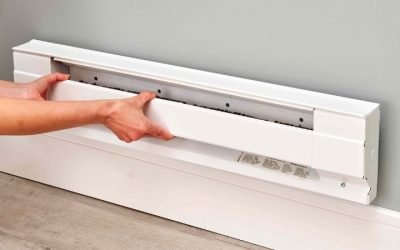
Some replacements run happily on removable batteries, while others draw power through existing HVAC control wires. That distinction matters more than the words on the box. A thermostat without C wire can work for many conventional furnace-and-air-conditioner installations, but a heat pump, two-wire boiler or zoned system may change the answer. Before buying, photograph your old terminal labels, identify the equipment type and switch off HVAC power before touching conductors. A thermostat built for 24-volt control wiring must not be connected directly to a 120- or 240-volt baseboard circuit.
Quick Verdict: For a compatible 24-volt system where connected features matter, the Google Nest Learning Thermostat (4th gen) is our Best Overall choice because Google explicitly documents C-wire-free Power Sharing and broad stage support. If dependable battery-only operation matters more than Wi-Fi, the LUX TX9600TS is the stronger fit. These are editorial conclusions based on manufacturer documents and listed prices as of October 2026, not detailed research.
As an Amazon Associate we earn from qualifying purchases.
By DIY Ideas 4 Home Editorial Team
6 Thermostats Without a C Wire Reviewed
How we selected: We compared manufacturer wiring guides, product specifications, power options, warranty terms and published prices in October 2026. The decisive question was whether each exact model can function at the thermostat wall without an installed C conductor in its documented application. Google provides power sharing, Sensi’s two devices have system-specific exceptions, and battery-capable non-Wi-Fi controllers avoid continuous app-power demands. Listed prices are current manufacturer storefront figures or an explicit absence of direct manufacturer pricing, not guaranteed checkout totals.
| Product | Best For | Key Spec | Listed Price (as of October 2026) | Watch Out For |
|---|---|---|---|---|
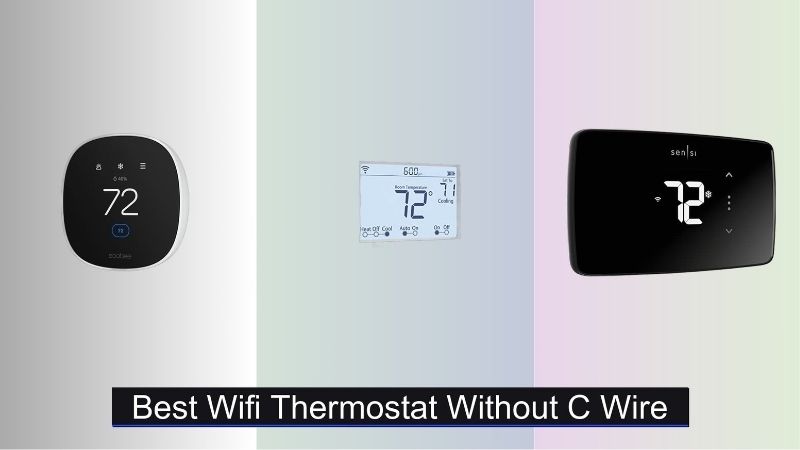
| Google Nest Learning Thermostat (4th gen) | Best Overall | 24V Power Sharing; C wire usually not needed | $279.99 regular, $239.99 shown on Google Store | Some equipment needs a Nest Power Connector |
| Copeland Sensi Lite ST25 | Lower-Cost Smart Schedules | No C on most conventional heat-and-cool systems | $89.99 MSRP | Heat pump, heat-only and cool-only need C |
| LUX TX9600TS | Battery-Run Heat Pump Controls | 2 AA batteries; up to 2H/1C heat pump | $55.99 | No Wi-Fi, unsupported 120/240V line voltage |
| Copeland Sensi Smart ST55 | Traditional Screen With Wi-Fi | No C on most conventional heat-and-cool systems | $129.99 MSRP | Requires C on heat pumps and one-mode systems |
| Google Nest Thermostat (2020) | Compact App Control | 24V Power Sharing; backup AAA cells | $129.99 regular | Power Connector possible; narrower stage support |
| Honeywell Home T4 Pro TH4210U2002 | Simple Installer-Style Programming | 2H/1C heat pump; battery or C-wire power | No official list price | Not a Wi-Fi thermostat; obtain exact-model quote |
Google Nest 4th Gen: Best Overall
Best For: Households wanting adaptive schedules and a room sensor without first fishing a new conductor through walls.
This fourth-generation Nest is the most complete connected choice here for someone whose old thermostat has no common conductor. Its Power Sharing approach is expressly designed for that situation, and the included remote room sensor adds more useful temperature context than a simple wall reading. The trade-off is price: households content with local programming can keep considerable money by choosing the LUX TX9600TS. A high-end controller is also not a substitute for verifying the existing furnace board or proprietary HVAC protocol.
Google’s Nest Learning Thermostat (4th gen) technical specifications document compatibility with most 24V gas, oil, electric, radiant and heat-pump equipment; its 3-stage heating and cooling terminal provisions are subject to connection-layout restrictions. Google’s specifications say a C wire or its Power Connector may be necessary in fewer than 1 percent of compatible cases, an estimate from Google rather than a guarantee for a particular home. The US Google Store displays a $279.99 regular price and $239.99 promotional price in October 2026. No separately installed wall C wire is normally needed.
The dial is 3.9 inches across, 1.1 inches deep and weighs 5.7 ounces per Google’s model-specific spec sheet. A trim plate and a second-generation Nest Temperature Sensor are included; a compatible Google Home app installation is required. Google’s retail warranty is two years, with different terms for HVAC-pro channels. If intermittent power or a complex relay arrangement disrupts operation, the $24.99 Nest Power Connector may be a supported remedy after checking the system diagram; do not improvise a jumper from R to C.
Pros:
- Google explicitly documents no-C operation for most compatible 24V systems.
- Box includes a second-generation Nest room temperature sensor.
- Heat-pump and multistage control options extend beyond basic smart models.
Cons:
- Regular $279.99 pricing makes simple furnace control expensive.
- Some relay boards still require an additional Power Connector installation.
Who Should Buy It: Buy for supported multistage smart control; choose LUX TX9600TS when battery-based heat-pump operation without an app is the goal.
Sensi Lite ST25: Lower-Cost Smart Schedules
Best For: Owners of standard combined furnace-and-AC systems who want remote scheduling at a moderate manufacturer price.
Sensi Lite ST25 answers a narrower problem than Nest but at a smaller entry price. In a conventional heating-and-cooling installation that Copeland approves, it can retain app-based scheduling without the homeowner adding a C conductor. Its crucial limitation is also unusually clear in the maker’s support documentation: a heat-pump installation is not the same wiring scenario. This unit should not be chosen for a C-wire-free heat pump merely because its store comparison chart says a common wire is usually unnecessary.
The Copeland Sensi Smart Wi-Fi Thermostat product comparison identifies the Lite ST25 at $89.99 MSRP, with a simple button-driven display, app scheduling, geofencing and smart alerts. Copeland’s support article titled Does My Sensi Thermostat Need a Common Wire? requires a C wire for heat-only, cool-only and heat-pump systems. On a supported conventional combined heat-and-cool circuit, a separate C conductor usually is not required. A pair of AAA batteries is used by ST25, but those cells do not remove the maker’s system-dependent Wi-Fi power requirements.
Copeland’s What Are the Dimensions of Sensi Thermostats? support page sizes ST25 at 5.10 inches wide, 3.10 inches high and 0.88 inch deep. The Sensi warranty chart identifies a three-year limited term for DIY ST25 purchases. The low-profile display may cover a rectangular wall mark that a smaller Nest circle would expose. When selecting the terminals in the Sensi installation app, disclose the actual equipment type rather than choosing conventional heating simply to make a checker pass; an incorrect selection can lead to connectivity failures.
Pros:
- Copeland posts an $89.99 MSRP for the specific Lite model.
- Five-inch-wide case conceals some older thermostat wall outlines.
- Official Sensi support permits no-C operation on many conventional systems.
Cons:
- Heat pumps explicitly require a C conductor for stable Wi-Fi.
- Button-controlled LED layout lacks the larger ST55 interface.
Who Should Buy It: Choose ST25 for eligible conventional HVAC; select Google Nest Thermostat (2020) after compatibility checking if a heat pump has no C wire.
LUX TX9600TS: Battery-Run Heat Pump Controls
Best For: Heat-pump owners who prefer dependable on-wall schedules and a replaceable-battery supply over remote apps.
The LUX TX9600TS takes a fundamentally different route to avoiding a C wire. Instead of powering cloud services, it uses two AA cells or the available compatible control supply for local programming. For the owner of a conventional 24V heat pump with simple auxiliary heating, that is a meaningful functional advantage over a Sensi unit that demands a common conductor for heat-pump Wi-Fi. Its screen can be programmed without owning a smartphone, but there is no remote monitoring, geofencing or internet weather feed.
LUX’s official TX9600TS product page lists $55.99 as of October 2026 and explicitly names dual power from two AA alkaline batteries. It documents support for conventional heat-and-cool equipment and heat pumps up to two heating stages and one cooling stage. The associated TX9600TS 7-Day Programmable User Manual supplies the actual terminal and compatibility diagrams, including the 24-volt system limitations; do not use this controller with line-voltage electric baseboards. The large touchscreen offers seven-day programming, manual holds and adjustable second-stage heat offset.
The manufacturer’s page specifies a 5.375-inch width, 3.375-inch height and 1.125-inch depth, so it covers a broad wall area but projects farther than the slim Sensi Lite. LUX lists a three-year warranty and an optional decorative wall plate. Check whether your heat pump uses a separate emergency heat output or compressor stage unsupported by the included terminals before purchase. The best budget decision may turn on a $55.99 device versus the cost of a contractor visit to correct an unrelated control-board issue.
Pros:
- Two AA batteries support local scheduling without Wi-Fi dependence.
- Manufacturer confirms up to 2H/1C heat-pump compatibility.
- $55.99 official list price undercuts every other priced pick.
Cons:
- Seven-day schedule changes must be made at the wall.
- Advanced two-compressor-stage heat pumps exceed stated cooling capacity.
Who Should Buy It: Pick TX9600TS for an approved simple heat pump; choose Honeywell Home T4 Pro TH4210U2002 for a contractor-standard UWP installation.
Sensi Smart ST55: Traditional Screen With Wi-Fi
Best For: Conventional furnace-and-AC homes wanting remote adjustments and a familiar wide rectangular display.
ST55 favors homeowners who dislike phone-only setup and tiny minimalist touch surfaces. Its familiar wall buttons make occasional local temperature changes straightforward, while the app provides scheduling and usage history when connected. That combination earns it a distinct place beside the simpler ST25, not a blanket upgrade: Copeland still requires a C conductor for heat pumps, heat-only boilers and cool-only setups. A household with any of those systems should eliminate ST55 from its no-C shortlist unless a legitimate power remedy is planned.
Copeland’s product page for the Sensi Smart Wi-Fi Thermostat and model comparison specify the ST55 family and $129.99 MSRP. Its published feature matrix includes remote control, seven-day schedules, local weather and runtime information. Copeland’s detailed no-C compatibility chart explicitly conditions C-wire-free installation on an approved conventional combined heat-and-cool arrangement; it also says the Touch and Touch 2 models require a C wire on all systems. That distinction prevents mistakenly purchasing a more expensive touchscreen unit as a solution to missing power.
The company’s thermostat-dimensions guide lists the ST55 housing as 5.88 inches wide, 3.75 inches tall and 1.00 inch deep, the widest display among these selected models. The ST55 manual identifies two AA cells, and Copeland’s warranty table states a three-year DIY limited warranty. Those batteries are not permission to skip the common wire where the system chart requires it; Sensi’s Wi-Fi troubleshooting guide explains that incompatible wiring may cause wireless shutdown even while some on-wall functions remain visible.
Pros:
- Wide 5.88-inch case conceals many rectangular paint outlines.
- $129.99 MSRP includes remote programming and runtime reporting.
- Physical wall buttons remain convenient when a phone is unavailable.
Cons:
- At least $40 more than ST25 at their published MSRPs.
- C-wire exception excludes heat pumps despite the unit’s heat-pump capability.
Who Should Buy It: Select ST55 for larger physical controls on conventional HVAC; Copeland Sensi Lite ST25 costs less if the basic display is acceptable.
Google Nest Thermostat (2020): Compact App Control
Best For: A straightforward compatible 24V system whose owner wants Google Home control in a small round housing.
The standard Nest Thermostat is not simply a cheaper copy of the fourth-generation Learning model. It suits an uncomplicated heating and cooling arrangement with less need for elaborate staging or bundled remote sensors. Its power-sharing design means a missing common conductor does not automatically disqualify the purchase. Yet Google’s own specifications warn that certain heat-only, cool-only and zone-controller arrangements may need a power accessory, so owners of those setups should treat a compatibility result as more important than the product’s attractive diameter.
Google’s Nest Thermostat Tech Specs page quotes a $129.99 regular listing and describes operation on compatible 24V HVAC systems. The model handles conventional single-stage heating and cooling with a second stage of either heating or cooling, or a heat pump with one heat and one cool stage plus auxiliary or emergency support. Google documents C-wire-free design for many installations while instructing buyers to check for a Nest Power Connector requirement. The two included AAA alkaline batteries are designated backup power, not an independent replacement for the HVAC supply during all operating conditions.
Google reports a 3.3-inch diameter, 1.07-inch depth and 4.9-ounce weight for this model. Unlike the higher priced fourth-generation Learning Nest, its decorative trim plate is sold separately, and Google’s posted standard warranty is one year. The Google Home app is required for installation; Google lists Matter compatibility for supported smart-home systems. Before ordering for a two-wire boiler, check whether the equipment has an appropriate 24V transformer and whether an additional compatible power component is needed.
Pros:
- Google documents Power Sharing for many no-C 24V installations.
- Three-point-three-inch diameter preserves a small contemporary wall footprint.
- Supports app schedules and compatible Matter home automation platforms.
Cons:
- Wall trim plate and Power Connector may add separate expenses.
- One-year warranty is shorter than the fourth-generation Learning model.
Who Should Buy It: Pick standard Nest for a verified simple 24V system; pay for Google Nest Learning Thermostat (4th gen) if its larger staging capacity is needed.
Honeywell T4 Pro TH4210U2002: Local Programs
Best For: Buyers with a compatible 2H/1C heat pump who prefer an installer-oriented thermostat without network setup.
The TH4210U2002 appeals to the homeowner replacing an older programmable wall control rather than building a connected home. Resideo’s selection chart explicitly separates battery or common-wire power from wireless features; this model has the former, not the latter. It also illustrates why model suffixes matter: the T4 family contains different conventional and heat-pump-capable SKUs. For a house using an appropriate two-heat-stage heat pump, the TH4210U2002 is the relevant variant, not the similar-looking TH4110U2005.
Resideo’s Non-Connected Thermostats Product Comparison Brochure identifies the T4 Pro TH4210U2002/U as a battery-or-C-wire device for a heat pump with two heating stages and one cooling stage. The T4 Pro Series installation guide, publication 33-00614EFS, diagrams the optional common connection for supported applications. It uses 24-volt controls, not 120/240-volt line-voltage heating. The Resideo contractor storefront does not publish a public official list price for this exact SKU; request a written model-specific quote rather than transferring a price from a different T4.
Resideo’s Honeywell Home Non-Connected Thermostats chart gives the T4 Pro a 4.06-inch square face and a 3.93-square-inch display, with five-year warranty terms shown for the nonconnected family. The UWP wall plate makes certain later replacements easier for an HVAC installer, though it does not correct an incompatible system on its own. Because this model is built for ordinary local programming, it lacks Wi-Fi alerts and remote sensor prioritization. A service technician should verify heat-pump O/B behavior and auxiliary-stage assignments if the old wiring is unclear.
Pros:
- Official Resideo brochure permits battery or common-wire operation.
- Specific TH4210U2002 supports documented 2H/1C heat-pump applications.
- Square 4.06-inch face uses Resideo’s familiar UWP mounting platform.
Cons:
- Public manufacturer price is unavailable for meaningful direct comparison.
- No remote app, occupancy sensing or Wi-Fi fault notifications.
Who Should Buy It: Choose this specific T4 Pro for an approved contractor-managed heat pump; use LUX TX9600TS for a publicly priced DIY-oriented touchscreen.
How to Choose a Thermostat Without a C Wire
Separate the wiring issue from the desired feature list before choosing a brand. The existing cable might have four labeled conductors, three, or only two, but the conductor count alone does not identify the equipment behind the wall. A spare unused cable strand is not automatically a common wire; the other end must be connected correctly to a compatible 24V common terminal. The following checks apply across all six models and determine whether a displayed price is close to the actual installed cost.
Match Power Method to the Actual HVAC System
Battery-powered operation and no-common-wire power sharing are different approaches. LUX TX9600TS and Honeywell Home T4 Pro TH4210U2002 document operation using replaceable batteries for supported control circuits. Google’s two Nest units rely primarily on compatible HVAC wiring and may supplement it with a manufacturer-approved Power Connector. Sensi ST25 and ST55 waive C-wire requirements on many conventional combined systems but explicitly require one for heat pumps and heating-only or cooling-only systems. Those exceptions are in Copeland’s own C-wire documentation, not optional reviewer preferences.
If the old setup uses a boiler with only R and W, look for the exact heating-only configuration in the proposed device’s manual. The presence of batteries does not imply that a Wi-Fi thermostat can operate solely on battery power indefinitely. Google’s Nest Power Connector costs $24.99 on its US store in October 2026 and may be preferable to pulling new cable, but only where the installation diagram and equipment wiring support it. Do not treat a power accessory as universally compatible with old millivolt equipment.
Read the Terminals Before Comparing Features
Check R or Rc, W, Y, G, O/B, AUX, E and C by terminal label, not cable color. Conventional furnace-plus-air-conditioner systems and heat pumps differ because a heat pump commonly needs an O/B reversing-valve command. A thermostat with one compressor output will not control the second compressor stage of equipment that requires Y2, even if an online listing says it works with heat pumps generally. A proprietary communicating HVAC control panel may need its matched controller regardless of its wire count.
Resideo’s T4 and T6 installation guides illustrate that common power and stage compatibility are separate questions. For example, TH4210U2002 serves a 2H/1C heat pump, while the TH6320U2008 in the broader T6 Pro family offers additional supported stage arrangements. A homeowner with a complex heat pump should verify compressor and emergency heat wiring against the exact manual and consider a licensed HVAC technician. Never connect line-voltage baseboard or a 120/240V thermostat circuit to these 24V control devices; turn off equipment at its breaker or service disconnect before removing old wires.
Budget for Adapters, Returns and Wall Coverage
The verified October 2026 manufacturer prices here extend from $55.99 for LUX TX9600TS to a $279.99 regular figure for the fourth-generation Nest. Sensi Lite ST25 is $89.99 MSRP and Sensi ST55 is $129.99 MSRP; the standard Nest’s regular list price is also $129.99. Resideo does not display a manufacturer-direct retail price for TH4210U2002. These numbers do not include labor or optional power accessories, and temporary promotions can change at checkout.
Physical dimensions affect the finished appearance after replacing an older wall unit. Sensi ST55 is nearly 5.9 inches wide, while the standard Nest is a 3.3-inch circle; an old mounting patch may remain visible behind the round display. Google’s fourth-generation Nest includes a trim plate but its basic Nest sells that part separately. Copeland and LUX publish exact case measurements, making a paper cutout useful before purchase. Ask the seller about model-number-specific returns if the compatibility checker later uncovers an unsupported zoning panel.
Decide Whether Remote Control Is Worth Added Wiring
Remote schedules are helpful when occupancy varies from day to day, but they introduce power, Wi-Fi and account requirements. Google’s Home app and Copeland’s Sensi app support remote thermostat functions in approved installations. LUX TX9600TS and Honeywell T4 Pro do not need internet access to execute stored local programs. If your router fails, a properly installed thermostat should retain its supported basic heating controls, though cloud schedules and notifications may be unavailable or delayed.
For a multi-zone HVAC system, one smart wall controller cannot create independent duct zones without corresponding equipment. Similarly, a room temperature sensor can guide one thermostat’s response but cannot give a second bedroom independent heating unless the installed system supports it. If your strongest reason for upgrading is energy savings, US Department of Energy setback guidance is about using the right schedule for your equipment rather than paying for a particular smart logo. Heat pumps with auxiliary heat deserve specific recovery-setting attention so a deep setback does not unintentionally call more backup heating.
Frequently Asked Questions
Unusual wiring situations often appear only after the wall plate comes off. These answers address the next decisions to make when an apparent four-wire replacement turns out to involve an unsupported heating circuit or an intermittent power fault.
Can I Use the G Wire as a C Wire?
Sometimes, but this is a control-board modification rather than a simple relabeling exercise. Copeland’s C-wire installation guidance discusses reusing a fan conductor in certain configurations, with corresponding changes at the HVAC equipment, and notes that other solutions may be preferable. Losing independent fan control or miswiring a transformer can produce trouble. Have an HVAC professional assess the actual terminals and system wiring before repurposing an existing conductor.
Does a Thermostat Need a C Wire With Two Wires?
It depends on the exact model and the heating equipment. A battery-operated thermostat may run a compatible low-voltage heating-only system without a common conductor. However, Copeland specifically requires a C wire for Sensi ST25 and ST55 in heat-only applications, despite their no-C capability on conventional combined HVAC. A Nest system may require its Power Connector or a different supported source. Consult the controller’s two-wire diagram, not the general product headline.
Why Does the Wi-Fi Drop Out After Installation?
An inadequate or incompatible continuous power arrangement is one possible cause. Copeland’s support guidance describes Sensi connectivity issues when heat-only, cool-only or heat-pump circuits lack the required common wire. Loose terminals, power interruptions and network settings can cause similar symptoms, so do not assume all Wi-Fi failures are a missing C wire. Check the exact manufacturer’s wiring support and power alerts before resetting everything or installing an unapproved accessory.
Can I Buy a Battery Thermostat for Electric Baseboards?
Not from these six unless the installed heating system uses a compatible separate low-voltage controller. Most direct-wired electric baseboard thermostats switch 120V or 240V circuits and require products rated for that voltage and load. LUX’s TX9600TS product page expressly excludes line-voltage heating, while Google’s and Resideo’s featured HVAC models are intended for low-voltage control circuits. A licensed electrician should select and install an appropriate line-voltage controller when that is the actual wall wiring.
Final Thoughts
The final purchase check is whether the old wall cable serves conventional equipment, a heat pump, a two-wire boiler or a zone board; that single finding can reverse the ranking. Google Nest Learning Thermostat (4th gen) remains the Best Overall choice for a verified compatible 24V installation without a C wire because it offers manufacturer-documented Power Sharing and greater stage flexibility. But a simple heat pump that already accepts battery operation may be better served by the $55.99 LUX TX9600TS, without paying for app functions. Photograph terminal labels, use the exact model’s compatibility guide, and obtain a professional wiring quote before treating a Power Connector or new cable as a routine accessory.