Our Top Picks
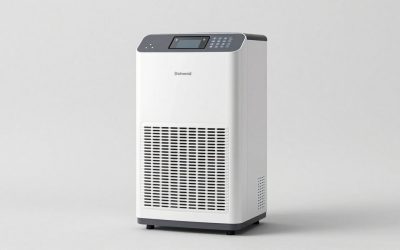
 COSTWAY Max 32 Pint Dehumidifier for Home10" x 8.5" x 17.5"10 x 8.5 x 17.5 Inches22 poundsCheck on Amazon
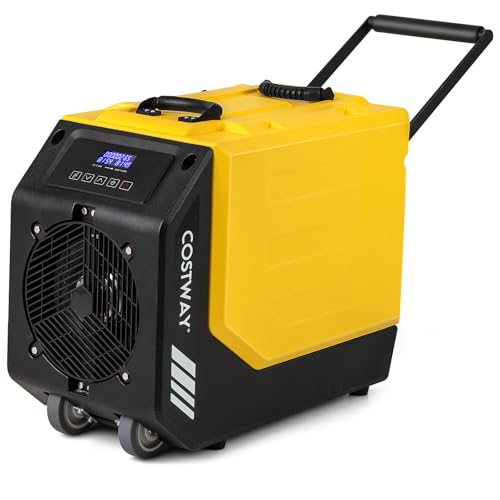 COSTWAY 190 Pints Commercial Dehumidifier with Pump24.5" x 14" x 20" (L x W x H)24 x 14 x 20 Inches80.5 PoundsCheck on Amazon
 COSTWAY 140 Pints Commercial Dehumidifier with Pump22" x 12" x 18"12 x 22 x 18 inches55.5 poundsCheck on Amazon
 COSTWAY 163 Pints Commercial Dehumidifier17" x 16" x 32" (L x W x H)17 x 16 x 32 InchesCheck on Amazon
A flooded basement and a damp bedroom closet need very different machines, and the Costway lineup covers both ends: the eight listings here run from a 32-pint home unit up to a 190-pint commercial unit with a pump. The best Costway dehumidifier for most households is the 65-pint Energy Star model, because it offers enough capacity for a typical damp basement without the power draw and bulk of the commercial-class units. The 32-pint model with the 2000 sq. ft. listing is the value pick for single rooms, and the 140-pint model with pump and drain hose is the premium pick for water-damage work.
This guide is built from the listing titles, which is the only information we hold about each unit. Where a title is silent on something, such as sound level or warranty, the text says to check the listing instead of guessing. The decision is easier if you start with the job rather than the number on the box, so the models are grouped that way below.
The Costway lineup in one table
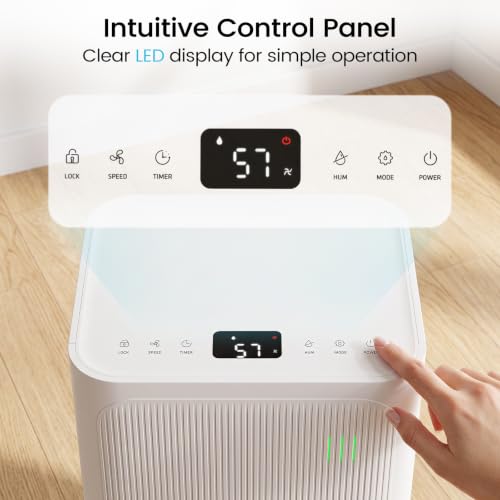
COSTWAY Max 32 Pint Dehumidifier for Home, Basement, Bedroom, Bathroom




As an Amazon Associate we earn from qualifying purchases. Product prices and availability are accurate as of the date/time indicated.
COSTWAY 190 Pints Commercial Dehumidifier with Pump


As an Amazon Associate we earn from qualifying purchases. Product prices and availability are accurate as of the date/time indicated.
COSTWAY 140 Pints Commercial Dehumidifier with Pump | Portable Industrial Dehumidifier with Drain Hose for Basements, Job Sites, Water Damage Restoration (Blue)


As an Amazon Associate we earn from qualifying purchases. Product prices and availability are accurate as of the date/time indicated.

COSTWAY 2000 Sq. Ft Dehumidifier for Basement for Bathroom Bedroom | 32 Pint Quiet & Energy Efficient Dehumidifier with Continuous/Drying/Auto Mode, 24H Timer, Drain Hose & Portable Handle


As an Amazon Associate we earn from qualifying purchases. Product prices and availability are accurate as of the date/time indicated.

COSTWAY 124 Pints Commercial Dehumidifier, White


As an Amazon Associate we earn from qualifying purchases. Product prices and availability are accurate as of the date/time indicated.
COSTWAY 163 Pints Commercial Dehumidifier (Orange) | 4500 Sq.Ft Crawl Space Dehumidifier with Drain Hose, 24H Timer, for Basement, Warehouse, Job Site


As an Amazon Associate we earn from qualifying purchases. Product prices and availability are accurate as of the date/time indicated.

COSTWAY 65 Pints Energy Star Dehumidifier


As an Amazon Associate we earn from qualifying purchases. Product prices and availability are accurate as of the date/time indicated.

COSTWAY 120 Pints Dehumidifier with Pump


As an Amazon Associate we earn from qualifying purchases. Product prices and availability are accurate as of the date/time indicated.
Price tiers are relative to the eight models in this article: Budget is the lowest-cost group, Premium the highest. Key specs come straight from each title.
| Model | Key spec (from title) | Price tier | Best for |
|---|---|---|---|
| COSTWAY 65 Pints Energy Star | 65 pints, Energy Star | Budget | Damp basements and large rooms |
| COSTWAY 2000 Sq. Ft, 32 Pint | 32 pints, Continuous/Drying/Auto modes, 24H timer, drain hose | Budget | Bedrooms, bathrooms, small basements |
| COSTWAY Max 32 Pint | 32 pints, home, basement, bedroom, bathroom | Budget | Single rooms on a tight budget |
| COSTWAY 120 Pints with Pump | 120 pints, pump | Mid-range | Wet basements with an awkward drain |
| COSTWAY 124 Pints Commercial | 124 pints, commercial, white | Mid-range | Large spaces where the drain is simple |
| COSTWAY 140 Pints Commercial with Pump | 140 pints, pump, drain hose, job sites, water damage | Premium | Water-damage drying |
| COSTWAY 163 Pints Commercial | 163 pints, 4500 sq. ft., drain hose, 24H timer | Premium | Crawl spaces and warehouses |
| COSTWAY 190 Pints Commercial with Pump | 190 pints, pump | Premium | Largest and wettest jobs |
Everyday rooms: the three smaller Costway models
These are the models for the situations most households actually face: a basement that smells musty from June to September, a bathroom without a good fan, or a bedroom where condensation shows up on the windows. At 32 to 65 pints they plug into a standard outlet and stay within a sensible power budget.
COSTWAY 65 Pints Energy Star Dehumidifier
The title gives two facts: a 65-pint capacity and an Energy Star label. It says nothing about drain method, coverage area or sound level, so those are all check-the-listing items. The Energy Star mention is worth confirming on the listing itself, because the certification is tied to efficiency per pint removed, which is what shapes the electricity bill on a machine that may run for months.
As a planning estimate, 65 pints per day equals about eight gallons, which is enough to handle a damp 1,500 to 2,500 sq. ft. basement in a humid summer. Estimated draw for a compressor machine in this class is in the 600 to 800 watt range while the compressor runs; at 12 hours of actual compressor time and a rate of $0.17 per kWh, that is roughly $1.20 to $1.65 per day. These are our own planning numbers, not figures published by the maker.
The 65-pint size is the sweet spot of the group. It is large enough that it reaches the target humidity and then cycles off, rather than running flat out all day, yet small enough that you are not paying for restoration-grade capacity you will never use. Because the title does not mention a hose or pump, confirm whether it has a continuous-drain port; a unit this size can fill its tank in under a day during damp spells.
Pros
- Capacity suits a damp basement without going commercial-class
- Energy Star in the title points to a lower cost per pint (verify on the listing)
- Budget-tier price within this lineup
Cons
- Title does not state drain method, coverage area or noise
- Larger and heavier than the 32-pint units, which matters on stairs
- Overkill for a single bedroom
Who it’s for: households with a musty main basement or a big open lower level who want one reliable machine rather than a restoration tool.
COSTWAY 2000 Sq. Ft Dehumidifier, 32 Pint, Continuous/Drying/Auto Mode
This listing has the richest feature list of the small units. The title names a 2000 sq. ft. coverage claim, 32-pint capacity, three operating modes (Continuous, Drying and Auto), a 24H timer, a drain hose and a portable handle, and it describes the unit as quiet and energy efficient. Treat the 2000 sq. ft. figure as a maximum for a lightly damp, open space, not a promise for a wet basement; 32 pints per day is a modest amount of water.
The mode list matters in practice. Auto mode holds a humidity target, Continuous mode keeps running regardless of the reading, and a Drying mode is commonly used for laundry or damp clothing. Which exact humidity range each mode targets is not in the title, so check the listing. The included drain hose is the real convenience: with the hose run to a floor drain, a 32-pint machine never needs its bucket emptied, which is the single biggest reason people stop using a dehumidifier.
As an estimate, a unit of this size draws roughly 300 to 400 watts while the compressor is on. At 10 hours of run time per day and $0.17 per kWh that is about 50 to 70 cents a day. The portable handle suggests it is meant to move between rooms, which suits a household that uses one machine for the bathroom after showers and the basement on laundry day.
Pros
- Drain hose in the title allows hands-free drainage
- Three modes plus a 24H timer give scheduling control
- Lowest price in the group
Cons
- 32 pints is thin for a genuinely wet or flood-prone basement
- Noise and exact humidity range are claims to verify, not measured values
- Whether it has a pump is not stated; assume gravity drainage only
Who it’s for: a bedroom, bathroom, laundry corner or small finished basement where you want a low-cost, set-and-forget unit.
COSTWAY Max 32 Pint Dehumidifier for Home, Basement, Bedroom, Bathroom
The title of this one is short: 32 pints, for home, basement, bedroom and bathroom. It does not list a coverage area, modes, timer or drain hose, so every one of those is a listing check. That sparse title is the main difference from the 2000 sq. ft. 32-pint listing above; both have the same stated capacity, and the practical question is which has the controls and drain option you want.
Capacity-wise it sits at the compact end. Thirty-two pints per day is about four gallons, a sensible match for a 400 to 800 sq. ft. room that is damp but not wet, such as a bathroom with no fan, a spare bedroom on a slab, or a laundry nook. In a basement larger than roughly 1,000 sq. ft., a unit this size would likely run non-stop and still lag behind the moisture coming in.
A useful way to decide between the two 32-pint listings is to ask whether you will use the tank or a hose. If the listing for this model shows a continuous-drain connection, it competes closely with the other 32-pint unit. If it does not, you will be emptying a tank, and a small tank on a damp week means walking to the sink once or twice a day. In that case the extra hose and timer on the other listing are worth more than the sticker difference.
One more factor is portability: a compact 32-pint unit is easy to carry from the bathroom to the laundry room, so match the room to the machine rather than leaving it in one corner all year.
Pros
- Compact capacity suited to bedrooms and bathrooms
- Budget-tier price
- Title explicitly names home rooms and basement use
Cons
- Title omits drain, timer, mode and coverage details
- Too small for large or wet basements
- Likely needs manual emptying unless the listing shows a hose port
Who it’s for: a single damp room where you will keep an eye on the tank or confirm a drain option first.
Large capacity: 120 to 190 pints
The five models below are a different category. Their pint ratings are three to six times higher than the small units, so they suit restoration work, crawl spaces, workshops and very wet basements. They also draw much more power, so the running cost math in the later section matters here.
COSTWAY 120 Pints Dehumidifier with Pump
The title is brief: 120 pints, with a pump. That is the entry point to the high-capacity group and, among the pump-equipped listings, the one with the lowest rating. A built-in pump moves water through a hose to a sink, tub or outdoor point that sits higher than the machine, with the lift height depending on the model; the listing should state it.
For planning, 120 pints a day is about 15 gallons. That is more than most finished basements will ever need, but it is a reasonable match for an unfinished 2,000 to 3,000 sq. ft. basement with visible dampness, a workshop in a humid climate, or a space that needs drying after minor water intrusion. Estimated draw while the compressor runs is around 1,000 to 1,300 watts; at 16 hours a day and $0.17 per kWh, expect roughly $3 to $3.50 per day when it works hard.
The pump is the selling point. In many basements the only drain is a utility sink or a laundry standpipe that sits higher than the floor. With a gravity-only machine you would be forced to empty a tank several times a day; a pump removes that chore. Pumps are also a wear item, so after a season it is worth checking the pump line for kinks and flushing it as the manual advises.
Placement helps the pump too. Keep the outlet line short and without sharp bends, and run it uphill only as far as the listing’s stated lift allows; a longer vertical run means a slower flow and more strain on the motor. Put the unit on a level surface so the internal float switch reads correctly.
Pros
- Pump handles drains that sit above the machine
- Capacity covers unfinished and wet basements
- Mid-range price for the capacity class
Cons
- Title omits coverage area, noise and hose details
- Higher power draw than the 65-pint unit
- Too large for ordinary living space
Who it’s for: a wet basement where the only drain is above floor level.
COSTWAY 124 Pints Commercial Dehumidifier, White
This listing is nearly all capacity: 124 pints, commercial, in white. No pump, hose, coverage area or timer appears in the title, so treat it as a straight tank-or-hose machine until the listing says otherwise. That makes it the simplest of the commercial-class models, and often the one to consider when a floor drain sits right next to where you can park the unit.
As an estimate, 124 pints is a little over 15 gallons a day. In practice a commercial unit like this is meant to run for extended periods, so a bucket is rarely realistic. The real question is how you will drain it. If you can run a gravity hose to a floor drain, the pump on the pricier listings is money you do not need to spend; if you cannot, you are better off with the 120-pint pump model above at a similar rating.
The white finish in the title is cosmetic but hints at an indoor or finished-space intent compared with the bright blue and orange colorways elsewhere in the lineup. Do not read more into that: color tells you nothing about build quality or sound level. If noise matters, such as in an open basement connected to living areas, look for the sound figure on the listing and treat it as a manufacturer claim rather than a verified result.
Run time matters as much as noise: because it is built to run for long stretches, put it where the exhaust air can leave freely, and keep the filter clean so the airflow stays strong.
Pros
- Large capacity at a mid-range price
- Commercial class suits long running hours
- Simplest option when gravity drainage is available
Cons
- No pump or hose mentioned in the title
- Coverage area and sound level are not stated
- Substantial power draw for what is often a seasonal job
Who it’s for: a large wet space with a floor drain close to where the unit will sit.
COSTWAY 140 Pints Commercial Dehumidifier with Pump
The longest title in the lineup spells out its intended jobs: a 140-pint commercial unit with a pump, a portable industrial dehumidifier with a drain hose, for basements, job sites and water damage restoration. It is the clearest restoration-oriented listing in the group, and the blue colorway is again only cosmetic.
Its title combines two drain features: a pump and a drain hose. That matters on a job site, where water has to leave the building and cannot depend on a convenient floor drain. Roughly 140 pints is about 17.5 gallons a day, which is enough to run a closed room or small basement after a clean-water leak while the wet materials are removed or opened up.
Planning estimate for drying a flooded finished basement: about 1,300 to 1,500 watts when the compressor is on, 24 hours a day for four days at $0.17 per kWh comes to roughly $20 to $25 in electricity. That is small next to the damage that mold can cause when drying stalls. A dehumidifier is not a substitute for removing soaked carpet, padding and drywall, and contaminated water needs professional guidance.
Because the title names both a pump and a hose, you can set it up in the middle of the room for even air movement and still send the water out through a window or to a distant sink. Leave a few feet of clearance around the intake, keep doors and windows shut while it runs, and empty any internal reservoir before you move the unit, since a full one is heavy and sloshes.
Pros
- Pump plus drain hose for flexible placement
- Title explicitly names water damage restoration and job sites
- Lower price than the 163 and 190 pint units
Cons
- Premium-tier price and power draw for casual use
- Bulky; plan for two-person lifting up stairs
- Noise and coverage area are not given in the title
Who it’s for: anyone drying a damaged space, or a landlord or contractor who needs a portable unit.
COSTWAY 163 Pints Commercial Dehumidifier (Orange), 4500 Sq.Ft Crawl Space
This listing names a 163-pint capacity, an orange finish, a 4500 sq. ft. figure, a crawl space label, a drain hose, a 24H timer and uses for basements, warehouses and job sites. A pump is not mentioned, so the machine presumably relies on gravity through the hose; verify before purchase. That differs from the 140 and 190 pint models, which both state a pump.
The crawl space description is notable. Crawl spaces are cold, tight and frequently damp, so a dehumidifier there must keep working at low temperatures. Compressor models can ice up when the air is cool, and the guide on why a dehumidifier ices up explains the causes. Check whether this listing states an auto-defrost feature and a minimum operating temperature.
As an estimate, 163 pints is roughly 20 gallons a day. A 4500 sq. ft. coverage claim is a ceiling, not a rule: a damp, uninsulated space of that size will need more than a single machine unless the moisture source is controlled. The timer is useful for restricting operation to off-peak electricity hours where your utility offers them.
Crawl spaces also bring a practical issue: access. A 163-pint machine is bulky, so measure the hatch before you buy, and plan to lay a vapor barrier or fix standing water first. A dehumidifier works best on air, not on a puddle, and a drain hose that runs across dirt can kink or collect debris unless you clip it along the path.
Pros
- Drain hose and a 24H timer
- Large capacity with a stated 4500 sq. ft. figure
- Title names crawl spaces and warehouses
Cons
- No pump in the title, so the drain must be at or below the unit
- Premium-tier price
- Low-temperature operation needs checking in the listing
Who it’s for: a crawl space, warehouse or garage with a downhill drain path.
COSTWAY 190 Pints Commercial Dehumidifier with Pump
At 190 pints and the highest price, this is the ceiling of the lineup. The title lists only the commercial class, the capacity and the pump, so features such as hose type, coverage area and timer all require a listing check. In effect you are paying for capacity and the pump together.
For scale, 190 pints a day is about 24 gallons. That much capacity is justified in a large, saturated space: a full basement after a flood, a big warehouse bay, or a moisture-heavy workshop. For anything under about 3,000 sq. ft. that is merely humid, it is far more than you need; the extra capacity simply means shorter cycles and higher peak power draw.
Estimated power draw is roughly 1,500 to 1,900 watts while the compressor works, which means a 15-amp household circuit can be close to its limit if other appliances share it. At 24 hours a day for five days and $0.17 per kWh, a hard-working unit of this size could cost about $30 to $38 in electricity for a five-day drying job. Those figures are our own planning estimates under stated assumptions.
Weight and noise are the other considerations that the title leaves out. A machine in this class is usually heavy enough that stairs are a problem, and the sound at full speed is closer to a shop fan than a household appliance. Plan for a wheeled path, a dedicated outlet, and a spot where the noise will not disturb people overhead.
Pros
- Highest capacity in the lineup
- Pump included according to the title
- Fastest drying potential for large wet jobs
Cons
- Highest price and power draw of the eight
- Likely loud and heavy; check the listing for weight and sound
- Overkill for most homes
Who it’s for: big, genuinely wet spaces and professionals who need to dry quickly.
How we picked these
The Editorial team built this guide from published specifications, manufacturer documentation and buyer reviews, working from the eight Costway listings only. Nobody on the team used or measured these units. That means every number about sound, power draw and real-world water removal in this article is either quoted from a listing title or labeled as an estimate with its assumptions shown.
We sorted the models by the job each title describes, then by drain method, then by capacity. We did not describe brand history, warranty terms or reliability, because the titles do not give those details and we have no verified source for them. If a feature is missing from a title, the text says to check the listing. That is deliberate: a feature that is not stated should not be assumed, particularly a pump or an Energy Star certification.
Price tiers are relative to this lineup, not to the entire dehumidifier market, and they can change. Use them to see which models sit near each other, then confirm the current price on the listing.
Worked example: two homes, two Costway choices
Capacity ratings only help if you apply them to a real room, so here are two scenarios with the assumptions spelled out.
Scenario A: a musty 1,200 sq. ft. finished basement. It has an 8-foot ceiling, a washer and dryer in one corner, and a floor drain 10 feet from the washer. Humidity readings in summer sit around 65 to 70 percent. A 65-pint Energy Star unit, set to 50 percent and drained by hose to the floor drain, is a sensible fit. Planning estimate: about 12 hours of compressor time per day for four summer months, around 700 watts, comes to roughly 1,000 kWh a season or about $170 at $0.17 per kWh. If you drop to the 32-pint unit, the electricity cost is lower, but it may run for 18 to 20 hours a day and struggle on rainy weeks.
Scenario B: a 900 sq. ft. basement after a clean-water pipe burst. The carpet and pad are removed within 48 hours, and drywall is cut two feet up. A 140-pint unit with pump and hose, placed centrally with the door closed, runs continuously for about four days. Planning estimate: 1,400 watts, 24 hours, four days, $0.17 per kWh is around $23. Using a 65-pint machine instead would take longer, and the added days leave wet framing exposed.
The contrast is the point: Scenario A is a comfort and mold-prevention problem solved with efficiency, while Scenario B is a speed problem solved with capacity. Buying the 140-pint unit for Scenario A wastes money on power and noise; buying the 32-pint unit for Scenario B risks mold. If you are sizing for a space around 1,000 sq. ft. and want a broader comparison across brands, see the guide to dehumidifiers for 1,000 sq. ft..
Reading a Costway title: pints, square feet, hoses and pumps
What the pint number really means
Pints per day is a laboratory rating at a set temperature and humidity. Since a 2019 change in the US testing point, the same machine carries a lower number than it would have under the older, warmer conditions, so a 2000 sq. ft. claim on a 32-pint unit is not directly comparable with an older 50-pint figure. The listing should state the test point. If it does not, assume the rating is optimistic for a cool basement, where real water removal is lower because cold air holds less moisture.
Square feet claims
Coverage figures such as 2000 and 4500 sq. ft. assume an open space with moderate dampness. Walls, closed doors and wet concrete reduce what a unit can handle. The titles with coverage claims also show how much range exists: the 2000 sq. ft. claim sits on 32 pints, the 4500 sq. ft. claim on 163 pints. That is about 62 sq. ft. per pint on the small unit and about 28 sq. ft. per pint on the large one, which suggests the larger unit’s claim is built for wetter conditions. Read coverage as a sign of intended use rather than a promise.
Hose, pump or tank
The drain method decides how much effort the machine needs. A tank is acceptable for a small unit in a bathroom. A hose is best when a drain sits lower than the outlet. A pump is for anything higher. Among the eight titles, only the 120, 140 and 190 pint listings name a pump, while the 32-pint 2000 sq. ft. unit, the 140 and the 163 name a hose.
Five mistakes to avoid with this lineup
Buying by pint rating alone. A 190-pint unit does not beat a 65-pint unit in a bedroom; it just cycles on and off quickly and over-dries the room. Match capacity to how wet the space is.
Assuming the title lists everything. Several titles omit drain method, noise and coverage. Treat any missing feature as unknown, and read the listing before you commit.
Ignoring the circuit. The commercial-class models can use most of a 15-amp circuit. A shared garage or basement circuit with a freezer or sump pump could trip. Check the amperage on the listing and plug directly into a wall outlet, not a thin extension cord.
Skipping maintenance. A clogged filter and dirty coils lower performance and raise cost. The guide on cleaning a dehumidifier safely covers filters and buckets.
Using a dehumidifier to fix a leak. If a unit never seems to catch up, the moisture source is often outside: gutters, grading or a cracked wall. A machine will manage humidity but will not stop water from entering.
Running-cost estimates for the whole lineup
The table shows planning estimates only, based on typical power draw for each capacity class and a stated rate of $0.17 per kWh. Real draw varies with the model, temperature and humidity, so check the nameplate on the listing.
| Capacity class | Estimated draw (compressor running) | Assumed daily run time | Estimated daily cost |
|---|---|---|---|
| 32 pints | 300 to 400 W | 10 hours | about $0.50 to $0.70 |
| 65 pints | 600 to 800 W | 12 hours | about $1.20 to $1.65 |
| 120 to 124 pints | 1,000 to 1,300 W | 16 hours | about $2.70 to $3.55 |
| 140 to 163 pints | 1,300 to 1,600 W | 20 hours | about $4.40 to $5.45 |
| 190 pints | 1,500 to 1,900 W | 24 hours | about $6.10 to $7.75 |
Compressor machines cycle, so the actual bill is often lower than the always-on figure, and a restoration job lasts days, not months. The comparison that matters is cost per month in a seasonal setup: the 65-pint model at the figure above costs roughly $35 to $50 a month, while a 190-pint unit on continuous duty would cost about $180 to $230.
Verdict
For most households the COSTWAY 65 Pints Energy Star is the best all-round choice: a capacity that handles a damp basement, a title that points to efficiency, and a Budget-tier price in this lineup. The budget pick is the 32-pint 2000 sq. ft. model, which has a drain hose and a 24H timer in the title and suits a bedroom, bathroom or small basement. The premium pick is the 140-pint commercial unit with pump and hose, built around water-damage and job-site use. If you have a crawl space with a downhill drain, the 163-pint model is the one to look at. Before you buy any of them, open the listing and confirm drain method, sound level and the pump lift height.
Frequently asked questions
Are Costway dehumidifiers a good fit for a basement?
Several listed Costway models name basements in the title, from the 32-pint units to the 190-pint commercial unit, so the brand clearly targets damp lower levels. Fit depends on capacity, not the name. A finished basement under about 1,500 sq. ft. usually suits a 32 to 65 pint unit, while a bare, leaky or recently flooded basement is where the 120 to 190 pint models make sense. Always confirm the drain method on the individual listing before ordering.
How many pints do I need?
Match the pint rating to how wet the space is, not just its square footage. As a rough planning guide, a single damp bedroom or bathroom suits around 30 pints, a damp basement of 1,000 to 2,000 sq. ft. suits roughly 50 to 65 pints, and water-damage drying or a wet crawl space calls for 120 pints or more. Ratings depend on the test conditions behind them, so treat these as estimates and size up if the space stays wet.
What separates the 140, 163 and 190 pint Costway models?
Going by the titles, the 140-pint and 190-pint units both list a pump, and the 140 adds a drain hose and mentions job sites and water damage restoration. The 163-pint unit lists a drain hose, a 24H timer and a 4500 sq. ft. crawl space use, but its title does not mention a pump. Beyond the pint rating, the practical difference is how water leaves the machine, so check the listing for pump lift height.
Do I need a pump on my dehumidifier?
A pump only matters if the water has to travel upward or a long way to reach a drain. If the unit can sit near a floor drain or sink lower than its outlet, gravity and a drain hose are enough and cost less. If the nearest drain is higher than the machine, such as a basement utility sink or a window, a built-in pump removes the need to empty a tank by hand.
Can I use a commercial-class dehumidifier in a living space?
You can, but it is usually the wrong tool. Commercial-class units in the 120 to 190 pint range are built for volume, so they draw more power, take more floor space and tend to be louder than residential models. In a normal bedroom or living room they will over-dry quickly and cycle off. Reserve them for restoration, crawl spaces, warehouses or very wet basements, and use a smaller unit for everyday rooms.