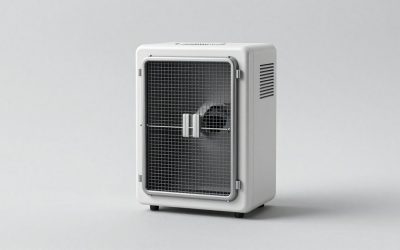
Our Top Picks
 Keystone 50 Pint Dehumidifier with LED Display50 Pint11.1 x 15.43 x 24.25 inches41.23 poundsCheck on Amazon
- Keystone 50 Pint Dehumidifier with Pump for Rooms50 Pint11.1 x 15.43 x 24.25 inches41.23 PoundsCheck on Amazon
- Keystone Energy Star 22-Pint Portable Dehumidifier for Large22 pint10.24 x 15.2 x 19.69 Inches32.41 poundsCheck on Amazon
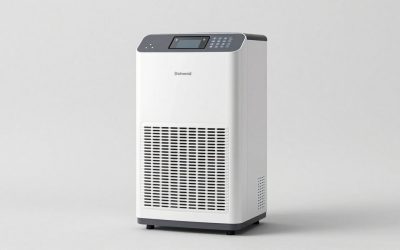
Keystone’s four listings reduce to two questions: how many square feet need to be covered, and does the water have to travel uphill to leave? The best Keystone dehumidifier for most damp basements is the 50-pint model with the LED display, because its title claims coverage up to 4,500 sq. ft. at a Mid-range price within this group. The 22-pint Energy Star unit is the budget pick for a single large room, and the 50-pint model with a built-in pump is the premium pick when the nearest drain is above floor level.
There are only four models here, so this guide goes deeper than a simple ranking. It shows how to turn the coverage claims into a pints-per-square-foot figure, walks through a sizing example for a real basement, lays out a drain decision tree and lists what the titles do not tell you. Features that a title does not state are marked as check-the-listing items.
Four models, three capacities, one pump
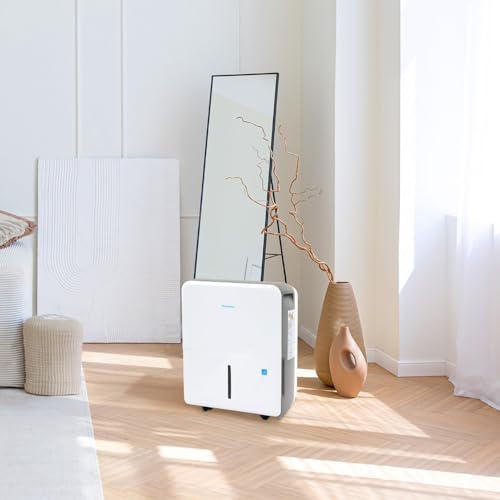
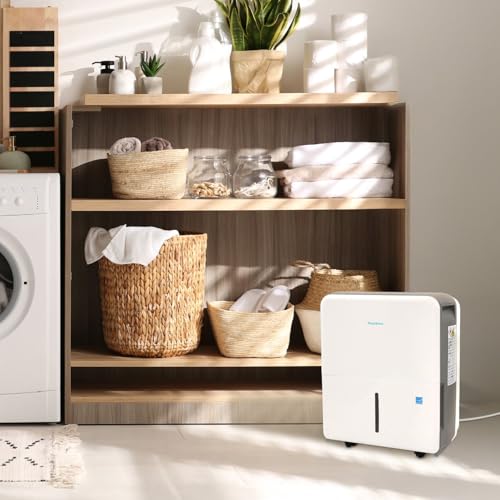
Keystone 50 Pint Dehumidifier with LED Display, up to 4,500 Sq. Ft. | LED Display, Energy Efficient Humidity & Moisture Extractor for House, Bedroom, Bathroom, Garage, Attic & Home Office



As an Amazon Associate we earn from qualifying purchases. Product prices and availability are accurate as of the date/time indicated.
Keystone 50 Pint Dehumidifier with Pump for Rooms up to 4500 Sq Ft. | Build-in Pump, Energy Efficient Humidity & Moisture Extractor for House, Bedroom, Bathroom, Garage, Attic & Home Office


As an Amazon Associate we earn from qualifying purchases. Product prices and availability are accurate as of the date/time indicated.
Keystone 35 Pint Dehumidifier, up to 3000 Sq Ft. for Bedroom, Bathroom | Energy Efficient Humidity & Moisture Extractor for House, Bedroom, Bathroom, Garage, Attic & Home Office


As an Amazon Associate we earn from qualifying purchases. Product prices and availability are accurate as of the date/time indicated.
Keystone Energy Star 22-Pint Portable Dehumidifier for Large Rooms up to 1,500 Sq.Ft. with Auto-Shutoff & Timer, Quiet and Moisture Absorber For Basement, Garage, Living Room


As an Amazon Associate we earn from qualifying purchases. Product prices and availability are accurate as of the date/time indicated.
Price tiers here are relative to these four models only. Key specs are paraphrased from each title.
| Model | Key spec (from title) | Price tier | Best for |
|---|---|---|---|
| Keystone Energy Star 22-Pint Portable | 22 pints, up to 1,500 sq. ft., auto-shutoff, timer | Budget | One large, lightly damp room |
| Keystone 35 Pint, up to 3000 sq. ft. | 35 pints, bedroom and bathroom use named | Mid-range | Moderately damp basements and bedrooms |
| Keystone 50 Pint with LED Display | 50 pints, LED display, up to 4,500 sq. ft. | Mid-range | Whole-floor and large basement coverage |
| Keystone 50 Pint with Pump | 50 pints, built-in pump, up to 4500 sq. ft. | Premium | Spaces where the drain is above the unit |
The four Keystone models, smallest to largest
Keystone Energy Star 22-Pint Portable Dehumidifier, up to 1,500 Sq. Ft.
The title packs in the most details of the four. It lists an Energy Star label, a 22-pint capacity, coverage for large rooms up to 1,500 sq. ft., auto-shutoff, a timer, a quiet claim and uses in a basement, garage and living room. The phrase “moisture absorber” in the title is marketing language; the listing’s specification section should tell you whether the unit is a compressor model, and that affects how well it works in a cold garage.
Capacity is the smallest here. Twenty-two pints is about 2.75 gallons a day, which suits a lightly damp room. A planning estimate for power draw is 250 to 350 watts while the compressor runs, so at 8 hours of compressor time and $0.15 per kWh the cost is about 30 to 42 cents a day. Those are planning figures built on assumed wattage rather than a published rating from the manufacturer.
Auto-shutoff and a timer are practical details. Auto-shutoff typically stops the machine when the tank is full, preventing overflow, and the timer lets you limit running hours. The title does not mention a drain hose connection or continuous drain, so assume you are emptying a tank unless the listing says otherwise. In a basement that stays damp all summer, a small tank means a daily trip to the sink.
The coverage claim also tells you something. At 1,500 sq. ft. for 22 pints, the ratio is about 68 sq. ft. per pint, the most conservative of the four titles. That suggests a more realistic coverage figure than the 35 and 50 pint claims, which stretch further per pint.
Pros
- Energy Star in the title, which points to lower running costs per pint (verify on the listing)
- Auto-shutoff and a timer
- Lowest price and lightest of the four, so easiest to carry
Cons
- Title does not mention a continuous drain or hose
- 22 pints runs long hours in a wet basement
- Technology type is not stated, so cold-room performance is unknown
Who it’s for: a living room, garage or lightly damp basement section of up to roughly 1,000 to 1,500 sq. ft.
Keystone 35 Pint Dehumidifier, up to 3000 Sq Ft, for Bedroom and Bathroom
The 35-pint unit’s title claims coverage up to 3000 sq. ft. and lists bedroom, bathroom, garage, attic and home office uses, along with an energy-efficient claim. Note that the headline text and the use list differ: the first line mentions bedroom and bathroom, while the later phrase widens it to the garage, attic and office. Neither says anything about a pump, LED display or timer.
At 35 pints, the machine removes about 4.4 gallons a day under its test conditions. As a rule of thumb that is enough for a moderately damp 1,500 to 2,000 sq. ft. basement, which is lower than the 3000 sq. ft. in the title. The gap is the main thing to understand: coverage claims assume ideal dryness, so a damp space reduces the usable area. The ratio here is about 86 sq. ft. per pint, a more optimistic figure than the 22-pint model.
Estimated draw is 400 to 500 watts while the compressor runs. At 10 hours of compressor time and $0.15 per kWh the estimate is about 60 to 75 cents a day. That makes it a modest cost to run all summer, roughly $18 to $23 a month if used daily.
It is the least featured of the four in the title, but that can be an advantage: fewer electronics, fewer things to fail, and a lower price. If you need to drain continuously, check the listing for a hose connector and for the tank size; divide the tank volume by the daily pint rating to see roughly how many hours it can run before it fills and switches off.
Pros
- Mid-sized capacity suited to most bedrooms and small basements
- Title names a wide range of rooms
- Lower price than the 50-pint models
Cons
- Drain method, timer and display are not mentioned in the title
- The 3000 sq. ft. claim is optimistic for damp conditions
- Price sits close to the larger 50-pint unit, so compare carefully
Who it’s for: a moderately damp basement or large bedroom area where 22 pints would run constantly.
Keystone 50 Pint Dehumidifier with LED Display, up to 4,500 Sq. Ft.
This is the only title that mentions an LED display. It also lists 50 pints, a 4,500 sq. ft. coverage claim, an energy-efficient claim and uses in the house, bedroom, bathroom, garage, attic and home office. Nothing in the title mentions a pump, hose, timer or Energy Star, so check the listing for those.
The 50-pint capacity is about 6.25 gallons a day. In a typical house it covers a whole-floor basement of 2,000 to 3,000 sq. ft. in damp weather, or a smaller space with stubborn moisture. A realistic estimate of power draw is 550 to 700 watts; at 12 hours and $0.15 per kWh it costs roughly $1.00 to $1.25 a day, or about $30 to $38 a month during a damp season.
The LED display is more than decoration. A display that shows the current humidity reading lets you learn the room: you can see how fast humidity rises after a shower or laundry, and whether the target setting is realistic. Whether this display shows humidity and the setpoint, or only status lights, depends on the listing.
The same ratio calculation gives about 90 sq. ft. per pint. The title is the most optimistic of the four about per-pint coverage, which suggests that the 4,500 sq. ft. figure fits an open, lightly damp space rather than a damp basement divided into rooms. Think of the practical coverage as nearer 2,000 to 3,000 sq. ft.
Pros
- High capacity gives headroom for wet seasons
- LED display makes it easier to read and adjust
- Same coverage claim as the pump model at a lower price
Cons
- Title does not say how the water drains
- 4,500 sq. ft. claim is a ceiling, not a practical figure
- Uses more power than the smaller units
Who it’s for: a large open basement or a whole floor where a drain is at or below the machine.
Keystone 50 Pint Dehumidifier with Pump for Rooms up to 4500 Sq Ft.
The pump model is the same capacity and coverage claim as the LED version, with the built-in pump as its headline feature (the title spells it “Build-in Pump”). The pump is the entire difference highlighted in the title, and it is also the reason this unit sits in the Premium tier of the four.
A built-in pump pushes water through a hose upward and sideways to a sink, a laundry standpipe or a window, with maximum lift depending on the model, which the listing should state. Without a pump, you either empty a tank or rely on gravity into a drain lower than the machine. Many basements have the opposite layout: the only drain is a utility sink at waist height. In that case the pump is not a luxury but the feature that decides whether you will use the machine at all.
The cost of the feature is not only the price. A pump adds a mechanical part that can fail or clog, and a long hose run adds a leak point. Keep the line clear of sharp bends, and follow the manual on flushing it. Capacity-wise, estimated power draw and running cost match the LED model: about 550 to 700 watts and $1.00 to $1.25 per day at the assumptions above.
The title does not mention an LED display, so do not assume it has one. Check whether the listing states humidity readout, timer and low-temperature operation.
Pros
- Built-in pump handles drains above the machine
- 50-pint capacity with a 4500 sq. ft. coverage claim
- Removes the daily tank-emptying chore
Cons
- Highest price of the four
- Pump is an additional part that can clog or fail
- Display, timer and low-temperature details not stated in the title
Who it’s for: a basement or utility room where the only drain sits higher than the floor.
How we picked these
The Editorial team worked from published specifications, manufacturer documentation and buyer reviews, and in this case from the four listing titles. Nobody on the team used or measured these units. Anything about run time, electricity use and real-world water removal in this guide is a labeled planning estimate, with the wattage and electricity rate shown so you can swap in your own numbers.
We ranked the models by capacity and by how well each title explains its drain method, because those two factors decide most buyer outcomes. We did not state brand history, warranty terms or reliability, since the titles do not give them and we cannot verify them. Where a title is silent, such as on noise, Energy Star status for the larger models, or low-temperature operation, we say to check the listing rather than guess.
Square feet per pint: what the four titles imply
A useful way to compare is to divide the coverage claim in each title by its pint rating. The result shows how aggressive each claim is.
| Model | Coverage claim | Pints | Sq. ft. per pint | Reading |
|---|---|---|---|---|
| 22-pint Energy Star | 1,500 | 22 | about 68 | Most conservative claim |
| 35 pint | 3000 | 35 | about 86 | Optimistic for damp spaces |
| 50 pint, LED display | 4,500 | 50 | 90 | Best suited to open, lightly damp space |
| 50 pint, pump | 4500 | 50 | 90 | Same claim as the LED model |
The pattern is that the 22-pint title is the most cautious. A rough adjustment is to treat the coverage figure as the maximum for a space that is only slightly humid, and to cut it by a third to a half for a damp basement. Under that rule, the 35-pint model is a better match for roughly 1,500 to 2,000 sq. ft., and the 50-pint models for about 2,250 to 3,000 sq. ft. These are our own planning estimates, not manufacturer figures.
For a broader look at sizing across brands, including how pint ratings changed with a new test standard, the guide to dehumidifiers for 1,000 sq. ft. explains the ratings in more depth.
A sizing walk-through: a 1,200 sq. ft. basement with a laundry corner
Take a basement of 1,200 sq. ft. with an 8-foot ceiling. It has a washer and dryer in one corner, a utility sink along one wall, a sump pit and concrete walls. Humidity in summer sits near 68 percent, and the goal is 50 percent. How do the four models fit?
Step 1: classify the dampness. Musty smell but no visible moisture means damp; damp patches on the walls or floor mean very damp; seepage or standing water means wet. Say this basement is damp with occasional wet spots after heavy rain, which is on the boundary between damp and very damp.
Step 2: choose a planning capacity. A common rule-of-thumb is about 25 to 30 pints for a damp 1,200 sq. ft. space, 35 to 40 for very damp and 45 to 55 for wet. Sizing charts vary, so these are rough. For the boundary case, aim for 35 to 40 pints, with room to spare for laundry days.
Step 3: match a model. The 22-pint unit would be too small. The 35-pint model fits the damp case but leaves little headroom. A 50-pint unit takes care of both the damp case and the wet days, and runs fewer hours per day at a given load, which is easier on the machine.
Step 4: decide the drain. The sink is on the wall about 36 inches above the floor, and the sump pit is a poor choice because of the risk of re-circulating water. A gravity hose to the sink will not work from a machine on the floor, so the pump model is the practical option here.
Step 5: estimate cost. A 50-pint unit at 600 watts running 12 hours a day for 120 summer days at $0.15 per kWh is about 864 kWh, which comes to roughly $130. If you chose the 35-pint unit instead, it might run 16 hours at 450 watts, about 864 kWh as well, so the savings shrink to almost nothing while the margin drops. In other words, extra capacity is not an extra bill if it lets the compressor cycle off sooner.
Pump or no pump: a drain decision tree
Work through these questions in order and stop at the first answer that fits.
- Is there a floor drain within reach of a hose, and is the unit’s drain outlet above it? If yes, use gravity and a hose, and skip the pump model.
- Is the nearest drain a sink or a standpipe above the floor? If yes, you need a pump.
- Can the water go out through a window or door? Only a pump will push it up and out, and you must check local rules about discharging outdoors.
- Do you only need the unit part of the week or for one room? A tank may be enough if you are willing to empty it daily.
- Do you travel or leave the house for days? Choose a continuous drain method, because a full tank switches the machine off and moisture returns.
The 22-pint model with auto-shutoff is a case in point for question five. Auto-shutoff protects the floor but also means the machine quits when the tank fills, so a small tank in a damp basement can be off for much of the night. The title for the 35 and the LED 50-pint model does not say whether a continuous drain is possible, so confirm it on each listing.
What the titles do not tell you
Four titles, and a lot of silence. Before ordering any of these, collect answers to the following items from the listing’s specification section or the manual:
- Technology: compressor or desiccant. This affects performance in a cold room.
- Operating range: the lowest air temperature the unit works in without icing. See the guide to humidifiers versus dehumidifiers if you are unsure which job you actually need done.
- Tank size: divide by the pint rating to see how fast it fills.
- Drain connector: whether a garden-hose style fitting is included for continuous draining.
- Sound level: only the 22-pint title says quiet, and no title gives a decibel figure.
- Power draw and cord length: a short cord can force you to use an extension, which is a poor idea for a machine that draws several amps.
- Warranty and returns: not stated in any title.
Keep a copy of the specification page when you buy. If the machine underperforms, you can compare the actual behavior to the stated claims. Cleaning the filter regularly keeps performance up, and the steps are covered in the guide to cleaning a dehumidifier safely.
A seasonal run plan you can copy
Buying the right size is only half the job; the settings decide whether the machine earns its keep. The plan below applies to any of the four models and uses a humidity target rather than a fixed schedule, because outdoor weather changes faster than a calendar.
| Period | Target humidity | Suggested use | Why |
|---|---|---|---|
| Humid months (summer) | 45 to 50 percent | Auto mode or humidistat, door closed | Keeps mold growth in check while avoiding non-stop running |
| Shoulder seasons | 50 to 55 percent | Run on laundry days and after storms, or use the timer | Moisture spikes are short, so run time can be too |
| Cold months | Check first with a hygrometer | Often off; confirm the unit’s low-temperature limit | Cold air holds little moisture, and compressor coils can frost |
| After a leak or storm | As low as the unit allows for a few days | Continuous mode with a hose or pump | Fast drying limits mold |
A cheap hygrometer is the one accessory worth buying alongside any of these. The built-in reading on a dehumidifier sits near the unit’s own intake and can differ from the rest of the room by several points. Put the hygrometer at chest height on the far side of the space and compare it with the machine’s display for a week; if they disagree by more than five points, trust the hygrometer when you set the target. Also note when humidity rises: if it jumps at the same time each day, such as during a shower or a dryer cycle, the timer can match the run time to that event rather than running around the clock.
Mistakes buyers make with a four-model lineup
Choosing the biggest coverage number. A 4,500 sq. ft. claim does not mean it will handle a 4,500 sq. ft. wet basement. Subtract for dampness and walls.
Paying for a pump you do not need. If a floor drain is within reach, the LED model saves money. The pump version only earns its price when the water must go uphill.
Buying too little capacity to save money. A small unit that runs all day wears faster and still may not reach the target humidity. Moving up one size is often cheaper than replacing the smaller unit later.
Placing it in a corner. Dehumidifiers need airflow on all sides. Leave at least a foot of clearance, and keep the intake away from walls and furniture.
Leaving doors open. A dehumidifier in a basement with an open door to a humid room or a leaking window is working against the outdoors. Close the space for best results.
Ignoring the humidity target. Setting 30 percent makes the machine run non-stop and overdries. A setting of 45 to 50 percent is sufficient for most homes.
Verdict
The Keystone 50 Pint Dehumidifier with LED Display is the best fit for most damp basements and whole-floor use: high capacity, a Mid-range price within this group and a display that makes it easy to tune. The budget pick is the Keystone Energy Star 22-Pint Portable, a sensible match for one large, lightly damp room. The premium pick is the 50 Pint with Pump, which earns its higher price only when the drain sits above the machine. The 35-pint model is the middle option for a bedroom, a bath or a moderately damp basement area. Confirm drain method, noise and operating temperature on the listing before you buy.
Frequently asked questions
Which Keystone dehumidifier is best for a basement?
For most basements the 35-pint or 50-pint models are the realistic range. Going by the titles, the 35-pint unit claims coverage up to 3000 sq. ft., and the two 50-pint units claim up to 4500 sq. ft. A basement that only smells musty may do fine with 35 pints, while one with damp walls or a laundry area benefits from the extra headroom of 50 pints. The 22-pint model fits smaller, lightly damp spaces.
What is the difference between the two 50-pint Keystone models?
Reading the titles, one 50-pint listing highlights an LED display and the other highlights a built-in pump. Both claim coverage up to 4,500 sq. ft. and name the same house, bedroom, bathroom, garage, attic and office uses. The pump version is the one to choose when the drain sits above the machine, such as a utility sink. If gravity drainage is possible, the LED version avoids paying for a pump.
Do Keystone dehumidifiers use a compressor or a desiccant?
None of the four titles states the technology, so check the specification section of each listing before buying. Units rated in the 22 to 50 pint range are typically compressor-based, which work best in warm, humid air and can ice up when the air is cold. If your space stays below roughly 60 degrees Fahrenheit, look for a model that explicitly lists a low-temperature range or auto-defrost.
Is the 22-pint Keystone model enough for a living room?
The title calls it suitable for large rooms up to 1,500 sq. ft. and also lists living rooms, garages and basements. For a normal living room that is merely a little humid, 22 pints per day is a comfortable fit. If the room regularly feels damp, shows window condensation or has a laundry nearby, that capacity will run long hours, and the 35-pint model gives you more margin.
Can a dehumidifier damage a room that is already dry?
A dehumidifier cannot over-dry a room if it has a humidistat and you set a sensible target. For comfort and mold control, aim for roughly 40 to 50 percent relative humidity. Running at the lowest setting in a dry winter can cause static, cracked wood and irritated sinuses. If you are unsure whether you need to remove or add moisture, measure the room with a hygrometer first.