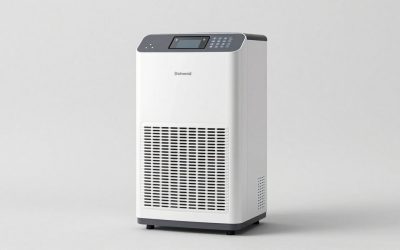
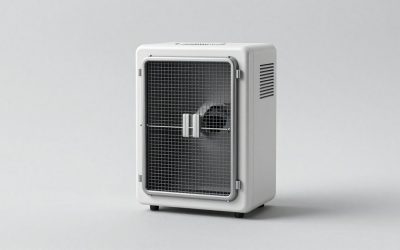
Our Top Picks
 Waykar 34 Pints 2025 Most Efficient Energy StarDrain Hose10.87 x 8.39 x 19.3 inches22.05 PoundsCheck on Amazon
 Waykar 80 Pints 2025 Energy Star Dehumidifier for9.45 x 13.51 x 20.47 inches28.57 poundsCheck on Amazon
 Waykar 120 Pints 6000 Sq. Ft 2025 Energy120 Pints 6000 Sq. Ft13.86 x 10.71 x 21.89 inches34 PoundsCheck on Amazon
 Waykar 150 Pint 7000 Sq.Ft Dehumidifier for Basement150 Pints 7000 Sq. Ft15.47 x 11.69 x 24.37 Inches40 poundsCheck on Amazon
 Waykar 150 Pint Commercial Dehumidifier with Pump &150 Pints 7000 Sq. Ft with Pump10.48 x 14.89 x 24.22 Inches38.6 poundsCheck on Amazon
Eight Waykar listings share only five capacities, and three of those capacities appear twice with different feature lists in the title. The best Waykar dehumidifier for most homes is therefore the 80-pint listing with the drain hose, which pairs a 5,000 sq. ft. coverage claim with auto defrost and self-drying in the title at a Budget-tier price within this group. The 34-pint Energy Star model is the budget pick for a bedroom or small basement, and the 150-pint commercial model with pump and drain hose is the premium pick for large or awkwardly drained spaces.
The challenge with this brand is not finding a machine but telling the near-twins apart. This guide decodes the titles, shows how the duplicates differ, works out how quickly the small tanks fill and estimates what each class costs to run. Details a title does not state are flagged as check-the-listing items rather than guessed.
All eight Waykar listings at a glance
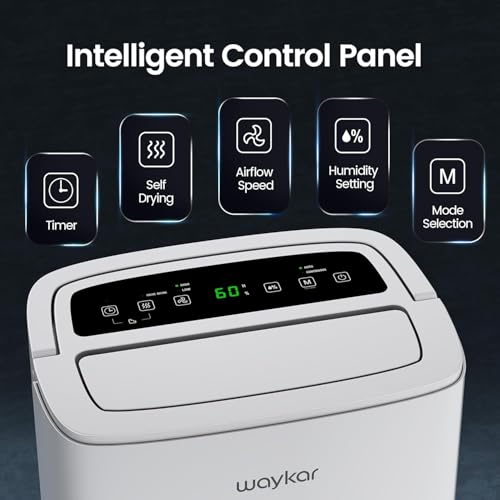
Waykar 80 Pints 5000 Sq. Ft 2025 Energy Star Dehumidifier for Basement | 90° Auto Swing, 30%–80% Humidity Control for home, Continuous drainage support, Whole-House Dehumidification, Auto-defrost


As an Amazon Associate we earn from qualifying purchases. Product prices and availability are accurate as of the date/time indicated.
Waykar 34 Pints 2025 Most Efficient Energy Star Dehumidifier for Home & Basement, Ideal for Spaces up to 2,000 Sq. Ft. with Auto or Manual Drainage, 0.62-Gallon Water Tank



As an Amazon Associate we earn from qualifying purchases. Product prices and availability are accurate as of the date/time indicated.
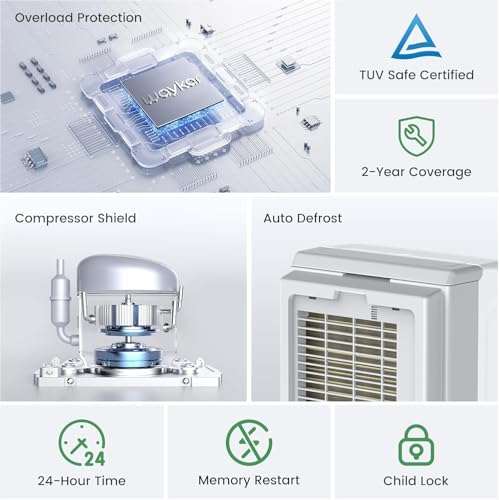
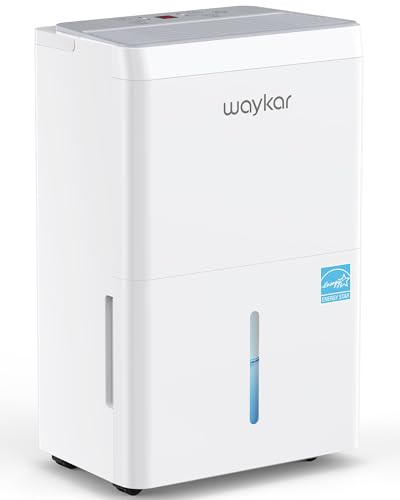
Waykar 80 Pints 2025 Energy Star Dehumidifier for Home up to 5,000 Sq. Ft, Ideal for Basement, Bathroom and Large Room with Drain Hose, Portable, Auto Defrost and Self-Drying




As an Amazon Associate we earn from qualifying purchases. Product prices and availability are accurate as of the date/time indicated.
Waykar 120 Pints 6000 Sq. Ft 2025 Energy Star Dehumidifier for Basement | 90° Auto Swing, Auto-defrost, 30-80% RH Control, Ideal for Workshops and Home with Drain Hose and 1.14 Gallons Water Tank


As an Amazon Associate we earn from qualifying purchases. Product prices and availability are accurate as of the date/time indicated.
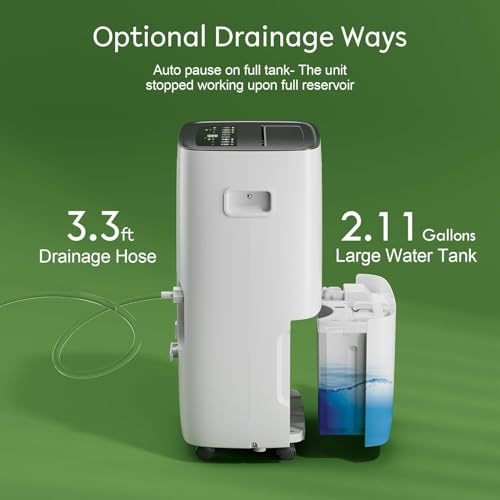
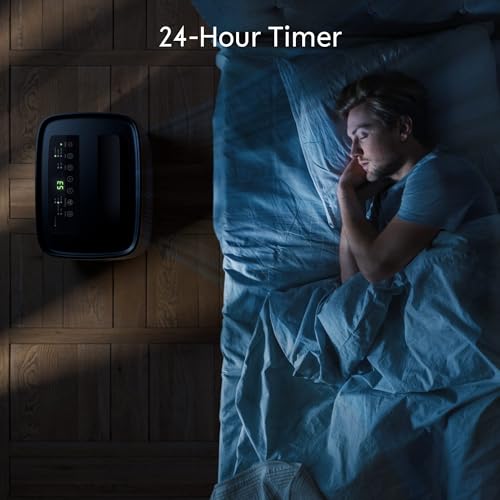
Waykar 150 Pint 7000 Sq.Ft Dehumidifier for Basement with Drain Hose & Tank | 90° Auto Swing, 30%–80% Humidity Control for home, Continuous drainage support, Whole-House Dehumidification, Auto-defrost



As an Amazon Associate we earn from qualifying purchases. Product prices and availability are accurate as of the date/time indicated.
Waykar 150 Pint Commercial Dehumidifier with Pump & Drain Hose for Basement | Energy Star, Up to 7,000 Sq.Ft, Self-Drying, Auto-Defrost, 30-80% RH Control, Ideal for Industrial, Large Rooms & Warehouses


As an Amazon Associate we earn from qualifying purchases. Product prices and availability are accurate as of the date/time indicated.
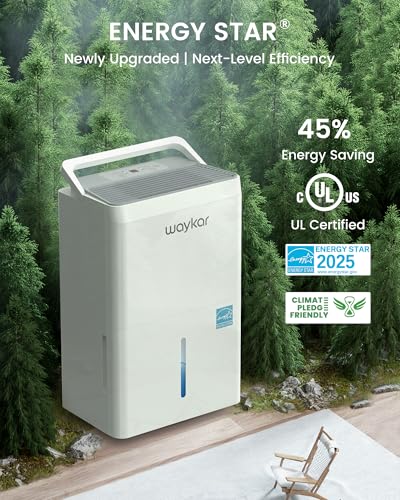
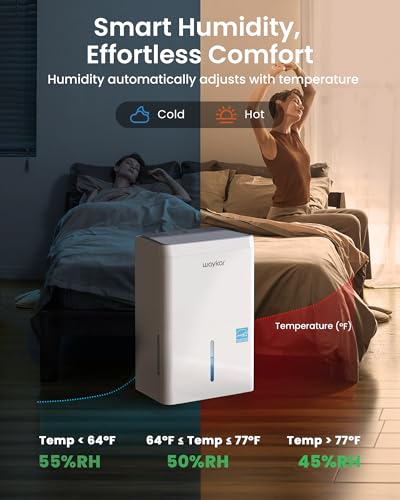
Waykar 6000 Sq.Ft Energy Star Dehumidifier for Basement & Home, 120 Pint/Day with Drain Hose & Tank, Ultra Quiet (40 dB), Smart Auto Comfort Mode



As an Amazon Associate we earn from qualifying purchases. Product prices and availability are accurate as of the date/time indicated.

Waykar 70 Pint Energy Star Crawl Space Dehumidifier with Pump & Drain Hose for Basements, Commercial & Water Damage Spaces up to 5000 Sq. Ft., Compact, Strong Dehumidification, 5-Year Quality Coverage


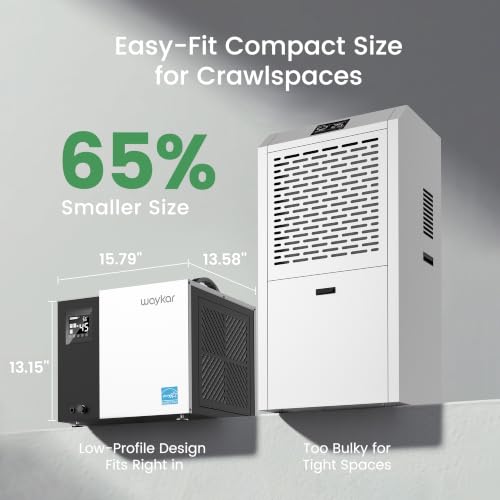
As an Amazon Associate we earn from qualifying purchases. Product prices and availability are accurate as of the date/time indicated.
Price tiers are relative to the eight Waykar models in this article. Key specs paraphrase each title; the listing is the authority for anything else.
| Model | Key spec (from title) | Price tier | Best for |
|---|---|---|---|
| Waykar 34 Pints Energy Star | Up to 2,000 sq. ft., auto or manual drainage, 0.62-gallon tank | Budget | Bedrooms and small basements |
| Waykar 80 Pints with Drain Hose | Up to 5,000 sq. ft., portable, auto defrost, self-drying | Budget | Everyday basements and large rooms |
| Waykar 80 Pints, 90° Auto Swing | 5000 sq. ft., 30-80% humidity control, continuous drainage, whole-house | Mid-range | Whole-house setups with a fixed drain |
| Waykar 120 Pints, 90° Auto Swing | 6000 sq. ft., auto-defrost, drain hose, 1.14-gallon tank | Mid-range | Workshops and large basements |
| Waykar 120 Pint/Day, Ultra Quiet | 6000 sq. ft., 40 dB claim, Smart Auto Comfort Mode | Mid-range | Large spaces near living areas |
| Waykar 150 Pint with Drain Hose & Tank | 7000 sq. ft., continuous drainage, auto-defrost | Mid-range | Very large, wet basements with a downhill drain |
| Waykar 150 Pint Commercial with Pump | Energy Star, pump, up to 7,000 sq. ft., self-drying | Premium | Warehouses and large rooms with uphill drains |
| Waykar 70 Pint Crawl Space with Pump | Energy Star, pump, drain hose, up to 5000 sq. ft. | Premium | Crawl spaces and water-damaged areas |
Starting small: the 34 and the two 80-pint listings
Most households land in this group. Between 34 and 80 pints you can cover a bedroom, a typical basement or a whole lower level, and the machines remain portable enough to carry up a stair.
Waykar 34 Pints Energy Star Dehumidifier, up to 2,000 Sq. Ft.
The title bills this as the most efficient Energy Star model, suitable for home and basement spaces up to 2,000 sq. ft., with auto or manual drainage and a 0.62-gallon water tank. “Most efficient” is the seller’s wording, so look for the Energy Star listing details rather than relying on the phrase. What is certain from the title is the capacity, the coverage claim and the tank size.
A 34-pint rating is roughly 4.25 gallons a day, which fits a damp 800 to 1,500 sq. ft. area, in line with the conservative end of a 2,000 sq. ft. claim. A planning estimate for power draw is 350 to 450 watts while the compressor runs; at 10 hours a day and $0.16 per kWh, that comes to about 56 to 72 cents per day. These are our estimates from typical machines in this class, not a published rating.
The tank is the weak point. At 0.62 gallons, it holds about five pints, so a machine pulling water at its rated pace fills it in about 3.5 hours. In a very damp room it fills even faster. The “auto drainage” in the title is therefore the feature that makes this unit workable: connect the hose to a floor drain and the tank becomes a backup rather than a daily chore.
The title is silent on noise, a hose in the box, and whether the humidistat has a numeric range. Check each before you commit.
Pros
- Lowest price tier in the Waykar group
- Energy Star in the title and a coverage claim that suits real rooms
- Auto or manual drainage gives flexibility
Cons
- 0.62-gallon tank fills within hours in a damp room
- Too small for a leaky or multi-room basement
- Noise and hose length are not stated in the title
Who it’s for: a bedroom, nursery or small finished basement that can use a hose or be emptied daily.
Waykar 80 Pints Energy Star, Home up to 5,000 Sq. Ft., with Drain Hose
This is the listing that works as the brand’s everyday workhorse. The title packs in 80 pints, Energy Star, coverage up to 5,000 sq. ft., a drain hose, a portable design, auto defrost and self-drying, with basement, bathroom and large-room uses named. It is also the least expensive of the 80-pint pair.
Eighty pints is 10 gallons a day, which is generous for a damp basement of up to roughly 3,000 sq. ft. The 5,000 sq. ft. figure is a ceiling for dry-ish, open space. At 62 sq. ft. per pint, it is a similar claim ratio to the 34-pint unit, so the larger unit is not stretching its claim any further than the small one. Estimated draw is 700 to 900 watts while the compressor runs; at 12 hours a day and $0.16 per kWh, that is about $1.35 to $1.75 per day.
Two features help with upkeep. Auto defrost lets the unit clear frost from the coils when the air is cool, which relates to the problem explained in the guide on why a dehumidifier ices up. Self-drying (the term used in the title) generally refers to a fan cycle that dries the coil and interior after shutdown, helping limit mildew; the listing should describe exactly how it works.
The title says nothing about a pump, so rely on gravity drainage through the hose, and the tank size is not stated.
Portability is a real strength at this size. Moving 80 pints of capacity between floors is manageable when the unit has a handle and wheels, which the listing should confirm. Seasonal storage is simple too: drain it, let it self-dry, wrap the cord and keep it upright so no residual water reaches the compressor.
Pros
- Drain hose, auto defrost and self-drying named in the title
- Large enough for most basements without going commercial
- Budget tier within the brand
Cons
- No pump mentioned
- Tank size and sound level not in the title
- Oversized for a bedroom
Who it’s for: a typical damp basement with a floor drain nearby.
Waykar 80 Pints Energy Star, 90° Auto Swing, 30%-80% Humidity Control
This second 80-pint listing has the same capacity and the same 5000 sq. ft. claim, but its title emphasizes different things: a 90-degree auto swing, 30 to 80 percent humidity control, continuous drainage support, whole-house dehumidification and auto defrost. It is aimed at a basement and costs a little more.
The auto swing most likely refers to a louver that sweeps the airflow across an angle to spread dry air, which can help in a wide room. The 30 to 80 percent range describes the humidistat, and continuous drainage support means a hose can be attached. What the title does not say is whether a drain hose is included in the box, so verify that. “Whole-house” is a marketing phrase; no single portable unit dries a whole house with closed doors.
Capacity, power draw and running cost match the other 80-pint listing: about 10 gallons rated per day, 700 to 900 watts and $1.35 to $1.75 per day on our assumptions. The decision is therefore about features. If you value air swing and a wide humidity range and plan a permanent hose, this listing fits. If you want a portable unit with a hose, and self-drying, the other is closer. Section “Same capacity, different listing” below sets them side by side.
If it fails to collect water, the problem is rarely the model. See what to check when a dehumidifier is not collecting water before assuming the machine is faulty.
Pros
- Auto swing and a broad humidity range in the title
- Continuous drainage support for a permanent hose setup
- Same coverage claim as the cheaper 80-pint listing
Cons
- Costs more than the other 80-pint listing for the same capacity
- Does not mention self-drying or portability
- Whole-house wording is optimistic
Who it’s for: an open lower level where you want air swing and a fixed drain hose.
Large spaces: the four 120 and 150 pint listings
Above 100 pints, the choices turn on drainage and noise more than on capacity. These models draw more power, and all four mention a hose in the title.
Waykar 120 Pints, 6000 Sq. Ft, 90° Auto Swing, Drain Hose and 1.14 Gallons Tank
The title gives 120 pints, a 6000 sq. ft. claim, Energy Star, a 90-degree auto swing, auto-defrost, 30 to 80 percent humidity control and a drain hose with a 1.14-gallon tank, and it names workshops and homes as uses. It is the cheaper of the two 120-pint listings.
A 120-pint rating is 15 gallons a day. The 1.14-gallon tank holds roughly nine pints, so at full rated removal it fills in under two hours. That is the key arithmetic: without the hose this machine is a chore, so plan the drain before you plan the location. For comparison, the 34-pint model with its 0.62-gallon tank fills in about three and a half hours at its own full rate.
Estimated draw is 1,000 to 1,300 watts while the compressor runs. At 14 hours and $0.16 per kWh, that is about $2.25 to $2.90 per day. Workshops often need this much because sawdust, damp lumber and open doors mean constant moisture, and a high-capacity unit cycles off sooner than a small one that never catches up.
The title does not state noise, so a unit this size is best placed away from sleeping areas. Clean the filter often in a workshop, because dust blocks airflow; the guide on cleaning a dehumidifier safely shows the steps.
A workshop also changes placement. Keep the unit away from the sawdust source, point the outlet toward the wettest wall and avoid pushing it against a bench, because the intake needs open space. If the space is a garage that gets cold, check the minimum operating temperature too.
Pros
- High capacity with a drain hose and a tank backup
- Auto-defrost and wide humidity range in the title
- Lower price than the 120-pint ultra quiet listing
Cons
- Tank fills quickly, so a hose is essential
- No pump mentioned
- Noise level not stated
Who it’s for: a workshop or large basement with a downhill drain.
Waykar 120 Pint/Day, 6000 Sq.Ft, Ultra Quiet (40 dB), Smart Auto Comfort Mode
This one competes with the other 120-pint listing on comfort. The title lists Energy Star, a 6000 sq. ft. claim, a drain hose and tank, an ultra quiet claim of 40 dB and a Smart Auto Comfort Mode. Unlike the cheaper listing it does not mention auto swing or a humidity range, so check the specifications for those.
Forty decibels is the sound of a quiet library, and the figure is a manufacturer claim made under unknown conditions; at a high fan speed or with the compressor running, a 120-pint machine is likely louder. Treat the number as a hint that the unit has a quiet mode rather than a promise for every operating state. Smart Auto Comfort Mode is a brand term; the listing should explain how it chooses speed and humidity.
The capacity and cost are the same class as its sibling: 15 gallons a day on paper, 1,000 to 1,300 watts and roughly $2.25 to $2.90 per day at 14 hours of compressor time. The price premium over the other 120-pint listing is the cost of the sound claim and the comfort mode. It makes sense if the basement is open to a living room, a playroom or a home office, where a loud machine will be noticed.
As with every high-capacity unit, plan the drain: the tank is small compared with the removal rate, so use the hose.
Because the title does not mention auto swing or an explicit humidity range, ask what controls you do get: a plain humidity dial and a fan-speed switch are enough for most people, but a digital readout makes it easier to tune the target. Keep it on a level, hard surface so the tank sensor and drain work reliably.
Pros
- 40 dB claim and a comfort mode in the title
- Energy Star and 6000 sq. ft. coverage
- Hose and tank both included according to the title
Cons
- Costs more than the similar 120-pint listing
- Title omits auto-defrost and humidity range
- Noise claim is unverified
Who it’s for: a large, open lower level connected to living space.
Waykar 150 Pint, 7000 Sq.Ft, Drain Hose and Tank, Continuous Drainage
The largest non-pump listing names 150 pints, a 7000 sq. ft. claim, a drain hose and tank, 90-degree auto swing, 30 to 80 percent humidity control, continuous drainage support, whole-house dehumidification and auto-defrost. Energy Star is absent from this title, unlike nearly every other Waykar listing, so check the listing if efficiency matters.
At 150 pints it removes about 18.75 gallons a day on paper. The claim ratio is about 47 sq. ft. per pint, the most aggressive on capacity of the brand: this title promises less area per pint than any other, which fits a space that is expected to be wet. Estimated draw is 1,300 to 1,600 watts; at 16 hours and $0.16 per kWh, that is about $3.35 to $4.10 per day.
It is a sound choice when moisture comes from the ground, as in a basement without a vapor barrier or a space that floods lightly in spring. The continuous drainage in the title is the feature to rely on, since the tank alone would fill in well under an hour at rated removal.
The trade-off is in running cost and noise. In a basement that only needs 50 percent humidity, a unit this size cycles off often, which is acceptable, but it still costs more to buy and carry than an 80-pint unit that would do the same job.
Weight deserves attention at this capacity. Units in the 150-pint class are commonly heavy enough that stairs are awkward, so confirm the shipping weight on the listing and decide in advance where it will live. Once placed, the hose and power cord should have a clear path so no one trips over them.
Pros
- Large capacity with continuous drainage support
- Auto swing and auto-defrost in the title
- Cheaper than the pump version of the same capacity
Cons
- Energy Star not in the title
- No pump, so the drain must be at or below the machine
- Heavy and power-hungry compared to 80-pint units
Who it’s for: a large, wet basement with a floor drain.
Waykar 150 Pint Commercial Dehumidifier with Pump and Drain Hose, Energy Star
This is the premium large-capacity listing. The title mentions a commercial class, 150 pints, a pump and drain hose, Energy Star, coverage up to 7,000 sq. ft., self-drying, auto-defrost and 30 to 80 percent humidity control, for industrial uses, large rooms and warehouses.
The pump is what you pay for. It allows the water to travel uphill and out of the building, which matters for warehouses, garages with high drains and basements where the only outlet is a sink. The title does not specify the pump lift or hose length, so read the listing. Capacity, power and cost are in the same class as the other 150-pint listing: about 18.75 gallons per day on paper and an estimated 1,300 to 1,600 watts.
Energy Star on a commercial unit is a useful combination: this is the machine most likely to run for hundreds of hours in a season, so even small efficiency gains add up. At 18 hours a day and $0.16 per kWh, a 1,450-watt unit costs about $4.20 a day. Over a 60-day wet period that is roughly $250, which makes efficiency worth reading about.
Self-drying again helps in a continuous-duty setting, because a coil that stays wet can grow mildew between cycles.
Before you buy, confirm the pump specifications: maximum lift, hose diameter, and whether the pump runs only when water is present. Try the discharge point with a bucket first if the hose exits through a window, and fasten it so wind cannot pull it free. A pump that discharges outdoors may also be subject to local rules.
Pros
- Pump and hose for uphill or distant drains
- Energy Star and self-drying named in the title
- Coverage claim up to 7,000 sq. ft.
Cons
- Premium-tier price
- Pump lift and hose length not given in the title
- Large, heavy and loud for ordinary living space
Who it’s for: a warehouse, large garage or basement with an uphill drain.
The specialist: a crawl space unit with a pump
Waykar 70 Pint Energy Star Crawl Space Dehumidifier with Pump and Drain Hose
The most expensive Waykar listing is not the largest. The title describes a 70-pint Energy Star crawl space dehumidifier with a pump and drain hose for basements, commercial and water-damage spaces up to 5000 sq. ft., calling it compact, strongly dehumidifying and carrying a “5-Year Quality Coverage” label. The coverage terms are not in the title, so read the listing to see what is included and who provides it.
The crawl space angle changes the priorities. A crawl space is low, cold and hard to reach, so a compact body, a pump that moves water to a drain or outside, and a hose that does not need emptying matter more than tank size. The ratio of 5000 sq. ft. to 70 pints is about 71 sq. ft. per pint, the most optimistic of the brand, which suggests that claim is for dry-ish open space rather than a wet crawl space.
Power draw is estimated at 700 to 900 watts, so a 24-hour run at $0.16 per kWh costs about $2.70 to $3.45 per day when it cycles heavily. Cold ground will push the unit to defrost more often; see why a dehumidifier ices up for the usual causes, and check the minimum operating temperature on the listing.
Installation is the other consideration. Place the unit on blocks or a stand so it stays clear of any standing water, route the hose without dips that could trap water, and seal the access hatch while it runs. A vapor barrier on the ground does far more to control moisture than any machine, so treat the dehumidifier as the second step rather than the first.
Pros
- Pump and drain hose for hard-to-reach drains
- Compact for confined spaces and Energy Star in the title
- Title names crawl spaces and water-damaged areas
Cons
- Highest price tier in the group
- Only 70 pints compared with 80 to 150 pint siblings
- Coverage terms and temperature limits are not in the title
Who it’s for: crawl spaces and small water-damaged areas where access is tight.
How we picked these
The Editorial team built this guide from published specifications, manufacturer documentation and buyer reviews, and for the Waykar group that means the eight listing titles. Nobody on the team used or measured these units. Power draw, running cost and fill-time numbers are our own estimates with the assumptions printed beside them; they are not measurements and should not be quoted as such.
We grouped the models by capacity and then by drain method, since the same capacity appears more than once. We left out brand history, warranty terms and reliability because the titles do not provide them, and we have no verified source. The only coverage mention, the “5-Year Quality Coverage” label on the crawl space model, is quoted from the title with a note to read the listing. If a title is silent about sound, hoses or temperature limits, we tell you to look it up.
Same capacity, different listing: choosing between the duplicates
Three capacities appear twice. The titles do not explain why, so use this table to see what each one stresses, along with the claim ratio of square feet per pint.
| Capacity | Listing emphasis | Coverage claim | Sq. ft. per pint | Price tier |
|---|---|---|---|---|
| 80 pints | Drain hose, portable, auto defrost, self-drying | 5,000 | about 62 | Budget |
| 80 pints | Auto swing, 30-80% control, continuous drainage, whole-house | 5000 | about 62 | Mid-range |
| 120 pints | Auto swing, auto-defrost, 30-80% control, hose, 1.14-gallon tank | 6000 | 50 | Mid-range |
| 120 pints | Ultra quiet 40 dB, Smart Auto Comfort Mode, hose and tank | 6000 | 50 | Mid-range |
| 150 pints | Hose and tank, auto swing, continuous drainage, no Energy Star in title | 7000 | about 47 | Mid-range |
| 150 pints | Commercial, pump and hose, Energy Star, self-drying | 7,000 | about 47 | Premium |
The rule that follows is simple. Within each pair, the capacity and coverage are the same, so pick on the feature you will actually use: a permanent hose and air swing for the 80-pint pair, quiet for the 120-pint pair, and a pump for the 150-pint pair. The cheaper listing in each pair is often the better choice if you do not need the extra.
Tank-fill math: why the hose matters
Two titles give tank sizes, which lets us calculate how long a tank lasts at the full rated removal rate. Real rooms do not run at the full rate all day, so the real time is longer, but the numbers show the scale of the problem.
| Model | Tank (from title) | Tank in pints | Rated removal per hour | Time to fill at full rate |
|---|---|---|---|---|
| 34 pint | 0.62 gallons | about 5 | about 1.4 pints | about 3.5 hours |
| 120 pint | 1.14 gallons | about 9 | 5 pints | about 1.8 hours |
The 34-pint unit’s tank lasts longer only because it removes less water. For the 120-pint model, you would empty the tank about 13 times per 24 hours at the full rated rate, and still six or seven times at half that rate. That is the reason the large listings mention hoses and continuous drainage so prominently. Treat the tank as an emergency buffer, and plan a hose to a floor drain, a sink or a pump line.
Running costs by class
| Class | Estimated draw | Assumed daily run time | Estimated daily cost |
|---|---|---|---|
| 34 pints | 350 to 450 W | 10 hours | about $0.56 to $0.72 |
| 70 to 80 pints | 700 to 900 W | 12 hours | about $1.35 to $1.75 |
| 120 pints | 1,000 to 1,300 W | 14 hours | about $2.25 to $2.90 |
| 150 pints | 1,300 to 1,600 W | 16 hours | about $3.35 to $4.10 |
All figures assume $0.16 per kWh and a compressor that runs for the stated number of hours. A properly sized unit cycles, so the bill on a mild week will be lower. The point of the table is the ratio: a 150-pint unit costs roughly six times as much per day as a 34-pint unit when both run, but a 34-pint unit left running around the clock in a space too big for it can cost about as much per day as an 80-pint unit that cycles off, and still fail to reach the target.
Decoding the feature words in Waykar titles
Energy Star
The certification relates to efficiency, typically expressed as liters of water removed per kilowatt-hour. It is useful on any unit that will run for months. Note that one 150-pint title does not mention it, so verify on the listing.
90-degree auto swing
A louver that sweeps the outlet air, intended to spread dry air across a wider area. It is a convenience, not a capacity feature, and it does not change how much water the unit can remove.
30 to 80 percent humidity control
The range of the humidistat. Your useful setting is usually 45 to 50 percent, so the range matters less than the accuracy of the sensor.
Auto-defrost and self-drying
Auto-defrost clears frost from the coils when the air is cool, which matters in basements and crawl spaces. Self-drying runs a fan cycle after shutdown to dry the coil, which helps limit mildew and odors.
Continuous drainage support
A fitting for a hose so water never collects in the tank. It is the single most useful feature for a large unit.
Mistakes buyers make with this brand
Treating the duplicate listings as the same product. Capacity matches, but drain, noise and efficiency claims differ. Compare the feature lines before you choose by price alone.
Buying 150 pints for a 1,500 sq. ft. basement. It will cycle off quickly and cost more to buy and carry. An 80-pint unit does the same job with less noise.
Relying on the tank in a large unit. At full rate, a 1.14-gallon tank fills in under two hours. Use a hose.
Ignoring temperature limits. Crawl spaces and cold basements frost compressor coils. Check the minimum operating temperature and auto-defrost behavior.
Using the coverage number as a promise. A damp basement divided by walls reduces effective coverage by a third or more.
Expecting the machine to fix the source. Gutters, grading and cracks keep adding water. The dehumidifier controls humidity but does not stop leaks.
Verdict
The Waykar 80 Pints Energy Star with Drain Hose is the best choice for most homes: it has enough capacity for a typical basement, a drain hose, auto defrost and self-drying in the title, and a Budget-tier price within the brand. The budget pick is the Waykar 34 Pints Energy Star, which suits a bedroom or small basement if you use the hose. The premium pick is the 150 Pint Commercial with Pump and Drain Hose for large spaces and uphill drains, while the 70 Pint Crawl Space model is the specialist for tight, wet spaces. Check the listing for sound level, tank size and temperature limits before ordering.
Frequently asked questions
Which Waykar dehumidifier is best for a typical basement?
For a typical basement of 1,500 to 3,000 sq. ft., the 80-pint Waykar listings are the sensible default, since their titles claim coverage up to 5,000 sq. ft. and include a drain hose, auto defrost and Energy Star. The 34-pint model suits spaces closer to 1,000 to 2,000 sq. ft. with light dampness. Step up to 120 pints only if the space is large, wet or divided into rooms.
Why are there two Waykar listings at 80, 120 and 150 pints?
The titles show different feature lists for the same capacity. For example, one 80-pint listing stresses 90-degree auto swing, 30 to 80 percent humidity control and whole-house use, while the other stresses a drain hose, portability and self-drying. Because titles are all we have, compare the specification sections on each listing, especially drain method, tank size and cord length, before choosing between them.
Do I need the pump version of the Waykar 150-pint model?
Only if the drain sits higher than the machine or far from it. The pump listing names a pump and drain hose, while the other 150-pint listing names a drain hose and tank with continuous drainage support. If you can run the hose downhill to a floor drain, the non-pump listing does the same job for less. Choose the pump for utility sinks, laundry standpipes or window discharge.
Is a 0.62-gallon tank big enough?
For manual emptying it is small. The tank holds about five pints, so a 34-pint unit working at its full rated rate would fill it in roughly three and a half hours, and often faster in a very damp room. That is why the title also mentions auto drainage. Plan to use the drain hose for any space that stays damp, and treat the tank as a backup.
What does a 30 to 80 percent humidity control range mean?
It means the humidistat can be set anywhere between 30 and 80 percent relative humidity. You will rarely want the extremes. A target of 45 to 50 percent is sufficient for most homes, and lower settings only make the machine run longer. Do not confuse the control range with a guarantee that the unit can reach 30 percent in a damp basement; capacity and room conditions decide that.