
how to stop drafts under doors: A fabric draft stopper is removable/temporary; a sweep or threshold is a continuous physical seal. A wider strip is not automatically better if it prevents latching.
Quick Answer: To stop drafts under a door, inspect the bottom gap while the door is closed. For a quick reversible fix, use a fabric draft stopper. For an exterior door, fit an appropriate door sweep or door shoe and adjust or repair the threshold so the seal just contacts it without preventing smooth closing and latching.
As an Amazon Associate we earn from qualifying purchases.
By DIY Ideas 4 Home Editorial Team
Before You Start: Tools, Materials and Safety
Work only with the surfaces, materials and controls that the exact manual identifies as owner-accessible. Check the expected result at each stage before proceeding.
| Decision point | Owner action | Result to check | Stop or exception |
|---|---|---|---|
| Find the bottom-gap location | Close the door and inspect daylight, worn sweep material, latch alignment and threshold clearance. | Identify whether air passes below the leaf or around adjacent frame joints. | Do not block a required combustion or ventilation opening. |
| Choose a reversible or mounted seal | Use a fabric draft stopper for a temporary renter-friendly solution, or measure for a sweep or door shoe where mounting is permitted. | Match seal width and available bottom clearance to the actual door. | Avoid hardware that interferes with egress or accessibility. |
| Fit and align the selected product | Clean the mounting surface; attach or adjust according to its exact hardware instructions. | The seal should contact the floor or threshold as designed without binding. | Do not modify a rated fire door without approved hardware and instructions. |
| Test real doorway operation | Close, latch and fully open the door several times and recheck any detectable draft. | The door should sweep freely and latch securely. | If the threshold is rotten, misaligned or leaking water, repair that underlying defect. |
Check daylight, threshold condition and door alignment
DOE window and door repair guide details door thresholds and sweeps, including compression seals and sliding bottom seals.
Start by deciding whether air is coming through the gap below the door or around its sides. With the door shut and latched normally, look for uneven daylight and check whether the threshold is damaged or the door is sagging. A sweep can help with a bottom gap, but it will not correct a latch problem or missing side weatherstrip. Note the type of floor: carpet, tile, and uneven stone affect how a bottom seal moves. Avoid adding a thick strip that makes an exterior door difficult to open in an emergency or prevents the latch from engaging securely.
Choosing a stopper, sweep or threshold seal
DOE warns some weatherstripping may impede door/sash closing and has variable durability.
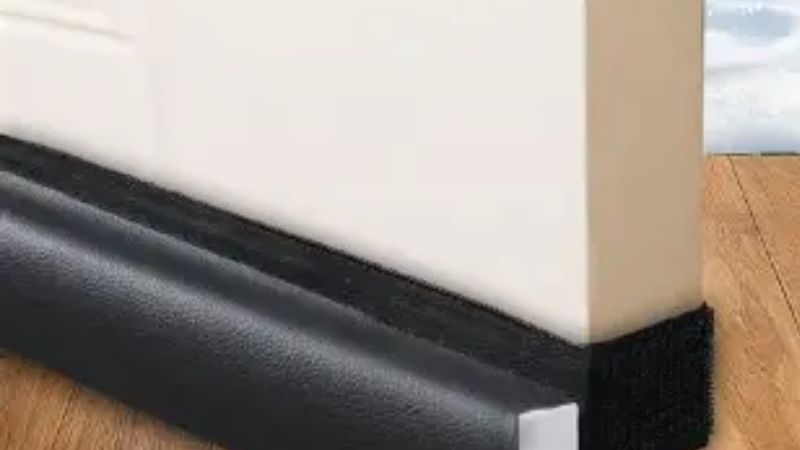
A removable draft stopper is often a sensible first experiment, especially for a renter or a door used infrequently. Place it against the bottom without fastening anything to the door or altering a fire-rated assembly. Check whether the cold stream diminishes while the door remains usable. The drawback is that a loose stopper must be repositioned after each opening, and it should never become a trip hazard on a frequently used route. If a stopper helps considerably, you have useful evidence that the bottom edge needs attention; you have not necessarily proved the door is otherwise properly sealed.
Best temporary renter-friendly fix
DOE renter tips suggest draft stoppers at the base of doors, with caulk/weatherstrip for other leaks.
When choosing an attached sweep, measure the door width and the bottom clearance rather than buying solely by the package photo. Check the manufacturer’s guidance for mounting height and the floor surface. A brush style may tolerate some irregularity, while other profiles need more uniform contact; performance varies with the actual assembly. Dry-fit the component and verify that it does not drag excessively across the floor or jam at the threshold. For a door that is part of a required fire or smoke barrier, use only appropriate compatible sealing components and seek qualified advice before altering it.
How to Interpret the Evidence
Door-bottom sealing closes a path for convective infiltration, rather than adding mass insulation to the entire door.
Threshold geometry and the sweep cooperate; a warped door or uneven floor can leave gaps even with a new sweep.
How to Do the Task Step by Step
Begin with observable conditions and proceed only through permitted user controls. A safety alarm, damaged part, live connection or inaccessible component ends the do-it-yourself path.
Step 1: find the bottom-gap location
Close the door and inspect daylight, worn sweep material, latch alignment and threshold clearance. Identify whether air passes below the leaf or around adjacent frame joints.
Do not block a required combustion or ventilation opening.
DOE performance standard specifies weatherstripping, sweep and threshold at garage-to-house doorway to stop air leakage and limit pollutant intrusion; match the building code.
The threshold is a separate part of the seal system. Inspect for missing inserts, loose fasteners, debris, or an obvious low spot without attempting to grind down the floor. If the existing threshold has an adjustment feature, follow its exact instructions and make small changes while checking that the door still closes and latches. Do not block a designed drainage path or create an obstacle for accessible entry. If a door rubs severely at one corner, the underlying alignment or hinge condition may need attention before any new bottom sweep can work well.
Step 2: choose a reversible or mounted seal
Use a fabric draft stopper for a temporary renter-friendly solution, or measure for a sweep or door shoe where mounting is permitted. Match seal width and available bottom clearance to the actual door.
Avoid hardware that interferes with egress or accessibility.
DOE door/window repair guidance describes threshold designs that work with door sweeps or compression seals; the two components need to fit together.
Test the finished door in ordinary use, not just when it is held closed by hand. Open and close it several times, lock and unlock it, and check the gap on both the hinge and latch sides. Look for new scraping marks and make sure children or pets can use the doorway safely. If drafts continue, the leak may be at the jamb, glazing, or wall perimeter instead of the sweep. A successful fix reduces noticeable movement of cold air while preserving secure closing, appropriate ventilation, and required access.
Step 3: fit and align the selected product
Clean the mounting surface; attach or adjust according to its exact hardware instructions. The seal should contact the floor or threshold as designed without binding.
Do not modify a rated fire door without approved hardware and instructions.
For an exterior door, check the weather seal on a calm day and again when wind pressure is present, if safe. A bottom sweep that appears to contact the threshold evenly may still leave a gap at one corner when the door is latched. If adjusting the latch or hinges is outside your experience, ask a qualified installer to evaluate alignment rather than piling more strips onto the bottom edge. The best fix remains easy to walk through and secure after every use.
Step 4: test real doorway operation
Close, latch and fully open the door several times and recheck any detectable draft. The door should sweep freely and latch securely.
If the threshold is rotten, misaligned or leaking water, repair that underlying defect.
Products That Help
Useful supplies for the specific checks above can include fitted door sweep and adjustable threshold seal. Confirm the exact size, device compatibility and applicable maintenance instructions first. Equipment and tools do not remove the need to stop for a safety fault.
Frequently Asked Questions
The answers below separate normal operation, owner-accessible checks and conditions that require manufacturer support or professional service.
Should a door sweep touch the floor?
It should make the intended contact with the threshold or floor without dragging so hard that the door cannot latch or swing freely. Test the actual clearance.
What is the difference between a sweep and threshold?
A sweep attaches near the moving door bottom; a threshold is the stationary sill it meets. Both must fit together without blocking normal operation.
Can I stop drafts without drilling my door?
Yes. A fabric draft stopper is a reversible option for renters and does not require drilling the door.
Why is cold air still getting in after adding a sweep?
The leak may be at a side or top edge, the threshold may be out of alignment, or the door may not latch correctly. Reinspect the whole perimeter.
Final Thoughts
Close the door and inspect daylight, worn sweep material, latch alignment and threshold clearance. If the threshold is rotten, misaligned or leaking water, repair that underlying defect.
