Key takeaways
- Best Overall: ErGear 48 x 24 Electric Standing Desk for sit-stand flexibility in a small footprint
- Best Value: Huuger 55-Inch Computer Desk for a wide open top and metal frame
- Best Budget: Furinno Go Green Desk, a 31.5-inch desk with side shelves
- Best Premium: Furologee 66-Inch L-Shaped Desk for dual monitors and storage
- Best Small Computer Desk: Furinno Go Green Desk for bedroom corners
- Best Folding Desk for Small Spaces: WOHOMO Folding Desk
- Best for Paperwork: Lufeiya 47-Inch Desk with File Drawers
The best home office desks depend on your room more than on any spec sheet. For a tight bedroom corner, the Furinno Go Green Desk and the WOHOMO Folding Desk are the easiest to live with. For a long workday, the ErGear 48 x 24 Electric Standing Desk is the runner-up pick because it lets you switch between sitting and standing. This guide covers seven desks sized for real rooms, from a 31.5-inch student desk to a 66-inch L-shaped workstation, plus four alternatives. Each pick lists only the specs shown in its listing; anything not stated is marked as not listed so you can check the maker’s sheet before buying.
Our top picks


As an Amazon Associate we earn from qualifying purchases at no extra cost to you.
Top Picks at a Glance
- Best Overall: ErGear 48 x 24 Electric Standing Desk for sit-stand flexibility in a small footprint
- Best Value: Huuger 55-Inch Computer Desk for a wide open top and metal frame
- Best Budget: Furinno Go Green Desk, a 31.5-inch desk with side shelves
- Best Premium: Furologee 66-Inch L-Shaped Desk for dual monitors and storage
- Best Small Computer Desk: Furinno Go Green Desk for bedroom corners
- Best Folding Desk for Small Spaces: WOHOMO Folding Desk
- Best for Paperwork: Lufeiya 47-Inch Desk with File Drawers
Comparison Table: Home Office Desks Side by Side
| Product | Best for | Key specs | Watch for | Price tier |
|---|---|---|---|---|
| Furinno Go Green Desk | a student, teen or remote worker who needs a compact first desk | 31.5 in wide, 2 side shelves, storage bins | Narrow surface; engineered wood | Budget |
| WOHOMO Folding Desk | renters, spare-room workers and anyone who needs the room back at the end of the day | 31.5 in wide, foldable, walnut finish | Folding hinges are the wear point | Budget to Mid-range |
| Furinno Econ Multipurpose Writing Desk | light laptop work, writing, homework and shared family use | Sonoma Oak/Ivory, simple frame, multipurpose | Dimensions not in the title | Budget |
| ErGear 48 x 24 Electric Standing Desk | people who sit for most of the day and want to alternate positions | 48 x 24 in, 4 memory presets, 176 lb capacity | Shallow 24 in depth | Mid-range |
| Lufeiya 47-Inch Desk with File Drawers | people who handle paper, bills, school records or client files | 47 in, file drawer cabinet, reversible | Cabinet takes leg space on one side | Mid-range |
| Furologee 66-Inch L-Shaped Desk | remote workers who need a big surface, a corner setup and storage | 66 in L-shape, power outlet, 2 drawers | Large box and long assembly | Mid-range |
| Huuger 55-Inch Computer Desk | a straightforward, wide desk for one or two monitors | 55 in, metal frame, large legroom | No storage | Budget to Mid-range |
1. Furinno Go Green Desk: Best Budget for a Bedroom Corner
- Width: 31.5 inches, as stated in the listing
- Two side shelves and storage bins built into the frame
- Finish listed as Dark Walnut
- Marketed for home office, study room, dorm and bedroom use
- Depth, height and weight limit: not listed in the title, check the maker’s sheet
Best for: a student, teen or remote worker who needs a compact first desk. Skip if: you run two monitors or a tower PC with a lot of cables
The Go Green is the desk to look at when floor space is the limiting factor. At 31.5 inches wide it fits beside a bed, under a window or in a hallway nook where a standard 48-inch desk would block a door. The side shelves are the point of the design: they move a lamp, a router, books or a printer off the work surface, which matters when the surface itself is small.
Think of it as a laptop desk rather than a full workstation. A 31.5-inch top fits a laptop, a mouse and a notebook, and a single monitor will fit if you accept that the keyboard sits close to the edge. Engineered-wood desks in this class are fine for light daily loads, but we would not stack heavy equipment on the shelves, and the maker’s sheet is the place to confirm shelf weight limits since the listing title does not state them.
Assembly is the usual flat-pack job. Plan on a floor area of roughly 4 by 6 feet while you build it, and keep the screw bags sorted. If you move often, tighten the fasteners again after the first month, because small desks with open shelves tend to loosen at the joints first.
Pros
- Very small footprint for a desk with storage
- Side shelves keep the work surface clear
- Easy to fit in a bedroom or dorm
- Lowest cost tier in this roundup
Cons
- Surface is too narrow for dual monitors
- Weight limits and depth are not listed in the title
2. WOHOMO Folding Desk: Best Folding Desk for Small Spaces
- Width: 31.5 inches, as stated in the listing
- Foldable design marketed as easy to assemble and fold
- Finish listed as Walnut
- Marketed for study, bedroom, dorm and apartment use
- Weight capacity and folded thickness: not listed in the title
Best for: renters, spare-room workers and anyone who needs the room back at the end of the day. Skip if: you want a permanent, heavy-duty workstation
A folding desk answers a very specific problem: you need a real surface for a few hours but cannot give up the floor permanently. The WOHOMO folds, so it can live against a wall or behind a door when you are not using it. For people working from a guest room, a living-room corner or a shared bedroom, that flexibility is worth more than extra width.
The trade-off is stiffness. Anything with hinges will flex more than a fixed frame, and the more often you fold and unfold it, the more the joints matter. Keep monitors light and avoid leaning heavily on the front edge. If you plan to leave it open all day, a fixed desk of the same width may feel steadier.
Before buying, measure the space where it will be stored folded and the path from there to where it opens. Check the maker’s sheet for the folded thickness and the load rating, since neither is given in the listing title.
Pros
- Frees the floor when closed
- Small footprint suits apartments
- Quick setup compared with a flat-pack desk
Cons
- Hinged desks flex more than fixed ones
- Folded size and capacity not listed in the title
3. Furinno Econ Multipurpose Writing Desk: Best Simple Writing Desk
- Finish listed as Sonoma Oak with Ivory
- Described as a multipurpose home office computer and writing desk
- Simple, no-drawer layout
- Dimensions and weight limit: not listed in the title, confirm on the maker’s page
- Second Furinno pick, chosen for a different layout than the Go Green
Best for: light laptop work, writing, homework and shared family use. Skip if: you need drawers, outlets or an adjustable height
The Econ is the plain option: a flat top, a light frame and a neutral two-tone finish that blends into most rooms. That plainness is a feature if you want a desk you can rearrange. It works as a writing desk in a bedroom, a homework station in a hallway or a secondary table in a craft room.
Because the listing does not state exact measurements, check the dimensions before you commit. Compare the width and depth with your chair, and remember that a seated adult needs about 30 inches of clear space behind the desk to push back and stand.
Light-colored finishes show scuffs and marker lines more easily than dark ones. If kids will be drawing on it, a cheap desk pad is cheaper than refinishing.
Pros
- Clean, neutral look
- Flexible placement
- Low cost
Cons
- No built-in storage
- Exact size must be confirmed before buying
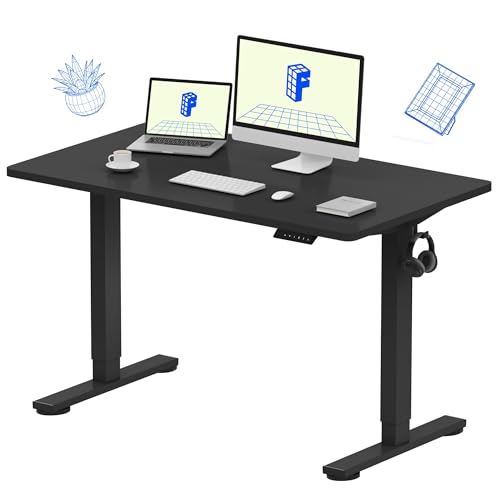
4. ErGear 48 x 24 Electric Standing Desk: Best Sit-Stand Desk on a Modest Budget
- Top: 48 by 24 inches
- Electric height adjustment with 4 memory presets
- Steel frame, 176 lbs capacity as listed
- Listed as easy assembly
- Black finish per the listing; other finishes not confirmed
Best for: people who sit for most of the day and want to alternate positions. Skip if: the room is under 6 feet wide or you never plan to stand
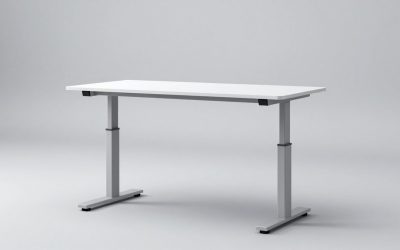
Sit-stand desks used to be a premium purchase. A 48 by 24 inch electric model like this puts the feature within reach for a home office. The four memory presets let two people share it, or let one person save a seated and a standing height and switch with one press.
A 24-inch depth is enough for a laptop or one monitor, but it gets tight with a monitor arm, a speaker and a desk mat. If you use a 27-inch monitor, sit about an arm’s length away and leave room in front of the keyboard for your forearms.
The 176-pound capacity covers a monitor, laptop and accessories with room to spare, but not a heavy workstation tower plus extras. Route cables through a tray or sleeve before you raise the desk the first time so nothing snags.
Pros
- Four memory presets
- Fits small rooms at 48 inches wide
- Steel frame with a stated 176 lb load
Cons
- 24-inch depth limits dual-monitor layouts
- Needs a nearby outlet and a bit of cable management
5. Lufeiya 47-Inch Desk with File Drawers: Best for Paperwork and Storage
- Width: 47 inches, as listed
- Includes a file drawer cabinet
- Reversible layout, so the cabinet can go on either side
- Marketed for small spaces, study and gaming
- Finish listed as Black
Best for: people who handle paper, bills, school records or client files. Skip if: you prefer an open leg area with no cabinet
A desk with a built-in filing cabinet changes how a spare room works. Instead of a separate cabinet and a stack of folders on the floor, the Lufeiya keeps active paperwork under your hand. The reversible layout means you can place the cabinet on the right or left to match where the wall, window or door sits.
At 47 inches the desk sits between the compact 31-inch options and the long L-shaped models. It is a good fit for a 9 by 10 foot room: you keep roughly three feet behind the chair and still have space for a bookshelf. The cabinet does reduce legroom on one side, so check the inner clearance on the maker’s page before you decide.
Fabric or lightweight file drawers are for light paper, not for full legal boxes. Use hanging folders sparingly and keep archive files elsewhere.
Pros
- Built-in file storage
- Reversible left or right
- Good size for small rooms
Cons
- Cabinet limits legroom on one side
- Drawer weight limits not listed in the title
6. Furologee 66-Inch L-Shaped Desk: Best L-Shaped Desk for Dual Monitors
- Overall length: 66 inches, as listed
- L-shaped and reversible
- Built-in power outlet and 2 drawers
- Includes dual monitor stand, fabric file cabinet and storage shelves per the listing
- Finish listed as Rustic Brown
Best for: remote workers who need a big surface, a corner setup and storage. Skip if: the room is smaller than about 10 by 10 feet
If you need space for two monitors, a laptop and paperwork at the same time, an L-shaped desk is the practical answer. The Furologee gives you a primary work surface and a return that can hold a printer, a second laptop or a reference area. The built-in power outlet reduces the cable run to the wall.
A 66-inch L-shape needs a corner. In a 10 by 12 foot room it can take over the whole back wall, so mark the footprint with painter’s tape before you order. Leave at least 36 inches in front of the chair for movement, and make sure the door and any closet doors can still open.
Expect a long assembly. Boxes for desks this size are heavy and awkward, so confirm that you can get them through doors and up stairs, and plan for two people.
Pros
- Large work area with a return
- Built-in outlet
- Reversible, with drawers and shelves
Cons
- Needs a big room
- Heavy boxes and a long assembly
7. Huuger 55-Inch Computer Desk: Best Value for a Full-Size Workstation
- Width: 55 inches, as listed
- Sturdy metal frame, per the listing
- Large legroom
- Finish listed as Rustic Brown
- Depth and weight limit: not listed in the title
Best for: a straightforward, wide desk for one or two monitors. Skip if: you need drawers or built-in outlets
The Huuger is the open, fixed-height alternative to the drawer and L-shaped models. A 55-inch top is wide enough for two side-by-side monitors on stands, or one monitor plus a writing area. The large legroom helps if you sit with your legs crossed or like to roll back from the desk.
Without drawers, you keep supplies elsewhere, which keeps the desk visually calm. A small rolling cart or a shelf beside it will cover the gaps. If you want a keyboard tray, check the underside clearance first.
Metal-frame desks like this usually feel steadier than all-particleboard ones because the legs handle the load. Even so, tighten the bolts after the first week of use.
Pros
- Wide enough for two monitors
- Open legroom
- Metal frame
Cons
- No storage
- Depth not listed in the title
Also Consider
FEZIBO 48 x 24 Electric Standing Desk
A close alternative to the ErGear: the listing shows a 48 by 24 inch top, electric height adjustment and 3 customizable memory presets in a maple finish. Choose it if you prefer a lighter wood look.
HUANUO 32 x 19 Small Electric Standing Desk
Very compact: the listing states a 176 lb capacity and a 28.3 to 46.5 inch height range with wheel-ready feet. It suits an apartment corner, though the 19-inch depth is tight for a full-size keyboard and monitor.
Pamray 32-Inch Small Computer Desk with 2 Drawers
A small desk with two drawers for bedroom and study use, listed as black. Useful when you need to hide pens and chargers but cannot spare a wide top.
TVU 65-Inch Farmhouse Computer Desk
A large farmhouse-style desk with drawers, a printer stand and power outlets according to the listing. It is a good fit if you want a traditional look and a lot of storage.
How We Chose
This guide is research-based. We did not personally use these desks. We compared the details in each listing, manufacturer-style specifications and general ergonomic guidance from sources such as the Occupational Safety and Health Administration (OSHA) and university ergonomics programs.
Every pick had to be a currently sold desk that can be found in our product store and named exactly. We kept the list to seven main picks with no more than two from any brand, and we mapped each one to a room size and work style rather than ranking by price.
Where a measurement or load limit is not shown in the listing title, we say so rather than guess. Always compare the final dimensions with your own room and your own chair before ordering.
Buying Guide
1. Measure the room first
Most desk regrets come from room fit. Measure the wall, then subtract the space for a chair to move. A seated person needs roughly 30 to 36 inches behind the desk to stand up and roll back without hitting a wall or bed. For a 10 by 10 foot room, a 47 to 55 inch desk is usually comfortable; an L-shaped desk of 60 inches or more makes the room feel full.
Use painter’s tape to mark the desk footprint on the floor. Leave 36 inches for walkways and make sure doors, closets and drawers can open fully.
2. Match the width to your screens
A laptop and a notebook need about 30 inches. One 24 to 27 inch monitor plus a laptop is comfortable at 47 inches. Two monitors on stands, or a monitor and a writing area, want 55 inches or more. Depth matters too: 24 inches is a practical minimum for a monitor, and 28 to 30 inches gives better viewing distance.
Aim to have the screen roughly an arm’s length away, with the top of the screen at or slightly below eye level.
3. Decide between fixed and adjustable height
A standard desk height is about 29 to 30 inches. That works for many adults, but taller or shorter users may need a keyboard tray, a footrest or an adjustable desk. A sit-stand desk lets you change position during the day. Look for a stated weight capacity of at least 150 pounds, a memory preset function and a stable steel frame.
If you do not plan to stand, a fixed desk with a good chair is usually the better value.
4. Think about storage and cables
Drawers and file cabinets keep papers out of sight but take leg space. Open shelves are lighter and cheaper but show clutter. Decide what you actually store: pens, chargers, files, a printer. Built-in outlets reduce cable runs, but they still connect to a wall outlet, so check how far the plug reaches.
A simple cable tray or sleeve under the desk makes sit-stand models safer to raise and lower.
5. Check material and assembly realities
Most desks in this price range are engineered wood or particleboard on a steel or wood frame. They are fine for a laptop, monitor and a few accessories, but sharp impacts and moisture damage the edges. Metal frames usually add stability.
Large desks arrive in heavy boxes. Confirm that you can move them through doors and stairs, and plan for two people on L-shaped and electric models.
Common Mistakes to Avoid
- Buying a desk by width only and ignoring depth. A 48 by 20 inch top feels very different from a 48 by 24 inch top.
- Ignoring the swing of doors, closets and drawers when you place the desk.
- Putting a monitor on the desk without a stand and then sitting too close.
- Skipping cable management on an electric desk, which can pinch cords when you raise it.
- Overloading shelves on a budget desk beyond the maker’s stated limit.
Frequently Asked Questions
What is the best desk size for a small home office?
For most small rooms, a desk 40 to 48 inches wide and 24 inches deep is the best balance. It fits one monitor and a laptop and leaves space for a chair to move.
Are standing desks worth it for a home office?
They can be if you will actually change position. A model with memory presets makes switching easy, and a 48 by 24 inch top fits many small rooms. If you never stand, a fixed desk costs less.
What is the best small computer desk for a bedroom?
A compact desk around 31 to 32 inches wide, such as the Furinno Go Green Desk, fits beside a bed or in a corner and still holds a laptop and a lamp.
Is a folding desk strong enough for daily work?
A folding desk suits light daily work such as a laptop and notebook. Keep loads light and check the maker’s stated capacity.
How much space do I need around a desk?
Plan on at least 30 to 36 inches behind the chair and 36 inches for walkways. Check that doors and drawers open fully.
Do I need a desk with drawers?
Only if you keep paper or supplies close at hand. A file drawer desk such as the Lufeiya suits paperwork; an open desk like the Huuger suits people who prefer clear legroom.
What is the best budget writing desk?
A simple desk such as the Furinno Econ Multipurpose Writing Desk is a low-cost option for writing and light laptop work. Confirm its dimensions on the maker’s page.
Which One Should You Buy?
If you want one desk that adapts, choose the ErGear 48 x 24 Electric Standing Desk. If you want the most workspace for the money, choose the Huuger 55-Inch Computer Desk. If you work in a bedroom corner, choose the Furinno Go Green Desk or the WOHOMO Folding Desk, depending on whether you need the floor back each night.
If paperwork is your problem, the Lufeiya 47-Inch Desk with File Drawers is the most practical. If you need a corner setup for two monitors and have the room, the Furologee 66-Inch L-Shaped Desk offers the most surface. Measure first, then buy.
Sources
- Manufacturer product pages and listing details for each desk
- OSHA computer workstation ergonomics guidance
- University ergonomics program desk and monitor setup guides
- Furniture assembly and sizing notes from the makers’ instruction sheets
Last updated: October 2026