Key takeaways
- Measure the room, leave walkway space, and mark the footprint on the floor with tape.
- Measure doorways, stairwells, hallways and elevator doors. Many modular and boxed sectionals are designed to pass through narrow openings, which is a major reason people choose them.
- Check seat depth and height against the people who will use it. Deep seats suit lounging; shallower ones suit older users who need to stand easily.
- Decide on chaise side. Some are reversible and some are fixed; the maker lists which.
- Consider a sectional with removable, washable covers if you have children or pets.
- Check what the maker says about return windows and fabric swatches. Ordering swatches is a low-cost way to judge color and feel.
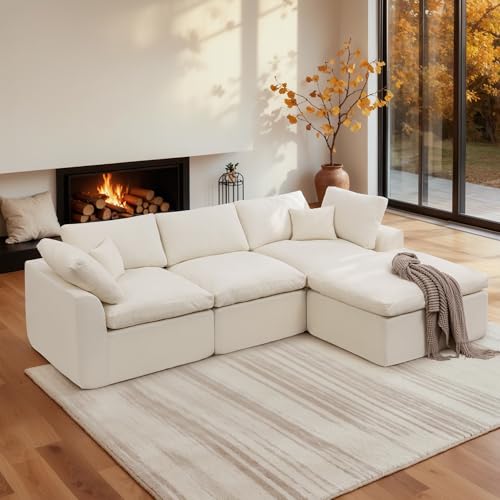
For most households, an affordable but well-built sectional means a hardwood or plywood frame, high-resilience foam cushions and a modular layout you can rearrange, and the best match depends on room size, whether you have pets or children, and how often you move. Direct-to-consumer modular brands suit renters and small spaces, a chaise sectional suits families who want lounging room, and a sofa-with-ottoman set suits shoppers who want the look without the footprint.
Price alone is a poor guide to quality. The parts that decide how long a sectional lasts are the frame, the suspension, the foam and the upholstery, and most makers list at least some of them. Compare those, not just the style.
Our top picks



As an Amazon Associate we earn from qualifying purchases at no extra cost to you.
Affordable Sectional Types at a Glance
| Type | Best for | Key points to look for | Limits |
|---|---|---|---|
| Modular sectional (Burrow, Article and Interior Define style) | Renters, small rooms, flexible layouts | Separate seat and arm pieces, delivered in boxes, reconfigurable | Seams between pieces can shift; check connector design |
| L-shaped chaise sectional | Family rooms with one open corner | Reversible or fixed chaise, one continuous seat | Fixed chaise limits rearranging |
| Sofa-plus-ottoman set | Small living rooms | Smaller footprint, ottoman for feet or extra seating | Less seating than a full L |
| U-shaped sectional | Large open-plan rooms | Seating for many, often with storage | Needs a big room and wide doors |
| Sleeper sectional | Guest rooms and small homes | Pull-out or fold-out bed built in | Heavier; mattress comfort varies |
Brand lineups and materials change from year to year, so read the maker’s current spec page for frame, foam and fabric details before ordering.
What Makes a Sectional Last
Frame
Kiln-dried hardwood or sturdy plywood is the usual mark of a durable frame. Particleboard and thin pine are common in the cheapest sofas and can crack or loosen at stress points. Makers who list the frame material are easier to compare. Corner blocks and screwed, doweled or glued joints help. If a maker does not say what the frame is, treat that as a gap in the information.
Suspension
Sinuous springs, webbing or eight-way hand-tied springs support the seat. Sinuous springs are common in value sectionals and perform well when spaced closely. Webbing is lighter and can sag sooner. Ask for the maker’s description and read return and warranty terms.
Cushion Foam
High-resilience foam holds shape better than low-density foam. Makers sometimes list foam density; higher numbers usually suggest firmer, longer-lasting cushions. Feather and down wraps feel softer but need regular fluffing. Foam with a fiber wrap is a common middle ground. Cushions that flatten in a year or two are the most frequent complaint in reviews of cheaper sofas.
Upholstery
Performance polyester, microfiber and tightly woven blends are common in budget lines and clean easily. Linen blends look relaxed but wrinkle and stain. Leather and faux leather suit some households and not others. Check the maker’s cleaning code and any stated rub-count rating. Households with pets often prefer tight weaves, since claws snag loops and loose weaves.
Fit, Size and Delivery Notes
- Measure the room, leave walkway space, and mark the footprint on the floor with tape.
- Measure doorways, stairwells, hallways and elevator doors. Many modular and boxed sectionals are designed to pass through narrow openings, which is a major reason people choose them.
- Check seat depth and height against the people who will use it. Deep seats suit lounging; shallower ones suit older users who need to stand easily.
- Decide on chaise side. Some are reversible and some are fixed; the maker lists which.
- Consider a sectional with removable, washable covers if you have children or pets.
- Check what the maker says about return windows and fabric swatches. Ordering swatches is a low-cost way to judge color and feel.
Budget, Mid-Range and Premium Tiers
Budget sectionals typically use engineered-wood or softwood frames, lower-density foam and basic polyester fabrics. They look good at first and may show wear sooner, which suits a temporary apartment or a first home. Mid-range sectionals, where many direct-to-consumer brands sit, often list plywood or hardwood frames, better foam and more durable fabrics, and they make a reasonable long-term compromise. Premium sectionals add hand-tied or eight-way springs, kiln-dried hardwood frames, down-blend cushions and wider fabric choices. For most families, mid-range gives the best balance of cost and longevity.
Pick This If You Are a Particular Kind of Buyer
| Pick this | If you |
|---|---|
| Modular sectional | rent, move often, or have narrow entries |
| Chaise sectional | want a simple family lounge with room to stretch out |
| Sofa and ottoman set | have a small living room |
| Performance-fabric sectional | have pets or young children |
| Sleeper sectional | host guests but lack a spare room |
| Hardwood-frame mid-range model | plan to keep it for many years |
Care Tips
Rotate and flip seat cushions every few weeks so they wear evenly. Vacuum crevices regularly, treat spills quickly and follow the cleaning code on the tag, which usually uses letters such as W, S, WS or X. Keep the sofa away from direct sun to reduce fading. Tighten any bolts or connectors on modular pieces every few months.
Reading Maker Claims and Reviews Carefully
Because most affordable sectionals are bought without sitting on them, the way you read product pages matters. Look for specific statements: frame material, foam type, fabric composition, cushion construction and warranty length. Vague phrases such as “premium materials” tell you little. Independent reviewers who cover sofas tend to focus on how cushions hold up after months of use, how pieces connect and how fabric handles stains. Weigh those long-term observations more heavily than first-impression comments about looks and delivery.
Warranty and Return Terms
Warranties on value sectionals often cover the frame for longer than the cushions and fabric. Read what counts as normal wear, since cushion sag and fabric pilling are common exclusions. Return windows vary between makers, and some charge fees for large-item pickup. Understand these terms before you order, and keep the original packaging until you are sure the sofa suits your room.
Odors and Setup
New foam can have a noticeable smell for a few days, which usually fades with ventilation. Many boxed sectionals need time to expand after unpacking, so leave them for the period the maker suggests before judging firmness. Allow room for the pieces to be assembled and plan for a second person to help lift them.
Layout Ideas for Common Rooms
- Narrow living room: a sofa with a short chaise on one end keeps a walkway open along the other wall.
- Open-plan space: a large L or U shape can divide the living area from the dining zone, with the back of the sectional serving as a boundary.
- Small apartment: a modular loveseat with an ottoman can be reconfigured as the room changes.
- Media room: choose deep seats and consider models with built-in consoles, headrests or power features, as listed by the maker. Follow the manual for any electrical components.
Color and Style Choices
Neutral tones such as gray, oatmeal and charcoal hide wear and suit changing decor, while bold colors date faster. Track arms and clean, tapered legs suit modern rooms, and rolled arms with skirted bases suit traditional ones. Raised legs let light and a robot vacuum pass underneath, which helps small rooms feel open.
Alternatives
- A standard sofa with an accent chair: cheaper and easier to move, and good for rooms where a sectional would crowd the space.
- A loveseat plus a chaise lounge: gives a sectional-like arrangement with separate pieces.
- Secondhand or floor-model furniture: can offer better frames for the same budget, though you give up warranty and fresh foam.
- Slipcovered sofas: a practical choice for households that need to wash covers often.
Frequently Asked Questions
What should I look for in a cheap sectional that will last?
Look for a hardwood or plywood frame, high-resilience foam, solid joinery and a durable fabric. Makers who publish those details are easier to trust. Be cautious if the product page lists none of them.
Are modular sectionals good quality?
Many are, particularly from direct-to-consumer brands that list their frame and foam. The trade-off is that pieces can drift apart without good connectors. Read the maker’s description of how the sections lock together.
Which fabric is best with pets?
Tightly woven performance fabrics and microfiber resist snags and clean easily. Loose weaves and some linens catch claws. Leather scratches but wipes clean, so it suits some owners and not others.
How much space do I need around a sectional?
Leave enough room to walk around it comfortably and to open doors. Tape the footprint on the floor before ordering and make sure doorways and hallways can fit the delivered pieces.
How long should an affordable sectional last?
It varies by frame, foam and use. Budget models may show cushion sag within a few years, while better-built mid-range models often last longer with regular rotation and care. Read the warranty terms to see what the maker covers.
Should I buy a sectional with a sleeper?
Only if you host guests often. Sleeper mechanisms add weight and cost, and the mattress comfort varies by model. Read how the maker describes the mattress and the mechanism before choosing.
More from Amazon
Programs that pair well with the guide above. Offers and eligibility are set by Amazon and may change.
A free business account with business pricing and bulk-buying tools for work, shop or home office.
Create a business accountFree shipping on eligible items, Prime Video and more. Eligible new members can start with a free trial.
Start a Prime free trialAudiobooks and podcasts to listen to on the go. Eligible new members can start with a free trial.
Try Audible freeAd-free music streaming. Eligible new subscribers can start with a free trial.
Try Music Unlimited freeAs an Amazon Associate we earn from qualifying purchases.