Key takeaways
- Display and indicator dimming: A model that can turn off its lights and beeps avoids a bright display in a dark room.
- Timer: Lets the fan switch off after you fall asleep.
- Remote or app control: Adjusting speed without getting out of bed is helpful.
- Oscillation control: Some people like moving air, others prefer a steady breeze; having the option is helpful.
- Natural or sleep mode: Varies the speed in a pattern that some people find less intrusive. Maker descriptions differ.
For most bedrooms, a tower fan with a low-speed night mode, or a DC-motor pedestal or desk fan with many speed steps, is the best way to get airflow without waking up; a small desk fan suits a nightstand, and an air-circulator style fan suits larger rooms. Quiet depends less on a headline number than on how the fan sounds at the speed you actually use.
Our top picks


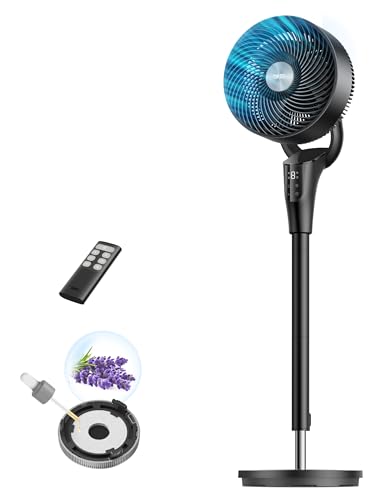
As an Amazon Associate we earn from qualifying purchases at no extra cost to you.
Quiet Bedroom Fans at a Glance
| Style | Example makers | Best for | Stated features to look for | Limits |
|---|---|---|---|---|
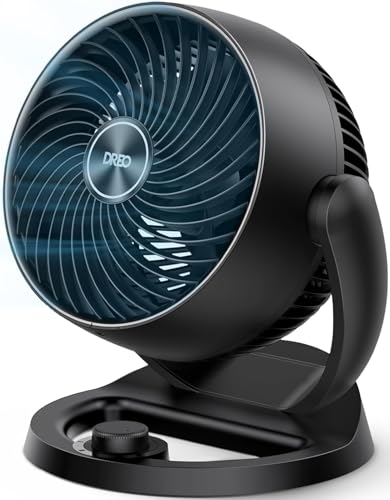
| DC-motor pedestal or tower | Dreo, Rowenta, Dyson | Sleeping, many speed steps, night mode | Brushless DC motor, many speeds, remote, timer, display dimming | Often costlier than AC-motor fans |
| Basic tower fan | Honeywell QuietSet, Lasko | Small rooms, tight footprint | Oscillation, remote, timer, preset modes | Airflow can feel less focused |
| Air circulator | Vornado | Moving air across a whole room | Vortex-style airflow, multiple speeds | Bigger body, can be louder at high speeds |
| Desk / nightstand fan | Lasko, Dreo, Honeywell | Personal airflow on a nightstand | Compact size, tilt head, low speeds | Limited reach |
| Bladeless or purifier fan | Dyson | Households that also want air purification | Smooth airflow, filter on certain models | Premium tier; filter replacement |
| Ceiling fan | Various | Permanent, whole-room airflow | DC motor, remote, reversible | Needs installation by a qualified electrician |
The makers above are examples of brands selling in each category. Specific models are updated frequently, so read the maker’s current specifications and reviewers’ notes before you choose.
What Makes a Fan Quiet
Motor type
Brushless DC motors are commonly marketed as quieter and more efficient than traditional AC motors, and they often allow more speed steps. Makers like Dreo and Rowenta emphasise this feature on their quiet models. That said, reviewers report that blade shape, housing resonance and vibration also affect how a fan sounds.
Number of speeds
A fan with a very low first speed can be nearly silent while still moving a little air. Look for models with many speed steps or a dedicated night or sleep mode. A fan that only offers three speeds may be too strong at the lowest setting.
Decibel ratings
Some makers publish decibel figures, though test methods and distances differ, so comparing numbers across brands is unreliable. Use them to compare models from the same maker, and read reviewer comments for the character of the sound, such as a hum, rattle or whoosh.
Build and stability
Wobbling bases, loose grilles and lightweight housing produce rattles. Heavier bases and tight tolerances usually help. Placing a fan on a stable surface and away from walls reduces buzzing from vibration.
Features That Help for Sleeping
- Display and indicator dimming: A model that can turn off its lights and beeps avoids a bright display in a dark room.
- Timer: Lets the fan switch off after you fall asleep.
- Remote or app control: Adjusting speed without getting out of bed is helpful.
- Oscillation control: Some people like moving air, others prefer a steady breeze; having the option is helpful.
- Natural or sleep mode: Varies the speed in a pattern that some people find less intrusive. Maker descriptions differ.
Size and Placement
Measure the space beside the bed. Tower fans fit narrow corners, while pedestal fans need a base footprint and clearance for the oscillating head. Air circulators can sit on the floor and point at a wall or ceiling to circulate air without a direct breeze, which some people prefer. Place the fan so it is stable, the cord does not trail across a walkway, and the intake and outlet are not blocked by curtains or bedding.
Pick X If You Need This
| Pick this | If you | Watch for |
|---|---|---|
| DC-motor tower or pedestal | Want near-silent low speeds and a remote | Higher cost; confirm night mode exists |
| Basic tower fan | Have a small bedroom and limited floor space | Sound at higher speeds |
| Air circulator | Want to move air through a larger room | Size and noise at max speed |
| Nightstand fan | Need gentle airflow close to the bed | Limited reach |
| Bladeless or purifier fan | Want a smooth airstream and a filter | Premium tier and filter upkeep |
| Ceiling fan | Want a permanent, quiet installation | Professional wiring |
Budget Tiers
Budget fans usually use AC motors and a few speed settings. They can work in a room with background noise but may hum on low. Mid-range fans often add DC motors, remotes and timers. Premium models, including those from Dyson and some Rowenta lines, aim at refined airflow, smart features and careful acoustic design. Decide which features you will use before paying for them, since a simple fan with a truly low first speed can beat a feature-packed one.
Safety and Care Notes
- Keep fingers, hair and objects away from grilles. Choose a model with a closely spaced grille if children are around.
- Plug directly into a wall outlet and avoid running the cord under rugs.
- Dust the blades and grille regularly following the maker’s instructions; unplug the fan first.
- Stop using any fan that smells of burning, sparks or has a damaged cord, and contact the maker or a qualified repairer.
- Fans move air but do not cool it, and they do not replace air conditioning in dangerously hot conditions. Follow public health guidance on heat and speak to a doctor if you have concerns about heat and health.
Alternatives Worth Considering
- White-noise machine plus a simple fan: If any fan noise bothers you, masking sound can help.
- Window fan: Moves outdoor air in or out and suits cool evenings.
- Portable or window air conditioner: A stronger option for hot climates, though many are louder than fans.
- Ceiling fan with DC motor: Quiet and out of the way, but requires a qualified electrician for wiring.
Practical Buying Notes
Before buying, decide where the fan will sit relative to the bed. A fan placed a few feet away at a low speed will feel very different from one on a nightstand, so a model with a sensible range of speeds is more useful than one with a high maximum output. Think about whether you want a direct breeze or air that moves gently around the room.
Read reviewer comments about the sound at low speed, about clicking or ticking from the oscillation mechanism, and about the remote’s range. Small irritations, such as a bright display or a loud beep when you change speeds, often matter more at night than raw airflow. Look at whether the maker lists the ability to turn off the display and the beeps.
Keep the fan clean. Dust on blades adds noise and reduces airflow, so a quick wipe each month, with the unit unplugged and as the manual describes, keeps it running smoothly. In seasons when you do not need it, store it covered so dust does not build up inside the housing.
Frequently Asked Questions
Which type of fan is quietest for sleeping?
DC-motor fans with many low speeds and a night mode are commonly described as the quietest, but results vary by model. Check reviewer comments about the sound at the speed you will use. A solid base and a clean fan also reduce noise.
Is a higher decibel number always louder?
Generally yes within the same measurement method, but makers test at different distances and speeds. Compare ratings from the same brand and rely on reviewers for the type of sound. A low hum can be easier to sleep through than an intermittent rattle.
Should I run a fan all night?
Many people do, though a timer can switch it off after you sleep. Some people find direct airflow on the face uncomfortable, so aim it away from you or use oscillation. If you have respiratory or other health concerns, ask your doctor.
Why does my fan buzz or rattle?
Loose parts, a dusty blade, an uneven surface or contact with a wall are common causes. Clean the blades, tighten screws if the manual allows and move the fan to a hard, flat surface. Persistent noise may mean a failing motor.
Is a tower fan or pedestal fan better for a bedroom?
Towers have a smaller footprint and often come with remotes, while pedestal fans usually move more air and can be adjusted in height. Choose based on floor space and how much airflow you want. Both can be quiet if built with a DC motor and a sturdy base.
How do I make a fan quieter?
Use a lower speed, clean the blades, place it on a solid surface and keep it away from walls and loose objects. A rubber mat under the base can reduce vibration. If the noise is mechanical, a replacement or repair may be the only answer.
More from Amazon
Programs that pair well with the guide above. Offers and eligibility are set by Amazon and may change.
A free business account with business pricing and bulk-buying tools for work, shop or home office.
Create a business accountFree shipping on eligible items, Prime Video and more. Eligible new members can start with a free trial.
Start a Prime free trialAudiobooks and podcasts to listen to on the go. Eligible new members can start with a free trial.
Try Audible freeAd-free music streaming. Eligible new subscribers can start with a free trial.
Try Music Unlimited freeAs an Amazon Associate we earn from qualifying purchases.