Key takeaways
- Items should be completely dry and clean before sealing. Moisture trapped in a sealed bag can lead to odor or mildew.
- Do not store down or feather bedding compressed for many months unless the maker of the bedding says it is fine. Many bedding makers advise fluffing items periodically.
- Natural-fiber items such as leather, fur, and delicate wool are usually better stored in breathable fabric bags. Check the garment label.
- Keep plastic bags away from small children. Plastic film is a suffocation hazard; follow the warning printed on the packaging.
- Do not seal in items that carry strong odors, scented sachets, or cedar oils directly against the film unless the maker approves it.
- Check bags every few months. If a bag has re-inflated, re-vacuum it or replace it.
Valve-style vacuum bags suit most closet shoppers who want to shrink bulky bedding and winter coats for a few months, roll-up “no pump” bags suit travelers and small spaces, and hard-sided or cube-style compression organizers suit people who need to access items often. The right pick depends on what you are storing, how long it will sit, and whether you own a vacuum cleaner with a hose attachment.
Our top picks


As an Amazon Associate we earn from qualifying purchases at no extra cost to you.
Vacuum Storage Bags at a Glance
| Type | Best for | How it seals | Limits |
|---|---|---|---|
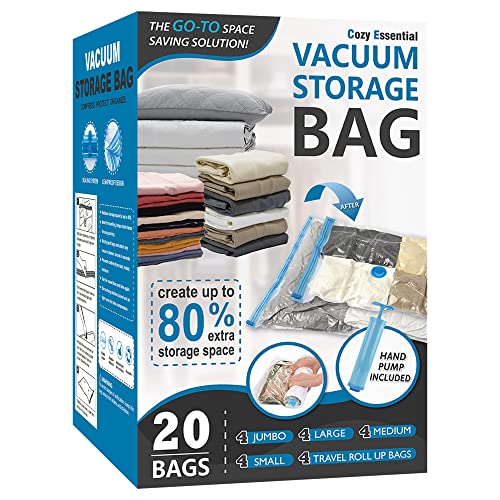
| Valve bags (jumbo, large, medium) | Comforters, duvets, pillows, seasonal clothes | Zip or slider closure plus a one-way valve; air removed with a household vacuum hose | Valves can leak over time; needs a vacuum |
| Roll-up compression bags | Travel, dorm rooms, small suitcases | Roll from the closed end to push air out through a one-way vent | Less compression than a vacuum; best for lighter loads |
| Hand-pump bags | Homes without a vacuum nearby, camping gear | Included pump attaches to the valve | Slower; more effort for big bags |
| Cube or hanging bags | Closet rods, wardrobes with limited floor space | Zip closure with valve; hanger hook on the top | Limited length for long garments |
| Rigid plastic bins with lids (not vacuum) | Fragile or delicate items | Snap-on lids | No space saving from compression |
What Actually Matters When Choosing
Material and thickness
Most vacuum bags are made from a nylon and polyethylene blend or from plastic film marketed as PE or PEVA. Makers commonly describe thicker film as more resistant to punctures, and reviewers who cover storage products generally agree that thicker material holds air out longer than thin film. Thin bags are fine for one trip or a short season, but zip-style closures on thin plastic are where most slow leaks start. If a maker lists the film thickness in microns or mils, that number is a useful way to compare bags in the same size class.
Closure design
Double-zip closures with a slider are the most common design. Some bags use a double-zip plus a pinch-down flap over the valve for an extra seal. Roll-up bags rely on a simple fold-and-clip closure, which is easier to close but does not hold a deep vacuum. The closure is the weak point of any bag, so a bag with a wide, well-molded zipper track is usually the safer choice.
Valve quality
The valve is the part that fails first. Look for a valve with a cap and a sealing gasket rather than a bare one-way flap. Makers of premium brands such as Ziploc and Spacebag describe their valves as double-seal or triple-seal designs, which is a useful feature when bags will sit for months.
Size and capacity
Makers typically label bags small, medium, large, jumbo, and sometimes extra-large or king. Dimensions vary by brand, so compare the stated flat size in inches against the item you are storing. A jumbo bag is typically listed for comforters and a medium for sweaters or pillows. Do not overfill; overstuffed bags are harder to seal and strain the zipper.
Picks by Need
Bulky bedding and winter coats
Jumbo valve bags from established storage brands are the standard choice. Reviewers who write about closet organization often point to Ziploc Space Bag and Spacebag as widely available names, and to store-brand sets from large home-goods brands as budget-friendly alternatives. If you have a vacuum cleaner with a standard hose, a plain valve bag will work, and the maker usually lists the vacuum adapter compatibility on the package.
Travel and small suitcases
Roll-up compression bags need no vacuum and no pump, which is why they appear in many packing guides. They compress softer items such as T-shirts and fleece, but they are not meant for long-term storage. Pair them with packing cubes if you want structure.
Closets with hanging space
Hanging vacuum bags let you store dresses and coats on a rod without folding. Garment makers typically note that suits, wool coats and delicate fabrics should not be compressed for long periods, because creases may set in. Follow the care label on the garment.
Under-bed and shallow spaces
Flat, low-profile bags are made for under-bed use. Check the stated height after compression and measure the gap beneath your bed frame.
Pick X If… Decision Table
| Pick this | If you |
|---|---|
| Jumbo valve bags | Need to shrink comforters and pillows and own a vacuum cleaner |
| Hand-pump bags | Do not have a vacuum nearby or are packing gear for camping |
| Roll-up bags | Travel often and want no equipment |
| Hanging bags | Have rod space and want to avoid folding |
| Cube-style organizers | Want easy access and stackable shelf storage |
| Budget multi-packs | Are storing once or twice a year and can replace bags occasionally |
| Premium thick-film bags | Store long term and want a longer-lasting seal |
Care and Safety Notes
- Items should be completely dry and clean before sealing. Moisture trapped in a sealed bag can lead to odor or mildew.
- Do not store down or feather bedding compressed for many months unless the maker of the bedding says it is fine. Many bedding makers advise fluffing items periodically.
- Natural-fiber items such as leather, fur, and delicate wool are usually better stored in breathable fabric bags. Check the garment label.
- Keep plastic bags away from small children. Plastic film is a suffocation hazard; follow the warning printed on the packaging.
- Do not seal in items that carry strong odors, scented sachets, or cedar oils directly against the film unless the maker approves it.
- Check bags every few months. If a bag has re-inflated, re-vacuum it or replace it.
Budget Tiers and Trade-offs
| Tier | What you get | Trade-off |
|---|---|---|
| Budget | Multi-packs of thin-film valve bags; mixed sizes | Zippers and valves may leak sooner; good for seasonal, short-term storage |
| Mid-range | Thicker film, better valves, sometimes an included hand pump | Slightly bulkier packaging; best balance for yearly use |
| Premium | Heavy-duty film, double-seal zippers, branded valves, often a longer warranty | Higher cost per bag; only needed for long-term storage |
Alternatives to Vacuum Bags
- Breathable fabric storage bags: Better for wool, knitwear and items that should not be compressed.
- Lidded storage bins: Give you structure and protection for fragile or shaped items such as hats and shoes.
- Under-bed rolling drawers: Provide easy access without compression.
- Cedar or lavender sachets: Sometimes used with fabric bags as a traditional moth deterrent; follow the product’s instructions.
Which Items Are Good Candidates?
Good candidates include comforters, synthetic pillows, throw blankets, sweaters, and children’s out-of-season clothes. Poor candidates include down jackets stored long term, leather items, anything damp, and fragile items that can crush. If you are unsure, check the care label or the bedding maker’s website for storage advice.
How to Use a Valve Bag Correctly
- Fold items flat and keep them dry.
- Leave a couple of inches below the zipper so it can close fully.
- Run a finger along the zipper to confirm it is sealed from end to end.
- Attach the vacuum hose to the valve (a nozzle adapter is usually included) and remove air until the bag is firm.
- Close the valve cap if the bag has one, and store the bag flat or on its side.
Where Vacuum Bags Fit in a Closet Plan
Vacuum bags work best as one layer of a larger closet system rather than a replacement for it. Start by sorting items into three groups: what you wear this season, what you will need next season, and what you rarely use. Only the second and third groups belong in compressed storage. Keeping everyday clothes in sealed bags defeats the purpose, since you will break the seal each time you need something.
Label each bag on the outside with a marker or a paper tag so you do not have to open several bags to find one blanket. Reviewers who write about closet organization commonly suggest storing bags flat on a shelf, under a bed, or on the floor of a closet rather than hanging them or stacking them high, because stacked bags can pull on the valve and zipper. Sharp furniture legs, zippers on stored garments and metal buttons can puncture film, so fold items with hardware inward or place a soft layer around them first.
Think about the location, too. Attics and garages swing in temperature and humidity, and makers of storage products usually advise a cool, dry, indoor spot. A bedroom closet or the space under a bed is generally more stable. If you live in a humid climate, a small moisture absorber placed near, but not inside, the bag can help, and you should still check stored items periodically for odor or dampness.
For travel, compressed bags are handy because they cut volume, but airlines weigh bags rather than measure how full they are. Compression does not reduce weight, so check the weight limit before you pack. Finally, keep the original packaging or take a photo of the size chart so reordering the same bag later is simple.
Frequently Asked Questions
How long can clothes stay in a vacuum storage bag?
Makers generally say bags are meant for seasonal storage, and many bedding and garment brands advise against compressing items for years. Check the care label, and open the bag every few months to let items air out.
Why does my vacuum bag keep losing its seal?
Slow leaks most often come from the valve or a partly closed zipper. Re-run the zipper, check that the valve cap is seated, and consider a thicker bag if a thin one repeatedly re-inflates.
Can I use a regular vacuum cleaner on a valve bag?
Yes, in most cases. Many bags include a nozzle adapter for standard household vacuum hoses; check the packaging for compatibility with your vacuum. Stop once the bag is firm to avoid straining the seams.
Are vacuum bags safe for down comforters and pillows?
Some bedding makers say short-term compression is fine, while others advise against it for long periods because it can affect loft. Follow your bedding maker’s instructions and fluff the item before use.
Do vacuum bags protect against moths and moisture?
A sealed bag keeps out dust and insects while it stays airtight, but it does not remove moisture already inside. Always store clean, dry items, and inspect the bag regularly.
What size bag should I buy for a queen comforter?
Makers typically list jumbo bags for queen and king comforters, but dimensions vary. Compare the flat size printed on the packaging with the folded size of your comforter, and choose the bag that leaves a small margin.
More from Amazon
Programs that pair well with the guide above. Offers and eligibility are set by Amazon and may change.
A free business account with business pricing and bulk-buying tools for work, shop or home office.
Create a business accountFree shipping on eligible items, Prime Video and more. Eligible new members can start with a free trial.
Start a Prime free trialAudiobooks and podcasts to listen to on the go. Eligible new members can start with a free trial.
Try Audible freeAd-free music streaming. Eligible new subscribers can start with a free trial.
Try Music Unlimited freeAs an Amazon Associate we earn from qualifying purchases.