Key takeaways
- Gradual volume or two-stage alarm: Avoids a sudden startle but still gets you up.
- Snooze behavior: Some clocks allow a fixed snooze, others let you set the length. Fewer snoozes can help you get up on time.
- Light intensity and ramp time: Check how long the sunrise lasts and how bright it gets.
- Battery backup: A coin cell or AA backup keeps the alarm working in a power cut on models that include it.
- Weekday and weekend schedules: Useful if your wake-up times change.
- Sound choice: Nature sounds, tones, radio or your own music, depending on the model.
- Display dimming: A bright display can disturb sleep; choose a clock with adjustable brightness.
For waking up more gently, a sunrise-style wake-up light such as a Philips SmartSleep model or the Hatch Restore suits most light-sleep and dark-morning households, a loud-alarm clock such as the Sonic Alert Sonic Bomb suits heavy sleepers, and a simple battery or plug-in clock with a gradual-volume alarm suits anyone on a tight budget. The best choice depends on how deeply you sleep, how dark your mornings are and whether you share a room with someone who wakes earlier or later.
Our top picks



As an Amazon Associate we earn from qualifying purchases at no extra cost to you.
At a Glance: Alarm Clocks for Waking Up
| Type | Example models | Best for | Key stated features | Limits |
|---|---|---|---|---|
| Sunrise wake-up light | Philips SmartSleep range | Dark winter mornings, gradual wake-ups | Maker lists simulated sunrise, a choice of wake-up sounds, and on some models radio and sunset mode | Light level may not suit very bright rooms; bulkier |
| Smart sound and light clock | Hatch Restore series | People who like routines and sound libraries | Maker lists sunrise light, sounds and app control | App-reliant; premium tier |
| Phone-free smart clock | Loftie Clock | Keeping the phone out of the bedroom | Maker lists a two-stage alarm and a sound library | Premium tier |
| Extra-loud alarm with vibration | Sonic Alert Sonic Bomb range | Heavy sleepers | Maker lists high volume and a bed shaker option on some models | Abrupt wake-up; may disturb partners |
| Twin-bell analog | Classic twin-bell clocks from several makers | Simple, battery-based alarm | Bell alarm, no screens | Harsh sound; limited features |
| Basic digital alarm | Compact digital clocks from established makers | Budget and travel use | Battery or plug-in, simple controls | Fewer comfort features |
How Different Alarms Affect the Way You Wake
An alarm that starts quiet and builds gradually tends to feel gentler than one that fires at full volume. Light-based alarms work on a different cue: brightness rises over a set period before the wake time. Makers of wake-up lights state this is intended to resemble a natural sunrise, though individual responses vary and reviewers report mixed results. None of these devices is a medical treatment. If you struggle with persistent sleepiness, unrefreshing sleep or trouble waking despite adequate time in bed, speak to a doctor.
Gradual volume versus a sudden alarm
Gradual alarms help if you wake easily but dislike being startled. Heavy sleepers may sleep through them, in which case a louder or vibrating model is a better fit. A common approach is a two-stage alarm: a soft sound first, then a louder one a few minutes later.
Light-based waking
Wake-up lights rise in brightness for a set period before the alarm. They help most in rooms with no natural light at wake time. If your bedroom already fills with daylight, the benefit is smaller.
Top Picks by Sleeper Type
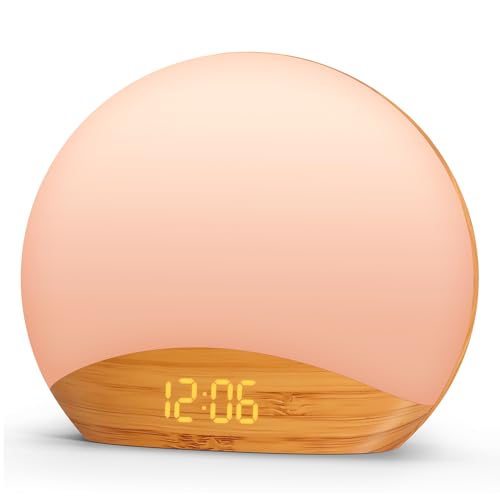
Philips SmartSleep wake-up lights: best for dark mornings
Philips lists multiple models, with simulated sunrise, a selection of alarm sounds and, on some versions, a radio and sunset function. Reviewers often describe them as dependable and straightforward to set up without an app. Check the maker’s dimensions and the maximum light output stated for your chosen model.
Hatch Restore series: best for routines and sound
The Hatch Restore combines a sunrise light, a sound library and a bedtime routine, controlled through an app. Reviewers commonly highlight the all-in-one design and the white noise options. The trade-offs reported are app dependence and the cost.
Loftie Clock: best for keeping the phone out of the room
The maker positions the Loftie as a phone-free alarm with a gentle first tone followed by a second stage. It suits people who check their phone late at night and want a separate device to wake them.
Sonic Alert Sonic Bomb: best for heavy sleepers
This range is aimed at people who sleep through ordinary alarms, and some versions pair a very loud alarm with a bed shaker, according to the maker. If you share a room, consider whether a partner will tolerate it. People with hearing loss should read the maker’s guidance on features designed for that purpose.
Twin-bell and basic digital clocks: best on a budget
These cover the basics: a time display and an alarm. They lack comfort features but are inexpensive and easy to replace. Choose one with a battery backup if your area has frequent power cuts.
Features That Matter for Waking Up
- Gradual volume or two-stage alarm: Avoids a sudden startle but still gets you up.
- Snooze behavior: Some clocks allow a fixed snooze, others let you set the length. Fewer snoozes can help you get up on time.
- Light intensity and ramp time: Check how long the sunrise lasts and how bright it gets.
- Battery backup: A coin cell or AA backup keeps the alarm working in a power cut on models that include it.
- Weekday and weekend schedules: Useful if your wake-up times change.
- Sound choice: Nature sounds, tones, radio or your own music, depending on the model.
- Display dimming: A bright display can disturb sleep; choose a clock with adjustable brightness.
Size and Compatibility Notes
Wake-up lights are larger than a basic clock, so measure your nightstand before buying. Smart clocks need a compatible phone and often a Wi-Fi network for setup, so check the maker’s stated requirements. Radio features differ by region, so confirm the bands supported. If you plan to use the clock in a child’s room, read the manual and keep cords out of reach.
Budget Tiers
| Tier | What to expect | Trade-offs |
|---|---|---|
| Budget | Basic digital and twin-bell clocks | Simple alarm only; harsh sound on some |
| Mid-range | Sunrise wake-up lights from established makers | Larger body; no smart features on some |
| Premium | Hatch, Loftie and similar smart clocks | App-based; higher cost |
Pick X If…
| Pick this | If you |
|---|---|
| Philips SmartSleep | wake in the dark and want gradual light without an app |
| Hatch Restore | want light, sounds and routines in one device |
| Loftie Clock | want to leave the phone outside the bedroom |
| Sonic Alert Sonic Bomb | sleep through normal alarms |
| Basic digital or twin-bell clock | only need a reliable alarm on a small budget |
Alternatives
- Phone alarm with a charger across the room: Costs nothing extra, but keeps the phone in the bedroom.
- Smart speaker alarms: Handy if you already own one; they lack light features.
- Wearable alarms: Vibrating wrist alarms wake you without sound, which helps if you share a bed. Check the maker’s battery and wear notes.
Care and Safety Notes
Use only the supplied adapter and keep cords away from beds and cribs. Do not cover wake-up lights or place them near water. If the clock gets hot, shows damage or behaves strangely, stop using it and follow the manual or contact the maker. Persistent trouble waking up or daytime sleepiness is a reason to see a doctor, not to buy a louder clock.
Matching an Alarm to Your Sleep Pattern
People wake in different ways, and the same clock can feel gentle to one person and useless to another. Light sleepers often do well with a soft sound or a sunrise light, because a loud alarm can feel jarring. Heavy sleepers generally need volume, vibration or a clock placed out of reach. Shift workers and people with irregular hours benefit from clocks with several alarm slots and easy schedule changes.
Winter and dark-room waking
In places where mornings are dark for several months, a wake-up light can make getting out of bed feel less abrupt. Makers describe the light as rising over a set number of minutes before the alarm. If your bedroom has blackout curtains, a lamp-style clock may make the greatest difference, while a room that gets early daylight may not need it.
Noise and shared rooms
If one person wakes earlier, choose a clock whose speaker is directional or whose alarm is quiet at first. Vibrating wearables and under-pillow shakers wake one sleeper without disturbing the other. Some smart clocks allow separate schedules, but this depends on the model.
Travel and backup
A compact battery clock makes a good travel or backup alarm. Keep one in a drawer in case a power cut or a phone update resets your main alarm. Setting a second alarm a few minutes after the first is a simple safeguard for important mornings.
Frequently Asked Questions
What type of alarm clock is best for waking up gently?
A sunrise-style wake-up light or a clock with a gradual or two-stage alarm is usually the gentlest. Models from Philips, Hatch and Loftie follow this approach. Results vary by person.
What is best for a heavy sleeper?
Look for an extra-loud alarm, ideally with a vibrating bed shaker, such as the Sonic Alert range. Placing the clock across the room so you must stand up to silence it also helps.
Do wake-up lights really work?
Makers state they simulate a sunrise to ease waking, and many users report liking them. Evidence on benefits varies, so treat them as a comfort feature rather than a treatment.
Should I keep my phone as my alarm?
It works, but it keeps a bright screen and notifications by the bed. A separate clock removes that temptation. If you keep the phone, enable do-not-disturb with the alarm still active.
Do I need a clock with battery backup?
If a power cut would make you miss something important, yes. Check the maker’s description to see whether the model keeps the alarm running without mains power.
Can I use these clocks in a shared bedroom?
Light-based and vibrating alarms disturb a partner less than a loud bell. Look for individual schedules or a wearable vibrating alarm if your wake times differ.
More from Amazon
Programs that pair well with the guide above. Offers and eligibility are set by Amazon and may change.
A free business account with business pricing and bulk-buying tools for work, shop or home office.
Create a business accountFree shipping on eligible items, Prime Video and more. Eligible new members can start with a free trial.
Start a Prime free trialAudiobooks and podcasts to listen to on the go. Eligible new members can start with a free trial.
Try Audible freeAd-free music streaming. Eligible new subscribers can start with a free trial.
Try Music Unlimited freeAs an Amazon Associate we earn from qualifying purchases.