Key takeaways
- How are knit panels stabilized?
- Can I choose layout, sashing and backing?
- What batting is used and how should I wash the quilt?
- What is the turnaround time?
- Can I get my leftover pieces back?
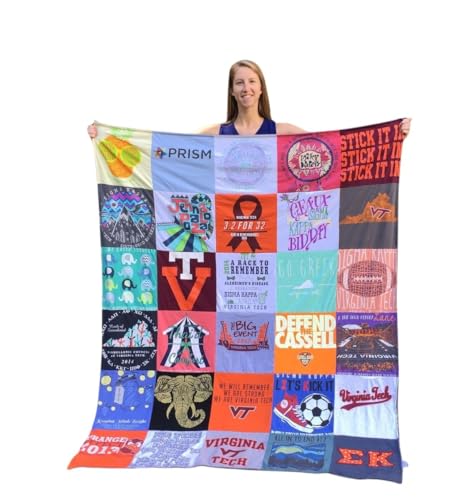
For a T-shirt quilt, the best approach is a quilt made with stabilized shirts, a cotton or cotton-blend backing and a mid-loft batting; custom makers suit people who want finished results from their own shirts, while a DIY pattern suits sewists who want control over layout and cost. Your choice depends on how many shirts you have, how much sewing skill you have and whether you want a quilt that is meant for daily use or for display.
Our top picks


As an Amazon Associate we earn from qualifying purchases at no extra cost to you.
At a Glance: T-Shirt Quilt Options
| Option | Best for | Key traits | Limits |
|---|---|---|---|
| Custom T-shirt quilt service | Keepsake quilts without sewing | Makers cut, stabilize and sew your shirts; many list size and border choices | Turnaround time varies; you mail irreplaceable shirts |
| DIY quilt with iron-on interfacing | Sewists who want control | Interfacing stabilizes stretchy knit; standard block layout | Needs sewing machine and patience |
| DIY with sashing and borders | Mixed sizes and logos | Strips of cotton frame uneven designs | More cutting and fabric |
| Pillow or blanket alternatives | Few shirts, small project | Fewer shirts needed | Smaller keepsake |
| Ready-made printed or kit quilts | Gifts without personal shirts | Pre-printed designs or kits | Not made from your own shirts |
What to Know Before You Start
T-shirts are knits, which stretch and curl. Quilting cotton does not. Most guides therefore advise fusing a lightweight woven or knit interfacing to the back of each cut shirt panel so it behaves like quilting cotton. Always follow the interfacing maker’s instructions on heat, steam and pressing time, and test on a scrap, since some prints are sensitive to heat.
Count your shirts first
Standard quilt sizes depend on the number of blocks. For example, a throw may use roughly a dozen blocks while a queen may need two dozen or more, depending on block size and sashing. Use the maker’s pattern or custom service chart to confirm.
Plan for front and back designs
Large front graphics usually become one block each. Small chest logos can be paired with sashing or filler blocks. Back designs can be featured in a second quilt panel if the maker offers it.
Custom Quilt Services
Many small makers and craft studios turn shirts into finished quilts. Their pages typically list block sizes, border options, backing fabric choices and size ranges. Before choosing, read the maker’s policy on how shirts are cut, whether they use stabilizer, what happens to leftover fabric and how long it takes. Since shirts are often irreplaceable, ask how they are packaged and tracked, and take photos before sending them.
Questions to ask a maker
- How are knit panels stabilized?
- Can I choose layout, sashing and backing?
- What batting is used and how should I wash the quilt?
- What is the turnaround time?
- Can I get my leftover pieces back?
DIY T-Shirt Quilts
If you sew, a T-shirt quilt can be a manageable project. You need a rotary cutter and mat, a clear ruler, fusible interfacing, quilting cotton for sashing and backing, batting, thread and a sewing machine with a walking foot, according to many beginner tutorials.
Steps in brief
- Cut the shirts, leaving seam allowance around each design.
- Fuse interfacing to the back of each panel.
- Trim all blocks to matching sizes.
- Join blocks with or without sashing.
- Layer the top, batting and backing.
- Quilt and bind the edges.
Materials by role
- Interfacing: Choose a brand that is made for knit stabilization and read its temperature notes.
- Sashing and border fabric: Quilting cotton from makers such as Kona, Moda or Robert Kaufman is a common pick.
- Batting: A low to mid loft cotton or cotton blend keeps the quilt from becoming too heavy.
- Backing: Flannel gives a soft feel; cotton keeps weight down.
Size and Layout Notes
| Quilt size | Approximate use | Planning note |
|---|---|---|
| Lap or throw | Sofa and display | Fewer shirts, quick to make |
| Twin | Child or dorm bed | Moderate shirt count |
| Full or queen | Adult bed | Large number of shirts or generous sashing |
| King | Large bed | May need filler blocks to reach size |
Budget Tiers
| Tier | Options | Trade-offs |
|---|---|---|
| Budget | DIY with basic interfacing and cotton blend backing | Time and skill required |
| Mid-range | Small custom makers or a pattern with good fabrics | Depends on turnaround and shirt count |
| Premium | Premium makers with heirloom materials and long-arm quilting | Highest cost, longer wait |
Pick X If…
| Pick this | If you |
|---|---|
| Custom maker | do not sew and want a finished keepsake |
| DIY quilt | enjoy sewing and want control and lower cost |
| Sashing layout | have mixed shirt sizes and logos |
| Pillows or a small throw | have only a handful of shirts |
| Ready-made printed quilt | want the look without your own shirts |
Alternatives
- Memory pillows: Use one or two shirts each.
- Wall hangings: Frame a few key designs.
- Tote bags or blankets: A simpler use for small stacks of shirts.
Care Notes
Follow the maker’s care label. As a general rule, wash on a gentle cycle in cool water, avoid bleach and dry on low or flat, because screen-printed graphics can crack or fade with heat. Store the quilt folded in a cool, dry place and avoid long periods of direct sunlight. If you plan to use a heating device near the quilt, follow that product’s manual.
Practical Tips for Better Results
Quality depends on preparation. Wash and dry shirts before cutting to remove shrinkage, and cut them while they are flat and wrinkle free. Keep the full design in the center of each block with at least a margin of fabric around it. Avoid cutting through thick graphics where possible, because these can be stiff and hard to sew.
Handling tricky shirt types
- Thick or cracked prints: Cover with a pressing cloth and use low heat; some makers suggest leaving very damaged prints out.
- Sports jerseys and mesh: These stretch more and may need heavier interfacing and a walking foot.
- Hoodies and sweatshirts: Thicker and bulkier; many makers handle them separately or use them as pillows.
- Tiny or youth sizes: Surround with sashing to match larger blocks.
Layout choices
Straight grid layouts are simplest and look tidy. Sashing adds contrast and room for variety. Some makers offer staggered or color-balanced layouts so that dark and light shirts are spread evenly. Take a photo of the layout before sewing so that you can restore the order if blocks get mixed up.
Quilting method
Because shirts are thick, simple straight-line quilting in the sashing, often called stitch in the ditch, keeps the designs clean. Ask a custom maker whether they tie or machine quilt the layers, as this affects how the finished quilt feels and washes.
Gifting and timing
If the quilt is a graduation or memorial gift, allow plenty of lead time. Custom makers often list production time in weeks and may be busier near holidays and graduation season.
Storage and display
A finished T-shirt quilt is heavy, so fold it loosely and store it in a breathable cotton bag rather than a sealed plastic bin. If you hang it on a wall, use a quilt sleeve and a rod to spread the weight, and keep it out of direct sunlight to limit fading of printed graphics.
Common Mistakes to Avoid
The most frequent problems are skipping interfacing, which leaves blocks wavy and puckered, and cutting blocks to uneven sizes, which makes seams hard to match. Another is pressing printed graphics with high heat, which can melt or smear plastisol ink. Some people also underestimate the weight of a full-size quilt made from many thick shirts. Test on a scrap, press with a cloth, measure twice and decide on a batting that keeps the finished piece comfortable for daily use. If you hire a maker, confirm the layout in writing before they start cutting, since shirts cannot be uncut.
Frequently Asked Questions
How many T-shirts do I need for a quilt?
It depends on block size and layout. A throw often uses around a dozen shirts, while larger beds need more or extra sashing. Check the maker’s or pattern’s chart.
Do T-shirts need interfacing?
Most guides advise it, because the knit stretches while quilting cotton does not. Interfacing helps seams stay flat and blocks keep shape. Follow the interfacing maker’s instructions.
Can I use shirts of different sizes?
Yes. Trim each design to a common block size and use sashing or filler fabric around smaller designs. Larger graphics may need to be shrunk or cropped.
Is it safe to mail my shirts to a quilt maker?
Many makers do this routinely, but shirts may be irreplaceable. Photograph them, use tracked shipping and read the maker’s policy on lost or damaged items.
How do I wash a T-shirt quilt?
Use a gentle cycle and cool water, avoid bleach and dry on low or flat. Check the maker’s care label first.
What batting works best?
Low to mid loft cotton or cotton-blend batting keeps the quilt drapey. Polyester is lighter and easier to wash. Choose based on the weight and warmth you want.
More from Amazon
Programs that pair well with the guide above. Offers and eligibility are set by Amazon and may change.
A free business account with business pricing and bulk-buying tools for work, shop or home office.
Create a business accountFree shipping on eligible items, Prime Video and more. Eligible new members can start with a free trial.
Start a Prime free trialAudiobooks and podcasts to listen to on the go. Eligible new members can start with a free trial.
Try Audible freeAd-free music streaming. Eligible new subscribers can start with a free trial.
Try Music Unlimited freeAs an Amazon Associate we earn from qualifying purchases.