Key takeaways
- Standard lengths from most makers include 63, 84, 95 and 108 inches, and extra-long 120 inch panels exist for tall ceilings.
- Confirm whether the stated width is per panel or per pair. This catches many buyers out.
- Rod pocket, back tab, grommet and pinch-pleat headings behave differently. Grommets slide easily, rod pockets look gathered but are harder to pull, and pinch pleats look tailored.
For most living rooms, lined or thermal-backed curtains in a medium-weight polyester or cotton blend are the safest all-round choice, sheer panels suit bright rooms where privacy matters less, and true blackout panels belong in media rooms or south-facing spaces with strong glare. The right pick depends on the light you want to control, the window width, and how much washing and ironing you are willing to do. This guide explains the main fabric types, how to size panels correctly, and which buyer each style fits, using category-level guidance rather than unconfirmed model names.
Our top picks


As an Amazon Associate we earn from qualifying purchases at no extra cost to you.
At a Glance: Curtain Types Compared
| Type | Best for | Typical stated features | Limits |
|---|---|---|---|
| Sheer voile or linen-look | Bright rooms, airy look, layering | Lightweight polyester or linen blend that diffuses daylight | Little privacy at night, no glare control alone |
| Light-filtering lined | General living rooms | Cotton, linen blend or polyester with a lining that softens light | Some daylight still passes through |
| Room darkening or blackout | TV rooms, south or west windows, shift workers | Triple-weave or coated back; makers often state a light-blocking percentage | Heavier, can feel stiff; light leaks at the edges |
| Thermal insulated | Drafty windows, cold climates | Thicker backing layer; makers describe reduced heat transfer | Bulky stack-back, longer drying time |
| Velvet or heavy drapery | Formal rooms, sound softening | Dense pile fabric, often lined | Collects dust, often dry-clean only |
Start With the Window, Not the Fabric
Measure before browsing. Mount the rod first, then measure from the rod to where you want the hem to land. A common design convention is to hang the rod several inches above the window frame, often closer to the ceiling, which makes the room feel taller. Hem options are floating just above the floor, touching the floor, or puddling. In a living room with children or pets, a hem that stops about half an inch above the floor is the easiest to keep clean.
For width, panels should be wider than the glass so they look full when closed. Makers usually describe fullness as roughly two times the rod length for a gathered look, and many designers treat one and a half times as a minimum for flatter panels. A pair of panels sold as 52 inches wide each may be enough for one narrow window, but a sliding door or a wide bay often needs several panels per side.
- Standard lengths from most makers include 63, 84, 95 and 108 inches, and extra-long 120 inch panels exist for tall ceilings.
- Confirm whether the stated width is per panel or per pair. This catches many buyers out.
- Rod pocket, back tab, grommet and pinch-pleat headings behave differently. Grommets slide easily, rod pockets look gathered but are harder to pull, and pinch pleats look tailored.
Fabric and Light Control
Sheer and Light-Filtering
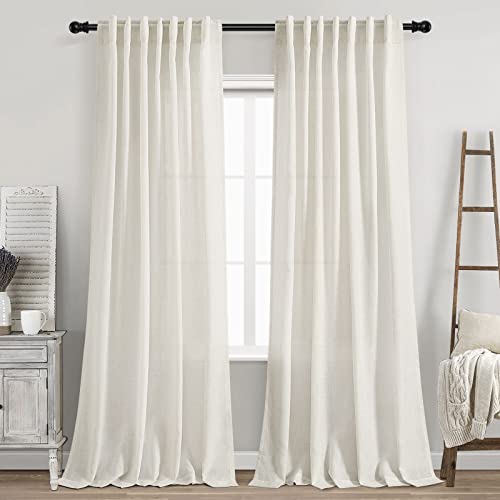
Sheer panels make a small room feel bigger because daylight keeps flowing through. They work well in front of a second heavier layer on a double rod. Linen-look polyester sheers wash easily and resist wrinkles better than real linen, while true linen drapes beautifully but creases and can shrink if the care label is ignored. Light-filtering lined panels are the middle ground: they give privacy during the day and a finished look, without turning the room dark.
Blackout and Room-Darkening
Blackout fabrics typically use a coated or triple-weave construction. Home-goods reviewers often point out that even a blackout panel leaks light around the edges unless the rod is wide and the curtain overlaps the frame. Look for panels that clearly overlap the window on both sides, or a wrap-around rod. If you want a truly dark room, a blackout panel on a wide rod does more than a premium fabric alone. Note that the term “room darkening” usually indicates a lighter effect than “blackout”.
Thermal Panels
Thermal curtains add a dense backing layer. Makers say this reduces heat transfer through the glass, and some energy-efficiency organisations note that closed insulating window coverings can help reduce drafts. Treat them as a modest comfort improvement rather than a replacement for weatherstripping or better glazing, and keep them away from heaters and radiators.
Velvet and Heavy Drapery
Velvet and heavy drapery absorb sound and look rich, so they suit rooms with hard floors and echo. They are heavy, so a sturdy rod and proper wall anchors are needed. Many are dry-clean only, so read the care label before buying if you want machine-washable convenience.
Color, Pattern and Room Style
Solid neutrals are the safest starting point because they pair with changing furniture and rugs. Colors close to the wall shade make the ceiling appear higher, while a contrasting color turns the curtain into a feature. Patterns look best on large, uninterrupted panels, and busy prints on small windows can feel cramped. If the sofa is patterned, choose a quieter curtain. In open-plan rooms, pick a fabric weight that suits both the living area and the dining space so the two zones feel connected.
Care, Safety and Child Concerns
- Cords: corded blinds are a known strangulation hazard for young children. Cord-free curtains are the safer default, but keep furniture and cribs away from any loop or tie-back.
- Fire: curtains should not hang over radiators, fireplaces or candles. Some makers state flame-retardant treatments, which are worth reading about if the room has a wood stove.
- Washing: follow the label. Many polyester panels are machine-washable on a cold gentle cycle and hang-dry to reduce wrinkles. Foam-backed blackout panels often specify low or no heat.
- Odor: new coated panels can smell of chemicals for a few days, so airing them before hanging helps.
- Certification: some makers cite OEKO-TEX or similar labels. If this matters to you, look for the specific label named on the product page.
- Hardware: heavy panels need a rated rod and wall anchors suited to your wall type. Follow the rod maker’s weight limits.
Decision Table: Pick X If …
| Pick this | If you want | Skip if |
|---|---|---|
| Light-filtering lined panels | One curtain that looks finished and suits most rooms | You need a dark room for daytime sleeping |
| Sheers on a double rod | Daylight by day, privacy and darkness by night with a second layer | You dislike managing two layers |
| Blackout or room-darkening | Glare control for a TV or a night-shift sleeper | You love a sunny room |
| Thermal panels | A cooler or warmer feel near drafty glass | Your window sits behind a radiator |
| Velvet drapery | A formal look and sound softening | You want easy machine care |
| Grommet heading | Panels you open and close often | You want a traditional gathered look |
Budget Tiers
Budget: basic polyester panels from large home-goods brands. They are fine for rentals and rooms you may restyle soon. Expect thinner fabric, less fullness and more wrinkles, so buy an extra pair to get a fuller look.
Mid-range: heavier weaves, linen blends, better stitching and a wider range of lengths. This tier suits most households and usually gives the best mix of fabric weight and easy care.
Premium: custom-sized or made-to-order drapery with interlining, quality hardware and professional hemming. Worth considering for large picture windows and rooms where the curtains are a focal point.
Styling Tips That Make Curtains Look Better
- Hang high and wide. Extending the rod beyond the frame lets the panels clear the glass when open.
- Choose one solid color or a quiet pattern for large windows, and save bold prints for a single small window.
- Steam rather than iron. A handheld steamer on a low setting removes creases without scorching synthetic fabrics.
- Match undertones. If walls are warm white, cool grey panels can look dingy.
- Pick rings or clips in a finish that suits the rod and other metals in the room.
Alternatives to Consider
- Roman shades or woven wood shades: choose cordless versions where children live; good for narrow windows where stacked curtains would crowd.
- Cellular shades: honeycomb construction that makers describe as insulating; tidy and well suited to energy-conscious rooms.
- Window film: static-cling privacy film for ground-floor windows where you want no fabric.
Frequently Asked Questions
How wide should living room curtains be?
Aim for the combined width of the panels to be at least one and a half times the width of the rod, and closer to two times for a fuller look. Measure the rod, not just the glass, because panels should cover the frame when closed.
How high should I hang the rod?
Many designers hang the rod a few inches above the frame, or even closer to the ceiling. Hanging higher makes the ceiling look taller, as long as the panels are long enough to reach the floor.
Are blackout curtains better than thermal curtains?
They solve different problems. Blackout panels block light, and thermal panels add a dense layer to reduce drafts. Many panels combine both, and the maker listing should state which properties are included.
Can I machine-wash living room curtains?
Many polyester and cotton-blend panels are machine-washable, but velvet, silk and some coated blackout panels are not. Always follow the care label, and wash on a gentle cycle to protect the lining.
What color curtains suit a small living room?
Light neutrals that match or sit close to the wall color tend to make the room feel larger, since the eye does not stop at the window. Vertical stripes can add the impression of height.
Are curtains safe around young children?
Curtains without cords are generally lower risk than corded blinds, but keep tie-backs and loops out of reach and avoid placing cribs or beds next to the window. Follow the rod maker’s instructions so the hardware is securely anchored.
More from Amazon
Programs that pair well with the guide above. Offers and eligibility are set by Amazon and may change.
A free business account with business pricing and bulk-buying tools for work, shop or home office.
Create a business accountFree shipping on eligible items, Prime Video and more. Eligible new members can start with a free trial.
Start a Prime free trialAudiobooks and podcasts to listen to on the go. Eligible new members can start with a free trial.
Try Audible freeAd-free music streaming. Eligible new subscribers can start with a free trial.
Try Music Unlimited freeAs an Amazon Associate we earn from qualifying purchases.