Key takeaways
- Pick one fuel strategy and stick with it: stabilized full tank, or an empty system. A half-empty tank of old fuel is the worst of both.
- Change the engine oil before storage so acidic used oil is not sitting in the crankcase all winter.
- Always disconnect the spark plug wire (and the battery cable on riders) before working near the blade.
- Riding mowers add battery care, tire pressure, and deck cleaning to the list.
- Robot mowers follow a different routine: clean, charge per the maker’s guidance, and store the unit and charger indoors.
How to winterize a lawn mower comes down to five jobs: deal with the fuel first (either run the tank dry or fill it and add fuel stabilizer), change the oil, pull and inspect the spark plug, clean the deck and sharpen the blade, then store the machine somewhere dry with the battery looked after. Those five jobs prevent the most common spring problems: a gummed-up carburetor, a dead battery, and rust. Gas push mowers, riding mowers, and robot mowers each need a slightly different routine, which is why this guide splits them out.
Our top picks



As an Amazon Associate we earn from qualifying purchases at no extra cost to you.
Key takeaways
- Pick one fuel strategy and stick with it: stabilized full tank, or an empty system. A half-empty tank of old fuel is the worst of both.
- Change the engine oil before storage so acidic used oil is not sitting in the crankcase all winter.
- Always disconnect the spark plug wire (and the battery cable on riders) before working near the blade.
- Riding mowers add battery care, tire pressure, and deck cleaning to the list.
- Robot mowers follow a different routine: clean, charge per the maker’s guidance, and store the unit and charger indoors.
How to Winterize a Lawn Mower: When to Start
Winterize after your last mow of the season, which for many areas falls in late fall once the grass stops growing. If you can still mow once every two or three weeks, keep the mower in service. If you plan to leave the machine unused for more than roughly 30 days, treat it as a storage case. Fuel can start to break down in a month or two, so storing a mower with untreated fuel through winter is where most carburetor problems begin.
| Task | Gas push mower | Riding mower | Robot mower |
|---|---|---|---|
| Fuel | Stabilize or drain | Stabilize or drain | Not applicable |
| Oil | Change | Change (and filter, if fitted) | Not applicable |
| Spark plug | Inspect or replace | Inspect or replace | Not applicable |
| Battery | Only if electric start | Charge, disconnect, or use a maintainer | Follow the maker’s storage charge guidance |
| Deck and blade | Clean, sharpen or replace | Clean, sharpen or replace | Clean, check blade wear |
| Storage place | Dry, covered | Dry, covered | Indoors if the manual recommends it |
| Typical time | 45 to 75 min | 1.5 to 2.5 hrs | 20 to 40 min |
Step 1: Handle the Fuel (Drain Lawn Mower Gas or Stabilize It)
You have two safe options. Which you choose depends on your mower and your habits.
Option A: Add fuel stabilizer and run the engine
- Fill the tank with fresh fuel (leaving a little room for expansion is fine).
- Add fuel stabilizer at the dose on the bottle, which is based on the volume of fuel.
- Start the engine and let it run for 5 to 10 minutes so the treated fuel reaches the carburetor.
- Shut off the engine and store it.
Many people choose this option because it keeps the seals from drying out and leaves nothing to drain in spring. A tank that is mostly full also leaves less air space where condensation can form.
Option B: Empty the fuel system
- Close the fuel valve if you have one and run the engine until it stops (the carburetor bowl will be nearly empty).
- If you want the tank empty, siphon the fuel into an approved gas container. Do not pour it into a drain or onto the ground.
- Pull the spark plug wire and try a start to burn off the last of the fuel in the carburetor.
Use this route only if you are sure you can drain fuel safely. Gasoline fumes are flammable, so work outdoors and away from pilot lights or sparks. Leftover stabilized fuel that is still fresh can go into your car, but check the stabilizer label for guidance on use.
Gear that helps
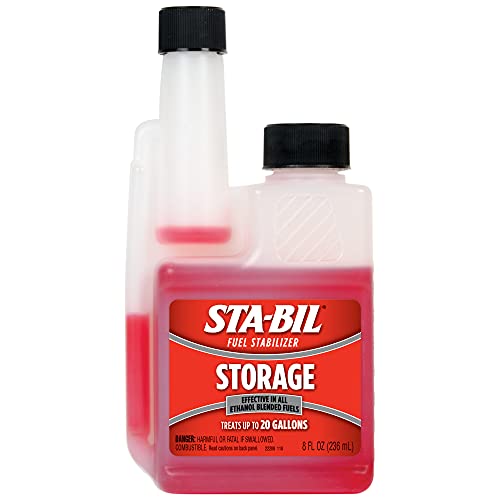
- STA-BIL Storage Fuel Stabilizer, 16 oz: treats 40 gallons per the label · keeps fuel fresh up to 24 months in storage · liquid additive
- Ethanol Shield Fuel Stabilizer, 24 oz (2 pack): ethanol-focused stabilizer · fuel additive · check dosing on the bottle
Step 2: Change the Oil Before Storage
Used oil carries contaminants that stay in contact with metal parts through the winter. Change it now instead of in spring.
- Run the engine for a few minutes to warm the oil, then shut it off and disconnect the spark plug wire.
- Drain the oil according to your manual (many push mowers drain through the side by tilting the mower with the air filter and carburetor facing up, or via a drain plug).
- Refill with the oil type and grade in your owner’s manual. A common choice for warm-season use is SAE 30 or 10W-30, but follow the manual for your engine.
- Check the level with the dipstick and wipe up any spills.
- Dispose of used oil at a recycling center or auto parts store that accepts it.
Step 3: Spark Plug and Cylinder Check
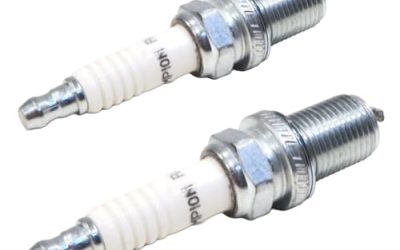
- Pull the spark plug and look at the electrode. A tan or light gray tip is normal. A black, oily, or heavily worn plug should be replaced.
- Many people add a teaspoon of clean engine oil into the cylinder through the spark plug hole and pull the starter slowly a couple of times to coat the cylinder wall. Check your manual before doing this, because not all makers recommend it.
- Reinstall the plug, but leave the wire disconnected until spring.
Step 4: Clean the Deck, Sharpen the Blade, and Check the Air Filter
- Clean the underside. Tilt the mower with the carburetor side up. Scrape off packed grass with a plastic scraper. Packed wet grass holds moisture and promotes rust.
- Blade. Remove it (spark plug wire off) and check it for nicks, bends, and wear. Sharpen it, or replace it if it is bent or worn thin. Leaving that job until spring means you start the season with a blunt blade.
- Air filter. Paper filters can be tapped clean or replaced. Foam filters can be washed and lightly oiled per the manual.
- Wipe down. A light coat of silicone spray or oil on bare metal helps slow rust.
How to Winterize a Riding Mower
Everything above applies to a riding mower, plus these additions:
- Battery. Charge it fully, then either disconnect the negative cable or connect a battery maintainer. A weak lead-acid battery left in the cold can freeze and fail. Store it off bare concrete if you remove it.
- Tires. Set the pressure to the sidewall or manual specification. Underinflated tires can develop flat spots during storage.
- Deck. Raise the deck, hose off the underside (with the mower parked on a slope or ramps), and let it dry completely before you store it.
- Grease points. Lubricate zerk fittings and pivot points according to the manual.
- Fuel. Fill the tank and add stabilizer; then run the engine for several minutes. Riders have bigger tanks, so stabilizing is easier than draining.
- Cover. Use a breathable cover. A plastic tarp can trap moisture.
Can You Store a Lawn Mower Outside?
It is possible, but it is not ideal. If a garage or shed is not available, here is a way to make outdoor storage less risky.
- Keep it off the ground on a pallet, ramps, or pavers so moisture does not wick into the wheels and deck.
- Use a breathable, mower-sized cover that is tied down. Avoid a sealed plastic wrap.
- Take the battery indoors (riders), and do not leave open fuel containers outside.
- Check the cover after storms and shake off standing water and snow.
A shed with even basic ventilation is better than a tarp. If the choice is “outside with a cover or inside a leaky shed,” compare how much moisture each place will have through January.
How to Winterize a Robot Lawn Mower
Robot mowers should be handled by the maker’s winter guidance, since models differ. Some makers recommend bringing the mower and charging station indoors; others allow parts of the system to stay out. Check the manual or the maker page for your model. A general routine looks like this:
- Clean the body, wheels, and blade area with a soft brush and a damp cloth (no pressure washer).
- Check the blades and replace worn ones.
- Charge the battery to the level the manual recommends for storage and store the mower indoors, away from freezing temperatures.
- Coil and keep the boundary wire in place, or follow the maker’s guidance if you need to lift it. If you use the app, note any firmware or setup tasks for spring.
- Store the charging station and power supply in a dry place if the manual says so.
Fuel Stabilizer for Lawn Mowers: Getting the Dose Right
Stabilizer is dosed by the volume of fuel, not by the size of the mower. A worked example: if the bottle says one ounce treats 2.5 gallons and your push mower tank holds about 1 quart, a single capful is far more than you need, so measure with the bottle’s cap marks or a small syringe. For a rider with a 2 to 3 gallon tank, the dose is closer to a full ounce. Add the stabilizer to the tank before the fuel (or stir by tilting the mower gently) so it mixes, then run the engine for 5 to 10 minutes. Always follow the dose printed on your bottle, since concentrations differ between brands.
Also note how much fresh fuel you add. Stabilizer does not rescue fuel that is already old, so if the tank has sat since summer, drain it and start with new gas.
Spring Start-Up Checklist
- Reconnect the spark plug wire and battery.
- Check oil level and fuel.
- Inspect the blade bolt for tightness.
- Check the tires and the deck height.
- Start the engine, let it warm up, and make a few passes in an easy area to check for vibration or smoke.
Frequently Asked Questions
Should I drain the gas from my lawn mower for winter?
Either drain it or stabilize it. Leaving untreated fuel in the tank is the thing to avoid. A tank with stabilizer that you ran through the carburetor is fine for the season, according to the stabilizer label.
How long can gas sit in a lawn mower?
Untreated gasoline can start to degrade in about a month or two, particularly fuels containing ethanol. Stabilizer extends that window, and your manual or the stabilizer label will give the maker’s guidance.
Do I need to change the oil before winter storage?
It is a good habit. Changing the oil before storage removes used oil with combustion byproducts. Many owners do it at season’s end rather than the start.
Is it okay to store a lawn mower outside?
You can, with a breathable cover, off the ground, with the battery removed. A dry shed or garage is better, because humidity and temperature swings promote rust and damage plastic.
How do I winterize a riding mower battery?
Charge it fully, then disconnect the negative cable or use a maintainer designed for your battery type. Store a removed battery in a cool, dry place and keep it charged.
How do I winterize a robot lawn mower?
Clean the mower, charge it as the manual advises, and store it indoors. Keep the charging station and power supply dry. Check the maker page for your exact model.
More from Amazon
Programs that pair well with the guide above. Offers and eligibility are set by Amazon and may change.
A free business account with business pricing and bulk-buying tools for work, shop or home office.
Create a business accountFree shipping on eligible items, Prime Video and more. Eligible new members can start with a free trial.
Start a Prime free trialAudiobooks and podcasts to listen to on the go. Eligible new members can start with a free trial.
Try Audible freeAd-free music streaming. Eligible new subscribers can start with a free trial.
Try Music Unlimited freeAs an Amazon Associate we earn from qualifying purchases.