Key takeaways
- Check fuel first: fuel that is old, watery or empty causes most spring no-starts.
- Next check the spark plug and the air filter, then the carburetor.
- Riding mowers add a battery, solenoid and safety interlocks to the list: seat, brake and blade switches must all be in the right position.
- If the engine starts and dies, suspect a clogged fuel cap vent, filter or carburetor jet.
- Do not spray starting fluid into an engine that cranks without firing unless your manual allows it; it can damage some engines.
If your lawn mower won’t start, the cause is almost always one of four things: stale or missing fuel, a dirty or fouled spark plug, a clogged air filter or carburetor, or a safety switch that is not being satisfied. Work through them in that order, because fuel and spark account for most no-start problems and cost little to check.
This checklist is organized by symptom: the engine does nothing, turns over but will not fire, starts and then dies, or only starts with the choke. It works for push mowers, self-propelled mowers and most riding mowers, with notes where the two differ. Always follow your owner’s manual for the specifics of your engine, and disconnect the spark plug wire before you work near the blade or under the deck.
Our top picks


As an Amazon Associate we earn from qualifying purchases at no extra cost to you.
Key takeaways
- Check fuel first: fuel that is old, watery or empty causes most spring no-starts.
- Next check the spark plug and the air filter, then the carburetor.
- Riding mowers add a battery, solenoid and safety interlocks to the list: seat, brake and blade switches must all be in the right position.
- If the engine starts and dies, suspect a clogged fuel cap vent, filter or carburetor jet.
- Do not spray starting fluid into an engine that cranks without firing unless your manual allows it; it can damage some engines.
Lawn Mower Won’t Start: Troubleshooting Checklist by Symptom
| What the mower does | Most likely cause | Check first |
|---|---|---|
| Nothing at all (no pull resistance, no click) | Safety switch, bail bar, kill switch or dead battery (riding) | Hold the bail bar down, check the key and kill switch, check the battery |
| Rope pulls but engine will not fire | No fuel, no spark, or a flooded engine | Fuel level and age, spark plug, choke and primer |
| Rope will not pull or is very hard | Blade stuck, clogged deck, seized or hydro-locked engine | Tip the mower safely, clear the deck, check oil level and flywheel brake |
| Starts, then dies in a few seconds | Fuel starvation: gas cap vent, fuel filter or carburetor jet | Loosen the gas cap, check the filter, clean the carburetor |
| Starts only with the choke on | Clogged carburetor jet or air leak | Clean the carburetor, check the air filter and fuel line |
| Starts but runs rough or smokes | Dirty air filter, stale fuel, too much oil | Replace the filter, drain old fuel, check the oil level |
| Cranks slowly or clicks (riding mower) | Weak battery, loose terminals, bad solenoid | Clean the terminals, charge the battery |
Step 1: Check the Basics Before You Touch Anything
- Make sure there is fuel in the tank and the fuel shutoff valve (if fitted) is open.
- Check the engine oil level. Many mowers have a low-oil sensor that stops the engine from starting when the oil is too low or the mower is tilted.
- Hold the bail bar or safety handle all the way down. If it is not engaged, the engine will not run.
- Confirm that the kill switch or key is in the run position.
- On a riding mower, sit in the seat, press the brake, disengage the blades and set the throttle as the manual describes.
- Prime the engine and set the choke according to the manual for a cold start.
Step 2: Fuel Problems and Old Gas
Gasoline goes stale. After a month or two the lighter parts evaporate and gum and varnish form, and ethanol blends can absorb water. Old fuel is the most common reason a mower will not start in spring. Signs include a sour smell, a dark color, or a layer of water at the bottom of the tank.
- Drain the old fuel into an approved container and dispose of it at a hazardous waste or recycling center that accepts fuel.
- Refill with fresh fuel of the grade named in the manual. Ethanol-free fuel is a good choice for seasonal engines if you can get it.
- Add fuel stabilizer to any fuel you will not use within a month.
- Check the fuel line for cracks or kinks, and replace the inline filter if there is one.
- Make sure the vent in the gas cap is clear. A blocked vent creates a vacuum that stops fuel from flowing, so the engine starves and dies. Try loosening the cap slightly: if the engine then runs, replace the cap.
Step 3: Spark Plug
A fouled or worn spark plug is the next most common cause. It is also one of the easiest parts to check and replace.
- Pull off the spark plug wire boot and clean around the plug so dirt does not fall into the cylinder.
- Remove the plug with a spark plug socket (usually 5/8 inch or 13/16 inch).
- Inspect it. A dry, light brown tip is normal. Black and sooty means rich running or old oil; wet with fuel means flooding; cracked porcelain or a burnt electrode means it should be replaced.
- Check the gap against the figure in the manual, and replace the plug if there is any doubt. Plugs are inexpensive.
- To check for spark, reconnect the wire to the plug, hold the plug’s metal body against bare engine metal away from the plug hole, and pull the starter while watching the gap. A bright blue spark means the ignition is working. If you are not comfortable doing this, use an inline spark checker.
Keep your hands and clothing away from the plug and the plug wire while you pull the starter, and do not do this near spilled fuel.
Step 4: Air Filter
A clogged air filter chokes the engine. Remove the cover and take out the filter. A paper filter that is dark with dirt should be replaced; a foam filter can be washed in warm soapy water, dried and lightly oiled according to the manual. Run the mower briefly without a filter only if the manual allows it; otherwise replace the filter before starting.
Step 5: The Engine Is Flooded
If you pulled the rope many times with the choke on and the plug is wet with fuel, the engine may be flooded. Turn the choke off, set the throttle to fast, and pull the rope several times to clear the extra fuel. If it still does not start, remove the spark plug, let it dry, pull the rope a few times with the plug out to clear the cylinder, then reinstall it and try again.
Step 6: Carburetor and Fuel Starvation
If the engine starts and dies, or only runs on the choke, a clogged carburetor jet is likely, especially after fuel sat in the tank for months. A basic clean can fix it.
- Spray carburetor cleaner into the air intake and try starting; a brief run suggests a fuel supply issue.
- Remove the carburetor bowl (if there is one), empty it and clean the bowl and the main jet. Use a thin wire or the cleaner’s straw to clear the jet, and replace the bowl gasket if it is damaged.
- Replace the carburetor if cleaning does not help; on small engines the replacement part is often a low cost tier.
Vapor Lock on a Lawn Mower
Vapor lock happens when fuel turns to vapor in the line or carburetor before it reaches the engine, so the engine hesitates, stalls or refuses to restart when hot. It is less common on mowers than on cars, but it can occur on very hot days or when the fuel line passes close to the muffler. If a mower starts fine cold and will not restart after a short break, let it cool for 15 to 30 minutes, check that the fuel line is routed away from heat, use fresh fuel, and make sure the gas cap vent is clear. If it keeps happening, have the fuel system checked.
Lawn Mower Starts Then Dies
When a mower runs for a few seconds and cuts out, the cause is almost always fuel not reaching the carburetor. Work through this list in order.
- Loosen the fuel cap a turn. If it then runs, the cap vent is blocked.
- Check for a clogged fuel filter or kinked line.
- Clean the carburetor jet and bowl.
- Check the choke and throttle linkage. A choke that stays closed will flood the engine; one that is not closed enough will starve it when cold.
- Check the oil level, since a low-oil sensor can shut down some engines.
Riding Mower Won’t Start: Extra Checks
| Check | What to look for |
|---|---|
| Battery | Clean, tight terminals; recharge or replace a weak battery |
| Seat switch | Sit fully in the seat; a failed switch can prevent starting |
| Brake and clutch pedal | Press the brake fully; some models require the clutch pedal pressed too |
| Blade engagement (PTO) | Make sure it is off |
| Solenoid or starter | A single click with no crank points to a weak battery or a bad solenoid |
| Fuse | Look for a blown fuse in the wiring harness |
| Fuel filter | Replace if it looks dark or restricted |
When the Rope Is Hard to Pull
A rope that will not pull, or pulls with strong resistance, can mean the blade is jammed by a clump of grass or debris, the flywheel brake is engaged, or the engine has liquid in the cylinder. Disconnect the spark plug wire, tip the mower the correct way (air filter up) and clear the deck. If the rope is still stuck, remove the spark plug and pull the rope: if fuel or oil shoots out, the cylinder had too much liquid. Let it drain, then reinstall the plug. If the rope still does not turn, the engine may be seized and needs service.
Prevent Future No-Start Problems
- Use fresh fuel and add stabilizer if the mower will sit for more than a month.
- At the end of the season, either run the carburetor dry or fill the tank with stabilized fuel and run it for a few minutes.
- Change the oil, replace the spark plug and air filter once per season.
- Keep the deck clean and check the blade for damage.
- Store the mower in a dry place with the fuel valve closed if it has one.
Gear That Helps
- STA-BIL Fast Fix Small Engine Treatment (8 oz): a treatment aimed at rough-running small engines with stale fuel.
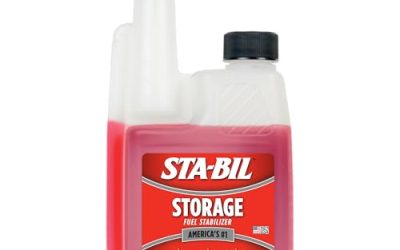
- STA-BIL Storage Fuel Stabilizer (16 oz): for stabilizing fuel before storage.
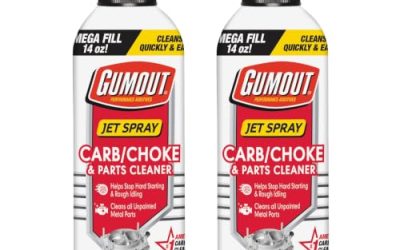
- Gumout Carb and Choke Jet Spray: a spray for cleaning gum and varnish from the carburetor and choke.
- WORKPRO 5/8-inch Swivel Magnetic Spark Plug Socket: a thin-wall socket that grips the plug for removal and installation.
FAQ
Why won’t my lawn mower start after sitting all winter?
Old fuel is the usual reason. Drain it, refill with fresh fuel, and check the spark plug and air filter before trying again.
Why does my lawn mower turn over but not start?
The engine is cranking but missing fuel, spark or both. Check the fuel level and freshness, the spark plug, the choke and the air filter, and look for flooding.
Why does my lawn mower start and then die?
Usually fuel is not reaching the engine: a blocked gas cap vent, clogged filter or dirty carburetor jet. Loosen the fuel cap and clean the carburetor.
How long does gas last in a lawn mower?
Often about 30 days before it begins to degrade, longer with stabilizer or ethanol-free fuel. Do not rely on fuel that has sat for several months.
Can a bad spark plug stop a mower from starting?
Yes. A fouled, cracked or worn plug can prevent the engine from firing. It is an inexpensive part to replace.
What is vapor lock on a lawn mower?
It is when heat turns fuel to vapor in the line before it reaches the carburetor, causing a stall or no-restart when the engine is hot. Let it cool and check the fuel line routing.
Should I use starting fluid on my mower?
Use it only if your manual allows it. It can damage some engines and is not a fix for the underlying cause.
Last updated: November 2026
More from Amazon
Programs that pair well with the guide above. Offers and eligibility are set by Amazon and may change.
A free business account with business pricing and bulk-buying tools for work, shop or home office.
Create a business accountFree shipping on eligible items, Prime Video and more. Eligible new members can start with a free trial.
Start a Prime free trialAudiobooks and podcasts to listen to on the go. Eligible new members can start with a free trial.
Try Audible freeAd-free music streaming. Eligible new subscribers can start with a free trial.
Try Music Unlimited freeAs an Amazon Associate we earn from qualifying purchases.