Key takeaways
- A carbon monoxide detector is one of the few home safety devices where a cap of under 200 dollars is almost irrelevant.
A carbon monoxide detector is one of the few home safety devices where a cap of under 200 dollars is almost irrelevant, because the units that do the job well sit far below it. The real decisions are how the alarm gets power, how long the sensor lasts, and whether you want a display that shows a live parts-per-million reading. This guide ranks ten detectors on those practical points rather than on price alone.
It is written for homeowners and renters who need an alarm for a hallway outside bedrooms, a basement near a furnace, a garage-adjacent room, or a camper and cabin where outlets are scarce. Some picks plug into the wall with battery backup, some run only on AA cells, and one is a rechargeable portable meter. Pick the power style first, then use the notes below to narrow the field for 2026.
Quick Picks
Our top picks






As an Amazon Associate we earn from qualifying purchases at no extra cost to you.
| Product | Best for | Key spec from the title |
|---|---|---|
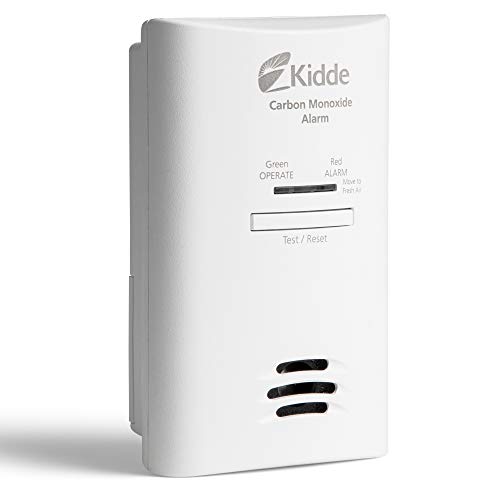
| Kidde plug-in COP | Hallways with a spare outlet | Plug-in with AA backup, rotating plug, surge immunity |
| Kidde battery COB | Travel and outlet-free rooms | AA powered, 85 dB alarm, 5th Edition |
| Kidde AA classic | Simple, no-frills coverage | Test-reset button, low battery indicator |
| TOPTES CT-580 | Portable spot checks | Rechargeable, 0-1000PPM, TFT color display |
| Kidde plug-in 3rd Edition | Plug-in coverage on a budget | AA battery backup, 85 dB alarm |
| Siterlink plug-in | Long battery replacement cycles | 10 year replaceable battery |
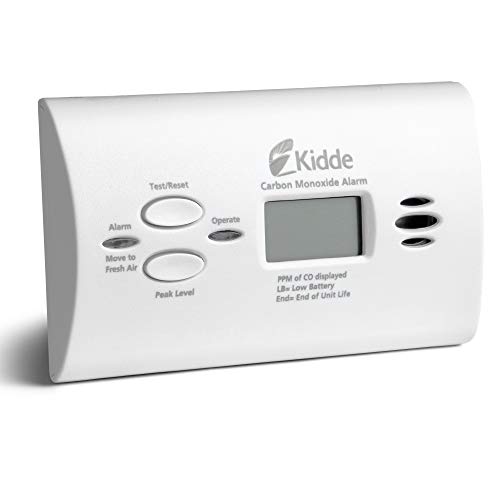
| Kidde COBD digital | Reading the level at a glance | Digital backlit display, AA powered |
| Kidde COPD | Quiet bedrooms | No low battery chirps, plug-in with AA backup |
| SITERWELL 7-year | Shelf or travel use with a screen | 7 year product life, LCD display, ETL |
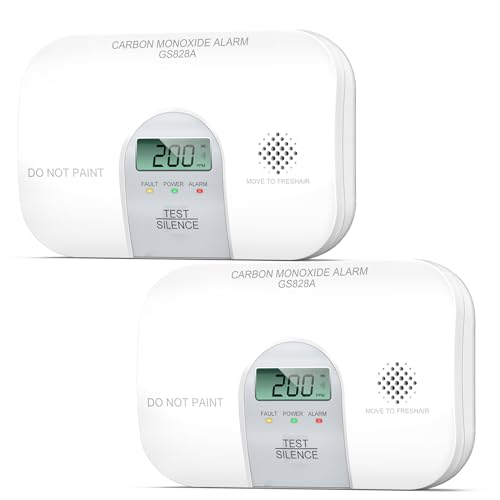
| SITERWELL plug-in 10-year | Long-life plug-in coverage | 10 year battery and AC powered, electrochemical sensor |
How to Choose
Match the power source to the room
Plug-in models with battery backup keep working through a power cut, which matters because a failed furnace often coincides with storm outages. Battery-only units can go anywhere, including rooms with no free outlet, but they depend on you replacing cells. A rotating plug helps in crowded outlet strips, since the alarm can face the room instead of the wall. If a detector will live in a camper, cabin, or garage workshop, battery or rechargeable designs are usually the easier fit.
Check sensor life and the end-of-life signal
Every CO sensor wears out, so look at the stated product life: seven and ten years both appear here. Write the install date on the back with a marker. Ignore battery claims that blur the difference between the battery and the sensor, because a fresh battery does not revive an expired sensor.
Look for the sound level and the safety listing
An 85 dB alarm is the figure several listings state, and it is a sensible floor for a bedroom hallway where a sleeping adult must wake. Check that the product mentions a recognized safety listing; the SITERWELL travel model, for example, lists ETL. Models that show only LED lights are fine for a simple alarm, but they cannot tell you whether a low reading is building. Budget picks often skip any readout, and that is the most common corner cut.
Decide whether you need a display
A digital backlit or LCD readout shows a trend after running a generator or warming up a car in an attached garage. Skip a display if the unit will sit high on a wall where you will never read it, and spend the effort on placement instead.
The 10 Best Options
Kidde Plug-in COP
This plug-in alarm pairs wall power with AA battery backup, and the title highlights a rotating plug with power surge immunity. That makes it a practical fit for a bedroom hallway where outlets are crowded or where storms cause flickers. It also lists LED status lights and an 85 dB alarm.
- Strength: battery backup keeps protection running through an outage.
- Strength: the rotating plug lets you orient the unit on awkward outlets.
- Trade-off: it needs an outlet, so it will not suit a tent, camper, or outlet-free closet.
Buyers who mostly want an outage-proof alarm for a bedroom corridor will find the feature set uncomplicated. Skip it if you want a numeric readout; the listing mentions status lights only.
Kidde Battery COB, 5th Edition
The COB runs on AA batteries and is described as lightweight and portable for travel or home. That frees you from outlet placement, so it works in a rental unit, hotel stay, or a cabin bedroom. It lists LED status lights and a loud 85 dB alarm, and the 5th Edition label points to a newer revision of the line.
- Strength: no outlet required, so placement is flexible.
- Strength: light enough to pack for trips.
- Trade-off: you are responsible for keeping fresh batteries in it.
It makes sense as a second alarm that moves between rooms or bags. Skip it if you want a permanent plug-in install with no battery routine.
Kidde AA Classic with Test-Reset
This is the plainest model in the group: an AA powered CO alarm with LEDs, a test-reset button, and a low battery indicator. It is described as portable, so it can move from a bedroom to a camper as needed. Buyers who want a no-surprises alarm for a spare room will find the feature list easy to understand.
- Strength: the test-reset button makes monthly checks quick.
- Strength: a low battery indicator warns before the cells fade.
- Trade-off: the listing shows no display, so you only get alarm states.
Spend a little more on the digital or ten-year options if you want the longest-lasting sensor or a live readout.
TOPTES CT-580 Portable
The CT-580 is a different kind of device: a rechargeable portable meter with vibration, visual, and audible alarms, a 0-1000PPM range, and a TFT color display. It suits someone who wants to check a garage, camper, or boiler room on demand, or who may not hear a standard horn.
- Strength: a color display with a stated 0-1000PPM range shows actual levels.
- Strength: vibration alarms add a signal beyond sound and light.
- Trade-off: a rechargeable handheld needs charging discipline, so it is less set-and-forget than a wall unit.
Treat it as a supplement to fixed alarms rather than a replacement. Skip it if you want one device screwed to a hallway wall for years.
Kidde Plug-in, 3rd Edition
This plug-in alarm uses AA battery backup, an 85 dB alarm, and LED status light indicators. The 3rd Edition tag suggests an earlier revision than some other Kidde listings, which can make it the simpler, less feature-heavy choice for a secondary outlet. It is a sensible way to cover a second-floor landing.
- Strength: wall power with battery backup is a dependable combination.
- Strength: clear LED indicators keep the status simple.
- Trade-off: no rotating plug or display is mentioned in the title.
Compare it with the newer plug-in listings before buying. Skip it if you need a portable alarm or a readout of the actual level.
Siterlink Plug-in, 10 Year Replaceable Battery
The Siterlink emphasizes a 10 year replaceable battery and a plug-and-play setup, and it is also called portable. For buyers tired of annual cell swaps, a long battery cycle is the attraction. It reads as a low-effort option for a hallway or basement stairs where you want to avoid frequent maintenance.
- Strength: the 10 year battery claim reduces upkeep.
- Strength: plug-and-play use means no wiring or mounting.
- Trade-off: the brand is less familiar than the Kidde line, so read the manual for end-of-life behavior.
Keep the manual handy so you know exactly how it signals expiry. Skip it if you want a recognized-name alarm with a status panel full of LEDs.
Kidde COBD with Digital Backlit Display
The COBD takes the AA-powered Kidde body and adds a digital backlit display alongside LED status lights and a loud 85 dB alarm. It is described as lightweight and portable, so it can sit on a nightstand or travel with you. The backlit screen is the draw for anyone who wants to see numbers.
- Strength: a digital display shows more than a simple green light.
- Strength: battery power makes room placement flexible.
- Trade-off: a screen and batteries mean more to monitor than a basic alarm.
It is a natural fit for a nightstand next to a bed in a rental. Skip it if you want wall power and do not care about a numeric readout.
Kidde COPD Plug-in with No Low Battery Chirps
The COPD combines a plug-in design, AA battery backup, a rotating plug with power surge immunity, and LED status lights. The standout phrase is no low battery chirps, which matters for light sleepers who dislike a 3 a.m. beep. It fits a master bedroom hallway where nuisance sounds are a real concern.
- Strength: the no-chirp design removes a common household annoyance.
- Strength: surge immunity and a rotating plug suit busy outlets.
- Trade-off: it needs an outlet, so it is not a travel unit.
Households with light sleepers or new babies tend to value that quiet more than extra features. Skip it if you want a display or a purely portable alarm.
SITERWELL 7-Year Travel Detector
This SITERWELL lists a 7 year product life, an LCD digital display, and a sound warning, with an ETL listing noted. It markets itself for travel, so it works for a family that spends weekends in rentals. The LCD gives a visible reading that most basic alarms lack.
- Strength: an LCD display plus an ETL listing in one compact unit.
- Strength: a 7 year life stated up front helps with planning.
- Trade-off: seven years is shorter than the ten-year options here.
It works well for vacation rentals where outlet access is unpredictable. Skip it if you want a plug-in unit with battery backup for permanent hallway use.
SITERWELL Plug-in, 10 Year Battery and AC Powered
The second SITERWELL is a plug-in model that combines AC power with a 10 year battery, plus an electrochemical sensor and a sound warning. It is also described as portable. For a basement near the furnace, that mix of outlet power and a long-life backup is appealing.
- Strength: electrochemical sensing is named in the listing.
- Strength: AC power with a 10 year battery cuts maintenance.
- Trade-off: the title does not mention a display, so you will not see a reading.
It makes the most sense near a furnace room where you want a long maintenance cycle. Skip it if you want a display, or a name you already trust from the hardware aisle.
Which One Fits Your Situation
You are covering a bedroom hallway in a typical house
The Kidde Plug-in COPD is the quietest-minded choice: wall power, AA backup, surge immunity, and no low battery chirps. The standard Kidde Plug-in COP is a close alternative if you do not care about that quiet feature.
You want a number, not just an alarm
The Kidde COBD with its backlit display or the SITERWELL 7-Year with its LCD gives a visible reading. If you want to scan a garage or camper on demand, the TOPTES CT-580 with its 0-1000PPM range is the stronger instrument.
You hate changing batteries
The SITERWELL Plug-in 10-Year and the Siterlink Plug-in both lead with ten-year battery claims. Pair either one with a calendar reminder for the sensor expiration date.
You travel or have an outlet-free room
The Kidde Battery COB is lightweight and battery-powered, and the Kidde AA Classic adds a test-reset button and a low battery indicator.
Common Mistakes
- Putting the detector behind a couch or curtain, where airflow to the sensor is blocked.
- Treating a fresh battery as proof the sensor is still good, when the sensor has its own expiration date.
- Installing one alarm in the basement and assuming the bedrooms upstairs are covered.
- Skipping the monthly press of the test button because the unit looks fine.
- Buying a travel unit for permanent hallway protection and then forgetting it runs on batteries.
Related guides
- Battery Powered Floodlight Camera With Local Storage
- Cordless Drill Brush Attachment For Bathroom Grout
- Rechargeable Emergency Lantern For Power Outages
Frequently Asked Questions
Where should a carbon monoxide detector go?
Place one outside each sleeping area and on every level of the home, including the basement. Keep units away from direct fuel-burning appliances so brief startup puffs do not cause nuisance alarms.
Is a plug-in model better than a battery model?
Neither wins outright. Plug-in units with backup suit hallways, while battery-only models suit travel and outlet-free rooms.
How often should I replace a detector?
Follow the stated product life, which runs seven to ten years in this group. Mark the install date, and replace the whole unit when the end-of-life signal sounds, not just the battery.
Do I need a display?
No. A display is a convenience for spotting small changes, not a requirement for protection.
More from Amazon
Programs that pair well with the guide above. Offers and eligibility are set by Amazon and may change.
A free business account with business pricing and bulk-buying tools for work, shop or home office.
Create a business accountFree shipping on eligible items, Prime Video and more. Eligible new members can start with a free trial.
Start a Prime free trialAudiobooks and podcasts to listen to on the go. Eligible new members can start with a free trial.
Try Audible freeAd-free music streaming. Eligible new subscribers can start with a free trial.
Try Music Unlimited freeAs an Amazon Associate we earn from qualifying purchases.