Key takeaways
- Compare four office chairs with adjustable lumbar support, seat-depth sliders and mesh backs, using the listed specs buyers with sensitive backs check.
Choosing an office chair when your lower back and legs complain quickly is less about thick padding and more about positioning. The seat needs to support your thighs without pressing into the backs of your knees, and the backrest needs to meet your lower back where your own curve actually sits. A chair built in one fixed shape makes your body adapt to it. The four chairs below were picked for the opposite reason: their listings describe support you can slide, deepen, or reposition until the chair adapts to you.
This roundup is for home-office workers who sit for long stretches and want those adjustments without turning the purchase into a research project. Every chair here is sold on Amazon as an office or desk chair, and each was chosen from the support features named in its own product title and listing details: adjustable or self-adaptive lumbar support, a seat-depth slider on two of the four models, and published fit ranges you can measure yourself against before ordering.
Quick Picks
As an Amazon Associate we earn from qualifying purchases.
| Product | Best for | Key spec from title |
|---|---|---|
| HON Ignition 2.0 Mid Back Task Chair | Adjustable seat depth | Seat-slide depth adjustment |
| Hbada E3 Pro Ergonomic Office Chair | Most lumbar adjustment | 3-zone dynamic lumbar support |
| SIHOO Doro C300 Ergonomic Office Chair | Set-and-forget support | Self-adaptive lumbar support |
| SIHOO M18 Ergonomic Office Chair | A simpler mesh design | Adjustable lumbar support |
How to Choose
Lumbar Support You Can Position
The lower-back support is the first feature to study, because a fixed pad lands wherever the factory put it, and that spot matches only some backs. Listings that describe height-adjustable or movable lumbar panels let you slide the support up or down until it meets the small of your back. Depth adjustment goes further, changing how firmly the support presses. Self-adaptive designs take the other route: the backrest flexes as you move, so support follows posture shifts without any dial. Neither approach is automatically better. What matters is that the listing names a real adjustment rather than a vague ergonomic shape.
Seat Depth and the Front Edge
Seat depth decides how much of your thigh the chair carries. Sit with your back against the backrest and you want a small gap, roughly two or three fingers wide, between the front edge of the seat and the backs of your knees. A seat that is too deep pushes you into a slouch or presses on the legs; one that is too short leaves your thighs unsupported. A sliding seat pan solves this properly, and two chairs below have one. On fixed-depth models, compare the listed seat depth with your own leg length before ordering, and note whether the front edge curves downward.
Seat Height, Arms and the Published Fit Range
Feet should rest flat on the floor with knees near a right angle, so check the listed seat-height range against your desk height and your lower-leg length. Several listings also publish a suggested user height range, which is a quick honesty check on fit. Armrests that adjust in height, and ideally width, let your shoulders drop instead of hunching toward the desk. Finally, confirm the stated weight capacity covers you with room to spare. A chair that fits on paper in every one of these measurements is far more likely to feel right on the first day.
Tilt, Back Material and the Frame Underneath
How the backrest moves matters over a long day. A synchro-tilt mechanism reclines the back and seat at different rates, which keeps your feet grounded while you lean back. A simple tilt lock holds one chosen angle instead. Mesh backs breathe and suit warm rooms, while foam cushions give a softer first sit. Underneath, look for testing or certification names in the listing, such as BIFMA, and read the warranty length, since the gas lift and tilt mechanism are the parts that work hardest. These details say more about daily comfort than any headline feature.
The 4 Best Options
HON Ignition 2.0 Mid Back Task Chair
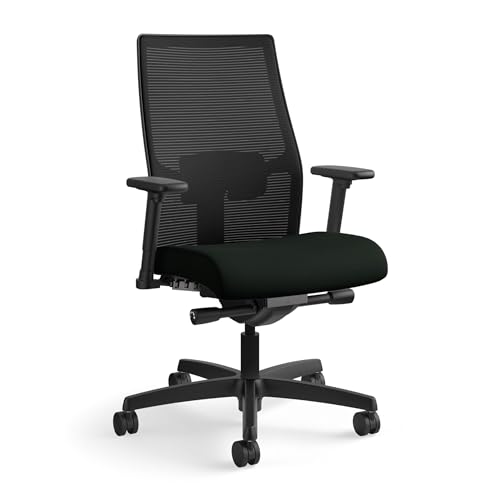
The Ignition 2.0 suits buyers who want to set two things precisely: where the lumbar support presses and how far the seat extends. HON’s listing describes a movable lumbar panel behind a four-way stretch mesh back, together with a seat-slide that changes the effective seat depth, a pairing that lets shorter and longer legs share the same model. The advanced synchro-tilt reclines back and seat at different rates, the arms adjust in height and width, and the chair carries a 300-pound capacity with the manufacturer’s full lifetime warranty behind it.
Specs
- Back: 4-way stretch mesh, mid-back
- Lumbar support: Adjustable, movable lumbar panel
- Seat depth: Seat-slide adjustment, 19 in listed seat depth
- Tilt: Advanced synchro-tilt, 2 reclining positions
- Armrests: Height and width adjustable
- Weight capacity: 300 lb
Best for: Buyers who want both lumbar positioning and a seat-depth slider from an established office brand.
Watch out for: The armrests adjust for height and width only, with no depth or pivot movement.
ASIN: B06Y3PGPR2
Hbada E3 Pro Ergonomic Office Chair

Hbada builds the E3 Pro around its lumbar system: the listing describes a three-zone dynamic support with eight-way adjustment, designed to keep contact with the lower back as you shift between upright work and a reclined reading angle. Around it sit a four-dimensional biaxial headrest, six-direction armrests and a sliding seat, so most contact points can be moved rather than accepted as delivered. This is the black variant without a footrest, positioned by the listing for big and tall users, with IGR, BIFMA, SGS and TUV certifications named and a three-year warranty included.
Specs
- Lumbar support: 3-zone dynamic, 8-way adjustment
- Headrest: 4D biaxial adjustable
- Armrests: 6D adjustable
- Seat depth: Sliding seat, 50 mm adjustment
- Weight capacity: 300 lb maximum recommendation
- Warranty: 3-year warranty
Best for: Buyers who want the widest set of lumbar, headrest and arm adjustments in one chair.
Watch out for: This variant ships without a footrest, and the many adjustment axes take time to dial in.
ASIN: B0DXKTMDYZ
SIHOO Doro C300 Ergonomic Office Chair

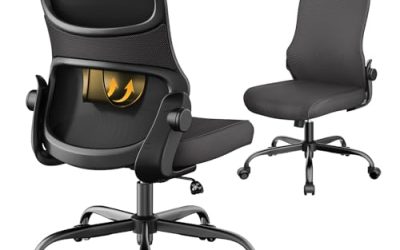
The Doro C300 takes the opposite approach to the Hbada: instead of dials and levers, its lumbar support is self-adaptive, flexing with the sitter as posture changes through the day. SIHOO pairs that with a full mesh seat and back, which buyers who run warm often prefer over foam, and the ultra-soft 3D armrests named in this listing’s title. The documented seat-height range starts lower than the other chairs here, which suits shorter desks and shorter legs, but the seat depth is fixed, so that measurement deserves a careful check against the listing first.
Specs
- Lumbar support: Self-adaptive dynamic lumbar support
- Armrests: 3D adjustable, ultra-soft
- Seat and back: Full mesh construction
- Seat height: 16.14 to 19.49 in range
- Weight capacity: 300 lb per the Amazon listing
- Warranty: 3 years
Best for: Buyers who want lumbar support that adjusts itself and an all-mesh seat and back.
Watch out for: The seat depth is fixed at 16.54 in, with no sliding seat pan.
ASIN: B0C3T865C2
SIHOO M18 Ergonomic Office Chair

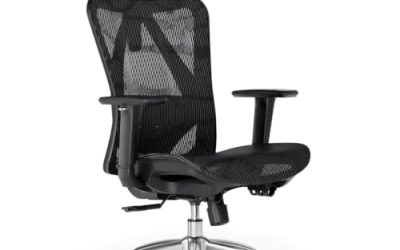
The M18 is the most straightforward chair in this group: a high-back mesh design with an adjustable lumbar support, an adjustable headrest and 2D armrests, plus a tilt lock for holding a chosen recline angle. Its listing highlights a wide cushion and a 330-pound capacity, and SIHOO publishes a suggested height range from five feet six inches to six feet two inches, which makes the fit check simple to do at home. There is no seat slider, so the fixed depth has to suit your legs as it stands, but the adjustment set covers the everyday basics without a long setup process.
Specs
- Lumbar support: Adjustable lumbar support
- Headrest: Adjustable
- Armrests: 2D adjustable
- Back: Breathable mesh, high back
- Weight capacity: 330 lb
- Suggested user height: 5 ft 6 in to 6 ft 2 in
Best for: Buyers who want the core support adjustments in a simpler, wide-cushion mesh chair.
Watch out for: No seat-depth adjustment, so the fixed seat depth needs to match your leg length.
ASIN: B07GNDDNMW
Which One Fits Your Situation
You Sit Upright for Long Workdays
Start with the HON Ignition 2.0 or the SIHOO Doro C300. The HON lets you place the lumbar panel and seat depth deliberately, then leave them set for months. The C300 asks even less of you, since its backrest adapts as you shift. Both use mesh backs that stay comfortable across long, warm afternoons at a desk.
You Are Tall, Broad, or Near Common Capacity Limits
Look first at the Hbada E3 Pro, which its listing positions for big and tall users, and the SIHOO M18, which carries the highest stated capacity here at 330 pounds and a published height range reaching six feet two inches. Check the seat depth figures carefully, because longer legs are exactly where fixed or short seats fall short.
You Share the Chair With Someone Else
Shared chairs reward quick, obvious adjustments. The Hbada’s many levers and the HON’s seat-slide and movable lumbar panel can be reset in under a minute once each person knows their settings. The C300 also shares well, because its adaptive backrest needs no resetting at all between users of different shapes.
Your Desk Is Low or Your Room Runs Warm
The Doro C300’s seat height starts at just over sixteen inches, the lowest floor here, which pairs well with compact desks and shorter legs. Its full mesh seat and back, like the mesh backs on the M18 and the HON, move air far better than a solid foam chair in a warm room.
Common Mistakes
- Buying by cushion thickness alone, when seat depth and lumbar placement shape comfort far more over a full workday.
- Skipping the listed seat depth, then discovering the front edge presses behind your knees or leaves your thighs hanging.
- Leaving the lumbar support at its factory height instead of sliding it to meet the small of your back.
- Expecting furniture to solve a medical problem; a supportive chair helps you sit well, but ongoing numbness or radiating leg symptoms deserve a clinician’s attention, not another accessory.
- Ignoring the published height range and weight capacity, which are the manufacturer’s own statement of who the chair was built for.
Frequently Asked Questions
Can the right office chair cure sciatic nerve pain?
No chair can do that, and listings should be read as descriptions of furniture, not treatment. What these chairs offer is positioning: lumbar support you can place, a seat depth that keeps pressure off the backs of your knees, and a height range that lets your feet rest flat. Persistent or worsening symptoms belong in a conversation with a doctor or physiotherapist.
Which matters more, lumbar support or seat depth?
They solve different problems, so the honest answer is both. Lumbar support keeps your lower back in contact with the backrest instead of slumping into the gap. Seat depth decides how your thighs and the backs of your knees meet the chair. If you can only prioritise one adjustment, choose the one your current chair gets wrong.
Is a mesh seat better than a foam cushion for long sitting?
Mesh, like the Doro C300’s seat, spreads support evenly and breathes well, which many people prefer in warm rooms or long sessions. A foam cushion, like the M18’s wide seat, feels softer at first contact and can suit lighter users. Neither is universally better; your room temperature, session length and body weight decide which you will notice more.
How should I set the lumbar support when the chair arrives?
Sit with your back fully against the backrest and your feet flat on the floor. Slide the lumbar support until it fills the natural inward curve above your belt line, then set its depth so you feel contact without being pushed forward. Work a full session before judging, and nudge it one step at a time over the first few days.
More from Amazon
Programs that pair well with the guide above. Offers and eligibility are set by Amazon and may change.
A free business account with business pricing and bulk-buying tools for work, shop or home office.
Create a business accountFree shipping on eligible items, Prime Video and more. Eligible new members can start with a free trial.
Start a Prime free trialAudiobooks and podcasts to listen to on the go. Eligible new members can start with a free trial.
Try Audible freeAd-free music streaming. Eligible new subscribers can start with a free trial.
Try Music Unlimited freeAs an Amazon Associate we earn from qualifying purchases.