Key takeaways
- Drain situation: Gravity drainage needs a floor or wall drain below the unit’s outlet, which is often impossible in an island. Drainless designs like the COTLIN recirculate meltwater instead, so if your target cabinet has no plumbing nearby, that decision is already made for you.
- Vent direction: Front-venting units breathe through the grille and can sit flush in a cabinet run. Rear or side-venting models need air gaps you’ll have to build in, and if you skip that, compressor life drops fast. Check this before you cut.
- Bin versus output: A 100 lb/day rating means nothing if the bin holds 24 lbs, because the machine stops producing once it fills. Match bin size to how you actually use ice: entertaining in bursts favors a 33-35 lb bin, steady daily use is fine with less.
- Opening dimensions and door swing: Measure the cabinet cutout width, depth, and height including any leveling legs. A reversible door, like the one on Mojgar’s 35 lb model, saves you from discovering the swing blocks your dishwasher after installation.
- Cleaning cycle: Self-cleaning cuts down on descaling by hand, which matters a lot in hard-water areas where scale builds on the evaporator plate within weeks. It’s not a replacement for periodic sanitizing, but it stretches the interval considerably.
What's inside
Cutting a 15-inch bay into a run of base cabinets sounds simple until you’re lying on the kitchen floor with a flashlight, tracing where the drain line is supposed to go. That’s the wall most people hit with under cabinet ice makers: the appliance itself is straightforward, but the plumbing, the venting clearance, and the toe-kick height turn a weekend project into a call to the plumber. Add in the fact that most listings bury whether a unit vents front or rear, and you can end up with a machine that technically fits the hole but slowly cooks itself in a sealed cabinet.
This guide is written from the install side out. I’ve broken down which units need a gravity drain versus a pump versus nothing at all, how bin capacity relates to actual daily output, and what clearances you need to leave behind the cabinet face. Below are the models worth your time in 2026, along with the selection criteria that matter once you’re holding a jigsaw.
As an Amazon Associate we earn from qualifying purchases.


How to Choose a/an Under Cabinet Ice Maker (2026)
- Drain situation: Gravity drainage needs a floor or wall drain below the unit’s outlet, which is often impossible in an island. Drainless designs like the COTLIN recirculate meltwater instead, so if your target cabinet has no plumbing nearby, that decision is already made for you.
- Vent direction: Front-venting units breathe through the grille and can sit flush in a cabinet run. Rear or side-venting models need air gaps you’ll have to build in, and if you skip that, compressor life drops fast. Check this before you cut.
- Bin versus output: A 100 lb/day rating means nothing if the bin holds 24 lbs, because the machine stops producing once it fills. Match bin size to how you actually use ice: entertaining in bursts favors a 33-35 lb bin, steady daily use is fine with less.
- Opening dimensions and door swing: Measure the cabinet cutout width, depth, and height including any leveling legs. A reversible door, like the one on Mojgar’s 35 lb model, saves you from discovering the swing blocks your dishwasher after installation.
- Cleaning cycle: Self-cleaning cuts down on descaling by hand, which matters a lot in hard-water areas where scale builds on the evaporator plate within weeks. It’s not a replacement for periodic sanitizing, but it stretches the interval considerably.
The Best Under Cabinet Ice Maker (2026)s Reviewed
COTLIN Drainless 15″ Ice Maker, 22 lb Bin
The standout here is the no-drain design, which makes this the only realistic option for island cabinets or any spot where running a drain line means opening up a floor. The 22 lb bin is modest and the crescent cubes are softer than gourmet ice, but for install simplicity it’s unmatched.
EUHOMY Commercial 100 lb Undercounter, 33 lb Bin
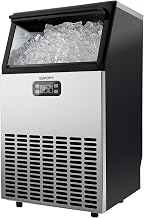
A well-balanced pairing of output and storage, with stainless construction that holds up to daily abuse better than painted steel. It’s a gravity-drain unit, so confirm you have a drain path before ordering.
Mojgar 15″ Built-In 100 lb/Day with 30 lb Bin
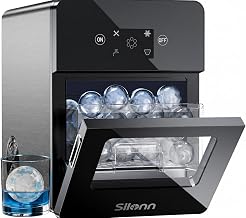
The 15-inch footprint drops cleanly into a standard cabinet bay, and ETL certification means the electrical work will pass inspection if you’re permitting a remodel. Self-cleaning is included, which is a real time-saver on a built-in you’d rather not pull out.
Mojgar 100 lb Front-Vent with 35 lb Bin and Reversible Door
My pick for a genuine flush built-in: front venting means no rear air gap to engineer, and the reversible door lets you plan the swing around your existing layout. The 35 lb bin is the largest in this group, which suits entertaining.
EUHOMY 15″ Commercial, 90 lb/Day with 24H Timer
The 24-hour timer is the underrated feature, letting you schedule production overnight so the bin is full when you need it and quiet when you don’t. The 24 lb bin is the tradeoff, so it’s better suited to steady use than one-off parties.
Frequently Asked Questions
Do I need a plumber for installation?
For a gravity-drain unit, you need a cold water supply line and a drain within reach, which most competent DIYers can handle with a saddle valve or tee fitting. Drainless models only need water and power, putting them well within reach of a basic install.
Can these run inside a fully enclosed cabinet?
Only if the unit is front-venting and the grille stays unobstructed. Rear-venting machines need clearance behind and above per the manual, typically a few inches, and enclosing one without it will shorten compressor life.
Why does my unit make less ice than advertised?
Rated output assumes 70°F ambient air and 50°F incoming water. A warm garage or summer kitchen easily cuts production by a third, which is normal rather than a defect.
How often should I clean it?
Run the self-clean cycle monthly and do a full manual descale and sanitize every three to six months, more often on hard water. Slushy or cloudy cubes are the usual signal you’ve waited too long.
Final Thoughts
If your cabinet has no drain access, the COTLIN Drainless is effectively the whole decision, and it’s a solid unit on its own merits. For a proper built-in with plumbing available, the Mojgar 100 lb front-vent model with the 35 lb bin gives you the easiest install and the most storage, while the EUHOMY 100 lb with its 33 lb bin is the value play if you want commercial-grade stainless without paying for extras.