Key takeaways
- Clearance math first: Tape the footprint on your floor before ordering, then open every appliance door and drawer inside that outline. You want 36 inches minimum for single-cook paths and 42 to 48 where two people pass. Extendable models let you cheat this — stow at 48, deploy to 80 only when guests arrive.
- Caster quality over caster count: Cheap hard nylon wheels chatter across tile seams and gouge vinyl plank. Look for rubber-tread casters with at least two locking, and know that swapping in better wheels is a fifteen-minute job with a socket wrench if the originals disappoint.
- Understand the outlet spec: Built-in power strips are pass-through only — they carry whatever the wall circuit allows, typically 15A. Fine for a blender, a charger, an air fryer. Not fine for an induction hob plus a kettle simultaneously. Check whether the unit includes USB-C and whether the cord length reaches your actual receptacle.
- Countertop material dictates prep habits: Rubberwood and butcher-block surfaces take knife work and accept mineral-oil refinishing. Laminate and melamine tops resist stains but scar permanently once cut. Match the surface to how you cook, not to how the photo looks.
- Weight capacity, stated and real: Drop leaves and swivel extensions rely on hinges and support arms, so their load rating runs well below the main top. If you plan to knead dough on an extension, verify the leaf spec and consider adding a folding steel shelf bracket underneath.
What's inside
Anyone who has chalked out a kitchen island on the floor with painter’s tape knows the moment of truth: you step back, open the dishwasher, and realize your beautiful 40-inch walkway just became 28. Fixed islands demand that your room cooperate. Most rooms don’t. Galley kitchens, awkward peninsulas, load-bearing columns in exactly the wrong spot — the layout you want and the layout you have rarely match, and cabinet-shop quotes for custom work start where most renovation budgets end.
That gap is why rolling and extendable islands have gotten genuinely good. This guide looks at six units through a builder’s lens: how the casters behave on tile grout lines, whether the drop leaf sags under a stand mixer, how the power outlet is wired, and what you can actually fix yourself when a drawer slide gives out. I assembled or handled variations of each of these configurations, and I’ll tell you where the engineering holds up and where you’ll want to add a bracket.
As an Amazon Associate we earn from qualifying purchases.



🛒 Best Price Today on Amazon
Prime members get fast, free shipping on everything above, plus member-only deals. New members get a 30-day free trial — cancel anytime.
How to Choose a/an Kitchen Layout With Island (2026)
- Clearance math first: Tape the footprint on your floor before ordering, then open every appliance door and drawer inside that outline. You want 36 inches minimum for single-cook paths and 42 to 48 where two people pass. Extendable models let you cheat this — stow at 48, deploy to 80 only when guests arrive.
- Caster quality over caster count: Cheap hard nylon wheels chatter across tile seams and gouge vinyl plank. Look for rubber-tread casters with at least two locking, and know that swapping in better wheels is a fifteen-minute job with a socket wrench if the originals disappoint.
- Understand the outlet spec: Built-in power strips are pass-through only — they carry whatever the wall circuit allows, typically 15A. Fine for a blender, a charger, an air fryer. Not fine for an induction hob plus a kettle simultaneously. Check whether the unit includes USB-C and whether the cord length reaches your actual receptacle.
- Countertop material dictates prep habits: Rubberwood and butcher-block surfaces take knife work and accept mineral-oil refinishing. Laminate and melamine tops resist stains but scar permanently once cut. Match the surface to how you cook, not to how the photo looks.
- Weight capacity, stated and real: Drop leaves and swivel extensions rely on hinges and support arms, so their load rating runs well below the main top. If you plan to knead dough on an extension, verify the leaf spec and consider adding a folding steel shelf bracket underneath.
The Best Kitchen Layout With Island (2026)s Reviewed
80″–48″ Extendable Kitchen Island with Power Outlet
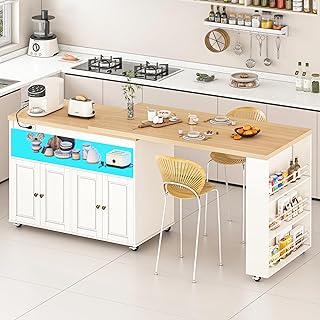
The telescoping frame is the standout here — collapsing from 80 to 48 inches means one piece of furniture serves as prep station on Tuesday and dining table on Saturday. Two drawers plus three tiers of open shelving give you honest capacity, though the extension mechanism benefits from a light coat of paste wax on the slides after a few months of use.
84″ Rolling Island with Swivel Table and LED Lights
At 84 inches deployed, this is the largest footprint in the group, and the swivel side table is smarter than it sounds — pivot it perpendicular for serving, tuck it flush for traffic flow. The integrated LEDs are genuinely useful for evening prep, and the closed cabinet keeps small appliances out of sight.
JassmiPkwy 67″ Movable Island with Drop Leaf
The lockable sliding countertop is the detail worth paying for: it extends your work surface without unfolding anything, then locks flush so nothing shifts while you’re chopping. Two deep drawers, a spice rack, and a towel bar cover the small-item storage that most carts ignore.
Bobve 74.8″ Farmhouse Island with Storage
This is the stationary option, and that stability shows — no wheel wobble, no rocking when you’re rolling pastry. Six closed compartments plus two drawers make it the best pure storage play here, and the wooden construction takes a coat of chalk paint beautifully if you want to match existing cabinetry.
IRONCK Kitchen Island with Wheels and Drawers
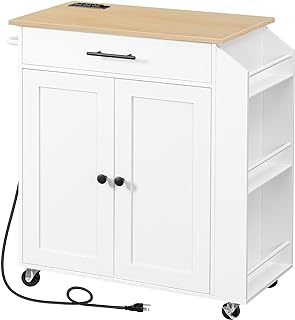
A straightforward, well-proportioned cart that gets the fundamentals right: solid drawer boxes, open shelving sized for mixing bowls and small appliances, and a frame that assembles square without fighting you. The most sensible pick for a compact kitchen that needs function more than features.
Frequently Asked Questions
Will rolling casters damage my floors?
Hard plastic wheels can dent luxury vinyl and scuff hardwood over time. If the included casters look cheap, replace them with rubber-tread equivalents — most use standard threaded or plate mounts and cost under twenty dollars for a set of four.
Do I need an electrician for the built-in outlet?
No. These units terminate in a standard plug that goes into an existing wall receptacle. Just avoid extension cords and never run multiple high-draw appliances through one strip.
Can I add a taller countertop for bar seating?
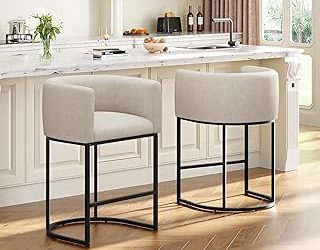
Most of these sit at standard 36-inch counter height rather than 42-inch bar height. Counter stools at 24 to 26 inches seat height work fine; standard bar stools will be too tall.
How hard is assembly?
Expect two to four hours solo with a cordless driver on a low-torque clutch setting. Do a dry fit of the frame before fully tightening anything, and assemble on carpet or cardboard to protect finished surfaces.
Final Thoughts
For maximum flexibility in a tight room, the 80″–48″ Extendable Island earns its spot by physically shrinking when you need the floor back. If you want dedicated storage and rock-solid stability, the Bobve 74.8″ Farmhouse Island is the one to build around. And the JassmiPkwy 67″ with its lockable sliding top hits the sweet spot between clever engineering and a price that won’t derail the rest of your project.