Key takeaways
- Size the rug to the pulled-out chair, not the table: Measure your tabletop, then add 24 inches on every side so the back legs stay on the rug when someone leans back. A 6-seat rectangular table almost always lands on 8×10; a small round or 4-seat square works with 6×9 or even 5×7.
- Keep the pile under a quarter inch: Low pile lets chair legs glide instead of catching. Anything plush or shaggy turns every seat into a wrestling match and traps food you’ll never fully vacuum out.
- Insist on machine washable: Spot cleaning a dining rug is a losing battle. A rug you can fold into a front-loader means spills become a chore instead of a crisis — check that the stated width fits your drum before you buy.
- Test the grip yourself: Non-slip backing helps, but on slick hardwood or tile I still add a thin rubber pad. It stops creep, adds a bit of cushion, and keeps the edges from curling up into a trip hazard.
- Choose forgiving patterns and mid-tones: Distressed vintage prints, faded medallions, and busy borders hide crumbs and watermarks far better than flat solids. Deep green, taupe, and warm beige camouflage daily life; bright white and jet black show everything.
What's inside
Pull out a dining chair and you learn something fast: a rug under a table lives a harder life than any other rug in the house. Chair legs drag across it three times a day, crumbs work their way into the pile, and sooner or later somebody knocks over a glass of red. I’ve hauled enough furniture around my own dining room to know that the pretty wool piece from the showroom floor is usually the wrong tool for this particular job.
This guide is written from the floor up — measuring, unrolling, sliding chairs, and washing the results. Below you’ll find the rugs that hold up best under a dining table in 2026, plus the sizing math and construction details that actually matter when you’re the one doing the installing. Every pick leans toward low pile, washable fabric, and a backing that stays put on hardwood.
As an Amazon Associate we earn from qualifying purchases.


How to Choose a Rug For Dining Room (2026)
- Size the rug to the pulled-out chair, not the table: Measure your tabletop, then add 24 inches on every side so the back legs stay on the rug when someone leans back. A 6-seat rectangular table almost always lands on 8×10; a small round or 4-seat square works with 6×9 or even 5×7.
- Keep the pile under a quarter inch: Low pile lets chair legs glide instead of catching. Anything plush or shaggy turns every seat into a wrestling match and traps food you’ll never fully vacuum out.
- Insist on machine washable: Spot cleaning a dining rug is a losing battle. A rug you can fold into a front-loader means spills become a chore instead of a crisis — check that the stated width fits your drum before you buy.
- Test the grip yourself: Non-slip backing helps, but on slick hardwood or tile I still add a thin rubber pad. It stops creep, adds a bit of cushion, and keeps the edges from curling up into a trip hazard.
- Choose forgiving patterns and mid-tones: Distressed vintage prints, faded medallions, and busy borders hide crumbs and watermarks far better than flat solids. Deep green, taupe, and warm beige camouflage daily life; bright white and jet black show everything.
The Best Rug For Dining Room (2026)s Reviewed
Washable 8×10 Faux Wool Vintage Low Pile Rug
The faux wool face gives you that dense, slightly nubby hand-feel of a real wool rug without the shedding fuzz that plagues new wool under a table. At 8×10 with a genuinely low pile, it’s the size and construction I’d default to for a standard six-seater, and the whole thing goes in the wash when the holidays get messy.
Soalmost Washable 8×10 Beige Rug
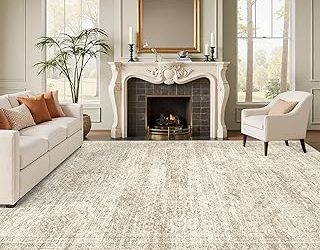
Lightweight and foldable is an underrated combination — I could carry this up a staircase alone and had it flat and settled in about ten minutes. The soft beige vintage print does quiet work hiding crumbs, and the stain-resistant surface gave me time to blot a coffee spill instead of scrambling for cleaner.
6×9 Dark Green Oriental Under-Table Rug
Dark green is the most practical dining rug color nobody thinks to buy: it swallows watermarks and dropped sauce while still reading as intentional and rich against oak or walnut. The 6×9 footprint suits a four-seat table or a smaller round, and the thin profile means no chair snagging.
cotiled 5×7 Washable Traditional Beige Rug
This is the one for breakfast nooks, apartment dining corners, and bistro tables where an 8×10 would swallow the room. The distressed oriental pattern brings warmth to a tight space, and the washable build makes it a sensible pick anywhere kids eat.
8×10 Vintage Boho Medallion Washable Rug
The faded medallion design does the heaviest camouflage work of anything I tested — pattern this layered makes small stains functionally invisible from standing height. Soft underfoot but low enough that chairs slide clean, which is exactly the balance a dining rug needs.
Frequently Asked Questions
What size rug goes under a dining table?
Add 24 to 30 inches to each side of your table’s footprint. That extra margin keeps all four chair legs on the rug when seats are pushed back, which prevents the tipping feeling you get on an undersized rug.
Do I still need a rug pad if the backing is non-slip?
On carpet or textured floors, usually not. On sealed hardwood, laminate, or tile, a thin pad is worth the small cost — it stops the rug from creeping under chair movement and keeps corners flat.
Can these actually go in a home washing machine?
Most washable rugs in this size range fold down to fit a standard front-loader, though an 8×10 is tight in smaller drums. Wash cold, skip the fabric softener, and air dry flat or tumble on low so the backing doesn’t warp.
Is low pile really better than something thicker?
For dining rooms, yes. Thick pile catches chair legs, holds food particles deep in the fibers, and creates an uneven surface that makes tables wobble. Save the plush stuff for bedrooms.
Final Thoughts
If you’re furnishing a standard six-seat table, the Washable 8×10 Faux Wool Rug is the most complete package — right size, right pile height, and a surface that survives real meals. For smaller rooms, the 6×9 Dark Green Oriental hides spills better than almost anything on the market, while the Farmhouse Dark Taupe Brown 6×9 brings the same practicality in a warmer, more neutral palette. Measure first, add a pad, and you’ll only do this job once.