Key takeaways
- Diameter versus seat count: Budget roughly 24 inches of edge per person. A 42-inch top genuinely fits four in a snug kitchen, 47 to 51 inches gives four people elbow room, and you need 59 inches before six chairs stop competing for space. Measure your room and leave 36 inches of clearance behind each chair for pull-out room.
- Base geometry and legroom: Four-leg metal frames are the most rigid and easiest to shim level, but the legs land exactly where chair corners want to go. A single pedestal frees up every seat for crossed legs, though it demands a heavy, wide footing to resist tipping when someone leans on the rim.
- Surface material and repairability: Sintered stone and tempered glass shrug off heat, knives, and wine with zero maintenance but cannot be repaired if chipped. Engineered wood with a laminate or veneer face resists water well and hides scuffs, yet sanding through the top layer ruins it. Only solid timber can be refinished, so match the material to how forgiving you need it to be.
- Hardware quality: Flip the top over before final assembly and inspect what the leg bolts thread into. Steel threaded inserts or a solid hardwood cleat will hold for decades; bare screws driven into particleboard will strip after a couple of moves. If you find the latter, dose the holes with wood glue and sawdust or upgrade to insert nuts, a ten-minute fix that doubles the table’s lifespan.
- Practical extras: Built-in shelving beneath the top turns a small table into storage for placemats and mail, which matters in studio apartments. Also check whether the tabletop ships in one piece or halves, since a seam across the middle will always telegraph through the finish over time.
What's inside
Anyone who has tried to squeeze four chairs around a rectangular table in a cramped apartment kitchen knows the problem: corners eat floor space and jab into hips. A round top solves the traffic-flow issue instantly, but shopping for one exposes a different headache. Diameter numbers on a listing rarely tell you whether a table will actually seat four adults comfortably, pedestal bases vary wildly in stability, and “wood” can mean anything from solid oak to a laminate skin over particleboard. Get it wrong and you end up with wobble, water rings, or knees knocking against a base column.
I build furniture on weekends and have flipped, refinished, and reassembled more flat-pack tables than I care to admit, so this guide looks at round dining tables the way a maker would: how the joinery holds up, whether the leg hardware bites into solid material or thin MDF, how the surface handles a spilled glass of red, and what you can realistically fix yourself later. Below are the standout round tables for 2026, spanning compact farmhouse builds under $250 through sintered stone slabs that would cost four figures at a showroom.
As an Amazon Associate we earn from qualifying purchases.


How to Choose a/an Round Dining Table (2026)
- Diameter versus seat count: Budget roughly 24 inches of edge per person. A 42-inch top genuinely fits four in a snug kitchen, 47 to 51 inches gives four people elbow room, and you need 59 inches before six chairs stop competing for space. Measure your room and leave 36 inches of clearance behind each chair for pull-out room.
- Base geometry and legroom: Four-leg metal frames are the most rigid and easiest to shim level, but the legs land exactly where chair corners want to go. A single pedestal frees up every seat for crossed legs, though it demands a heavy, wide footing to resist tipping when someone leans on the rim.
- Surface material and repairability: Sintered stone and tempered glass shrug off heat, knives, and wine with zero maintenance but cannot be repaired if chipped. Engineered wood with a laminate or veneer face resists water well and hides scuffs, yet sanding through the top layer ruins it. Only solid timber can be refinished, so match the material to how forgiving you need it to be.
- Hardware quality: Flip the top over before final assembly and inspect what the leg bolts thread into. Steel threaded inserts or a solid hardwood cleat will hold for decades; bare screws driven into particleboard will strip after a couple of moves. If you find the latter, dose the holes with wood glue and sawdust or upgrade to insert nuts, a ten-minute fix that doubles the table’s lifespan.
- Practical extras: Built-in shelving beneath the top turns a small table into storage for placemats and mail, which matters in studio apartments. Also check whether the tabletop ships in one piece or halves, since a seam across the middle will always telegraph through the finish over time.
The Best Round Dining Table (2026)s Reviewed
42″ Round Farmhouse Table with Storage
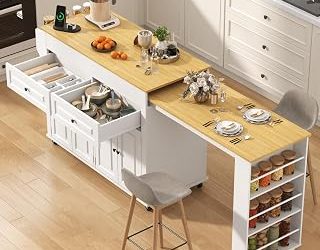
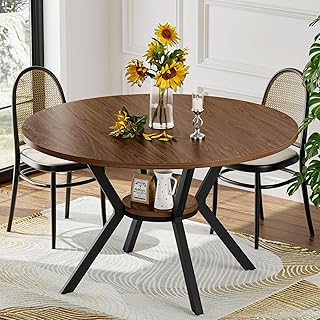
This is the pick for genuinely tight kitchens and breakfast nooks, with a rustic wood top on black metal legs plus an under-shelf that swallows the clutter most small tables have nowhere to put. Assembly is straightforward with a hex key, and running a coat of wipe-on polyurethane over the top before first use adds meaningful water resistance for about fifteen minutes of work.
Terra 59″ Transitional Pedestal Table
The Terra pairs a 1-inch engineered wood top in walnut with a mid-century pedestal base, which means all four diners get unobstructed legroom and the room stays visually open. The smooth factory finish is well applied and consistent, though it is a veneer surface, so use felt pads under decor and never drag anything heavy across it.
POVISON 59″ Sintered Stone Round Table
Sintered stone is the most durable dining surface you can buy at this price, laughing off hot pans, cutting knives, and acidic spills with no sealing required. The glossy white slab on a carbon steel base reads as high-end showroom furniture, and the tabletop’s mass makes it feel far more planted than its lightweight assembly suggests. Recruit a second person for the lift.
jiteentarou 47″ Round Wood Table
At 47 inches this is the sweet spot for four adults who want space without dominating the room, and the thickened waterproof top handles daily family use better than most budget farmhouse tables. The metal support frame is straightforward and easy to level with felt glides on an uneven floor.
POVISON 51″ Glass Round Table
Tempered glass on a black X-frame steel base is the trick for making a small dining area feel larger, since the eye passes straight through to the floor. Clean the underside during assembly, keep glass cleaner handy for fingerprints, and this stays maintenance-free for years.
Frequently Asked Questions
How many people actually fit at a 59-inch round table?
Six is realistic with standard 18-inch-wide chairs, and comfortable for four to five with serving dishes in the middle. Eight is only workable with narrow, backless stools.
Do pedestal tables wobble more than four-leg tables?
Not inherently. Stability depends on the width and weight of the footing relative to the top diameter. A wide, heavy pedestal is rock solid, while any table on an uneven floor benefits from adjustable glides or a cedar shim.
Can I refinish an engineered wood or laminate top?
No. Sanding cuts through the decorative layer and exposes the substrate. You can, however, top-coat a laminate surface with a bonding primer and cabinet enamel for a color change, or fit a custom butcher block round over the existing frame.
What is the best way to protect a wood top from water rings?
Two thin coats of wipe-on poly or a hardwax oil applied before the table goes into service, reapplied yearly on high-use areas. It takes under half an hour and prevents the most common damage these tables suffer.
Final Thoughts
For small spaces where every square foot counts, the 42″ farmhouse table with storage delivers the most function for the money. If you want the most durable and lowest-maintenance surface available, the POVISON 59″ sintered stone table is the clear winner, while the Terra 59″ pedestal table is the pick for anyone prioritizing legroom and a warm walnut look over stone-tough resilience.