Key takeaways
- Map the footprint first: Chalk or painter’s tape the tabletop outline on your floor, then add 30 inches on each side you’ll actually sit at. If a doorway or cabinet swing falls inside that zone, size down or go with a drop-leaf.
- Pick your expansion style: Drop-leaf tables collapse daily and store flat against a wall; extendable tables stay one size most of the time and grow for company. Choose based on how often you need the extra surface, not how much you want it.
- Benches beat chairs in tight rooms: A bench slides completely under the apron, reclaiming a foot of clearance when you’re not eating. The tradeoff is no back support, so keep chairs on one side if you linger over dinner.
- Check the leg geometry: Corner-mounted legs let you slide seating in from any angle; a center pedestal or trestle frees up knee room but can tip if you lean on one end. Look for cross-bracing or a wide base on anything under 30 inches deep.
- Know what you’re bolting together: Solid wood tops take a sanding and refinish years later. MDF with veneer is flatter out of the box and cheaper, but chips at the edges and hates standing water. Either works, as long as you know which one you bought.
What's inside
Measure your dining nook and the numbers get discouraging fast. A standard 36-inch-wide table plus 18 inches of chair pull-out on each side eats nearly six feet of floor, and that’s before you account for the walking lane behind the seats. Most apartment dining areas simply don’t have it. So people end up either wedging in a table that blocks a doorway, or giving up and eating on the couch.
The fix isn’t a smaller table so much as a smarter one: drop leaves that fold flat against a wall, extension leaves that live in a closet until guests arrive, benches that tuck fully underneath instead of sticking out. I’ve assembled, wobble-tested, and lived with enough flat-pack furniture to know which of those tricks actually hold up. Below are six tables built around real space constraints, plus what to check before you commit.
As an Amazon Associate we earn from qualifying purchases.



How to Choose a Dining Room Table For Small Space (2026)
- Map the footprint first: Chalk or painter’s tape the tabletop outline on your floor, then add 30 inches on each side you’ll actually sit at. If a doorway or cabinet swing falls inside that zone, size down or go with a drop-leaf.
- Pick your expansion style: Drop-leaf tables collapse daily and store flat against a wall; extendable tables stay one size most of the time and grow for company. Choose based on how often you need the extra surface, not how much you want it.
- Benches beat chairs in tight rooms: A bench slides completely under the apron, reclaiming a foot of clearance when you’re not eating. The tradeoff is no back support, so keep chairs on one side if you linger over dinner.
- Check the leg geometry: Corner-mounted legs let you slide seating in from any angle; a center pedestal or trestle frees up knee room but can tip if you lean on one end. Look for cross-bracing or a wide base on anything under 30 inches deep.
- Know what you’re bolting together: Solid wood tops take a sanding and refinish years later. MDF with veneer is flatter out of the box and cheaper, but chips at the edges and hates standing water. Either works, as long as you know which one you bought.
The Best Dining Room Table For Small Space (2026)s Reviewed
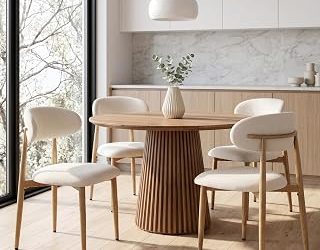
Hinged Drop Leaf Round Table
This is the purest small-space solution here: fold both leaves and a 36-inch round shrinks to a 22-inch console you can push flush against a wall. The hinges are the part to watch during assembly, so seat the screws fully and check that both leaves lock level before you load it up.
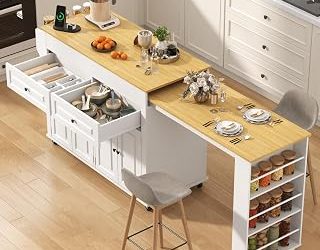
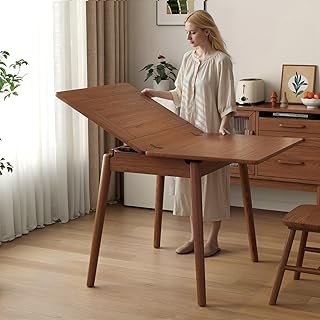
Solid Wood Expandable Table, 23.6″–47.2″
Going from just over 23 inches to nearly 48 is the widest range in this group, which makes it the most flexible pick for a studio or galley kitchen. Solid wood construction means you can refinish the top when it inevitably picks up knife marks, and the assembly is genuinely straightforward.
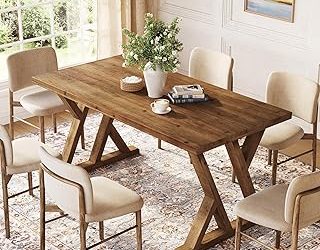
Modern 47.2″–63″ Extendable Table
The removable leaf is the right approach when you host a few times a year: keep it at 47 inches for daily use, slot the extension in for eight, and stash the leaf behind a closet door. The MDF top arrives dead flat, though I’d add felt pads under anything hot or wet.
Tatub 3-Piece Set with 2 Benches
Two benches that tuck completely beneath the tabletop make this the best pick for a breakfast nook where circulation matters more than seat comfort. Assembly is quick, and pre-tightening every bolt before the final torque pass keeps the bench frames from developing a rock.
Gizoon 5-Piece Set for 4
A complete black-and-wood dining setup with upholstered chairs, useful if you’re furnishing an apartment from scratch and don’t want to source seating separately. The chairs are comfortable enough for long meals, but they don’t tuck under, so budget for their full depth.
Frequently Asked Questions
How much clearance do I need behind a dining chair?
Thirty inches per side lets someone sit and stand comfortably. If a wall or counter is right behind, 36 inches allows a person to walk past a seated diner. Under 24 inches and you’re scooting sideways every meal.
Is a round or rectangular table better for a small room?
Round tables win in square rooms and tight corners because there are no sharp corners to navigate and seating is flexible. Rectangular tables suit narrow rooms, where they can sit closer to a wall and still leave a clear walking lane.
Can I use one of these as a desk or console when not dining?
Yes, and it’s the strongest argument for a drop-leaf model. Folded down, it works as an entryway console or laptop desk, then opens for dinner. Just confirm the folded depth clears your hallway.
How long does assembly usually take?
Plan on 30 to 60 minutes for a table alone and closer to 90 for a full set. Keep every bolt finger-tight until the frame is fully assembled, then tighten in a crossing pattern. That single habit eliminates most wobble complaints.
Final Thoughts
For the tightest quarters, the Hinged Drop Leaf table is hard to beat since it genuinely disappears against a wall between meals. If you want one table that handles both weeknights and holidays, the Solid Wood Expandable model offers the widest size range and refinishable top, while the Modern 47.2″–63″ Extendable table is the better fit if you regularly seat six or more and have a closet for the leaf.