Key takeaways
- Footprint math first: Chalk your floor or tape out the closed and extended dimensions before ordering. Add 30 inches minimum on every side you’ll sit at, 36 if it’s also a walkway. A table that fits on paper often doesn’t fit in practice.
- Expansion mechanism type: Butterfly leaves store inside the table and deploy solo in seconds. Removable leaves mean finding storage for a 12-inch plank. Drop leaves are simplest and most reliable but cut usable surface hardest when folded.
- Material honesty: Solid rubberwood or oak takes refinishing and abuse. Thick plywood (18mm and up) is genuinely strong and stable. Particleboard with veneer will chip at the edges and swell if water sits on it. Check the listing’s core material, not just the finish name.
- Leg style versus seating: Four corner legs block chair placement at the ends. Pedestal or center-support bases let you squeeze in an extra person. Metal legs with adjustable feet solve uneven apartment floors that wood legs can’t.
- Casters and storage extras: Locking wheels turn a table into a rolling prep station, but only if the locks actually hold under load. A lower shelf adds real capacity in a kitchen with no pantry — just accept it makes the table read visually heavier.
What's inside
Measure your dining nook and the math gets brutal fast. You need 36 inches of clearance behind each chair to actually pull it out, another 24 inches of table edge per person to eat without elbowing your partner, and somehow that has to fit in a 9-by-10 corner that also holds a radiator. Most “small” dining tables solve this by just being small — a cramped 30-inch square that works fine for cereal and falls apart the moment two friends come over for dinner. That’s the real problem: you’re not shopping for a small table, you’re shopping for a table that’s small most of the time and big when it counts.
I’ve assembled, wobble-tested, and lived with enough flat-pack furniture to know where the shortcuts hide — the particleboard core behind a veneer edge, the cam locks that strip on the second tightening, the extension mechanisms that need two people and a prayer. This guide covers six space-saving dining tables that hold up to hands-on scrutiny, from expandable solid wood models to drop-leaf carts on locking casters. I’ll flag what to check before you buy, what each table does well, and where the compromises land.
As an Amazon Associate we earn from qualifying purchases.



How to Choose a/an Dining Table For Small Spaces (2026)
- Footprint math first: Chalk your floor or tape out the closed and extended dimensions before ordering. Add 30 inches minimum on every side you’ll sit at, 36 if it’s also a walkway. A table that fits on paper often doesn’t fit in practice.
- Expansion mechanism type: Butterfly leaves store inside the table and deploy solo in seconds. Removable leaves mean finding storage for a 12-inch plank. Drop leaves are simplest and most reliable but cut usable surface hardest when folded.
- Material honesty: Solid rubberwood or oak takes refinishing and abuse. Thick plywood (18mm and up) is genuinely strong and stable. Particleboard with veneer will chip at the edges and swell if water sits on it. Check the listing’s core material, not just the finish name.
- Leg style versus seating: Four corner legs block chair placement at the ends. Pedestal or center-support bases let you squeeze in an extra person. Metal legs with adjustable feet solve uneven apartment floors that wood legs can’t.
- Casters and storage extras: Locking wheels turn a table into a rolling prep station, but only if the locks actually hold under load. A lower shelf adds real capacity in a kitchen with no pantry — just accept it makes the table read visually heavier.
The Best Dining Table For Small Spaces (2026)s Reviewed
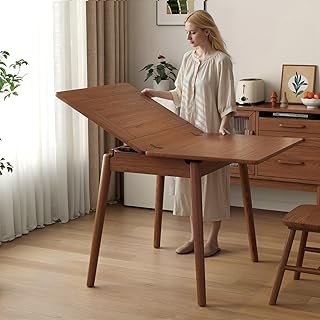
Solid Wood Expandable Table, 23.6″–47.2″ (Walnut)
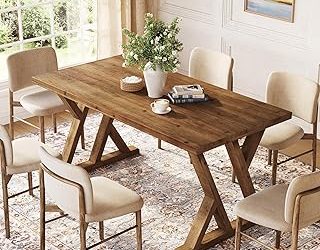
This one earns its keep on range alone — collapsed to 23.6 inches it reads as a console table, opened to 47.2 it seats six in a pinch. Solid wood construction means you can sand out the inevitable knife scars in a few years instead of living with them, and assembly is genuinely straightforward with pre-drilled hardware that lines up on the first try.
AWQM 3-Piece Dining Set for 2
The smart move here is matched proportions: the chairs actually tuck fully under the table, which is the detail most budget sets get wrong by half an inch. It’s the right answer for a breakfast nook or studio where you’d rather buy once than piece together a table and mismatched seating, though the compact top means it stays a two-person setup.
Extendable Round-to-Oval Table with Hidden Storage (Oak)
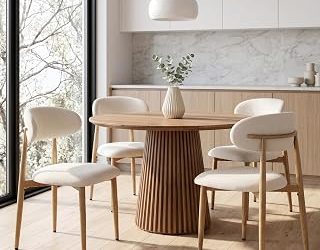
Round-to-oval is the most forgiving geometry in a tight room — no sharp corners to catch hips, and the 35.4-inch closed diameter fits corners a rectangle can’t. The integrated leaf storage is the standout feature since it eliminates the classic problem of a spare leaf living behind the sofa for three years.
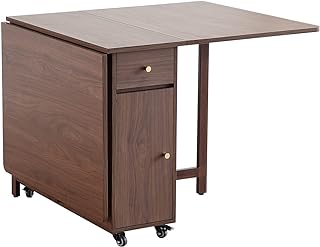
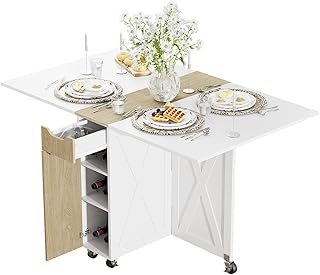
Drop Leaf Folding Table with Storage and Wheels (Walnut)
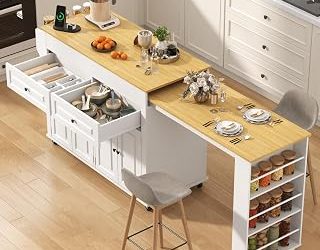
The 18mm plywood and 300-pound rating put this in genuinely sturdy territory, and the locking casters mean it doubles as a kitchen island or craft bench between meals. Both leaves down, it parks flat against a wall — the most complete disappearing act on this list.
42″–58″ Extendable Round Table with Flip Leaf
The built-in flip leaf deploys in one motion without leaving the room, and the metal legs give better lateral stability than wood at this price. The lower shelf is a legitimate bonus in small kitchens, and the leaf-out 58-inch oval comfortably handles six.
Frequently Asked Questions
What’s the smallest table that seats four?
A 36-inch round or a 40-by-28-inch rectangle works if guests are comfortable at close quarters. Round tops seat four more graciously than rectangles at the same footprint because nobody is stuck at a corner.
Are extendable tables stable when opened?
Well-built ones are. Look for a center support leg or a locking slide rail — tables that rely only on friction fit will develop a noticeable dip at the seam within a year of regular use.
How hard is assembly, honestly?
Most of these are 30 to 60 minutes with the included Allen key. The real variable is hardware quality: check that cam locks seat fully before final tightening, and don’t fully torque any bolt until every piece is loosely in place.
Do drop-leaf tables feel flimsy?
Not with proper hinges and a real support bracket underneath. Press down hard on an open leaf when you first assemble it — if there’s flex, the bracket isn’t engaged correctly.
Final Thoughts
For the widest range in the smallest closed footprint, the Solid Wood Expandable Table is the pick — it genuinely transforms from console to six-seater. If you want the leaf to stop being a storage problem, the Round-to-Oval Oak Table with hidden leaf storage solves it elegantly. And for renters who need the table gone entirely between meals, the Drop Leaf Folding Table with locking wheels is the most versatile piece here.