Key takeaways
- Daily output vs. bin size: The headline number (34 to 44 lbs per day) assumes continuous running with the bin emptied. If you’re not transferring ice to a freezer, your practical ceiling is whatever the internal basket holds — usually 2 to 3 lbs. Match output to how you actually use it: entertaining calls for the higher-capacity units, a single daily tumbler does not.
- Cleaning access: A removable top cover is the single most useful feature on these machines. It turns descaling from a blind, awkward reach into something you can actually see and scrub. Auto-clean cycles flush the water path; they don’t remove biofilm from the reservoir corners.
- Noise floor: Nugget makers grind, so the auger noise is unavoidable. Anything rated around 43 dB is genuinely livable in an open kitchen. Units without a published figure typically run louder, especially once the compressor cycles.
- Portability hardware: Built-in handles matter more than they sound like they should. These units weigh 25 to 35 lbs, and moving one for counter cleaning or an RV trip without a grip point is a two-person job.
- Drainage and water lines: Look for a bottom drain plug and a self-recirculating reservoir. Melted ice returning to the tank cuts your refill frequency substantially, but it also means you need to dump and refresh the water every day or two to keep things tasting clean.
What's inside
If you’ve ever hauled home a bag of gas station pellet ice just to keep the habit alive, you already know the problem: that soft, chewable, slushy-textured ice is weirdly addictive, and almost nothing in a standard freezer comes close. Countertop nugget machines solve it, but the category is crowded with lookalike units that share similar spec sheets and wildly different build quality. Drainage design, pump noise, how the auger seats, whether the top cover actually comes off for cleaning — these are the details that decide whether a machine lives on your counter for five years or gets shoved in a closet by month four.
I approached this the way I’d approach any small appliance I plan to open up eventually: looking at serviceability, water path layout, real-world cycle timing, and how each unit handles the boring maintenance that keeps mineral scale from killing the compressor. Below are six machines worth your counter space in 2026, plus a buying framework and answers to the questions that come up most once the box is unpacked.
As an Amazon Associate we earn from qualifying purchases.



How to Choose a Sonic Ice Maker (2026)
- Daily output vs. bin size: The headline number (34 to 44 lbs per day) assumes continuous running with the bin emptied. If you’re not transferring ice to a freezer, your practical ceiling is whatever the internal basket holds — usually 2 to 3 lbs. Match output to how you actually use it: entertaining calls for the higher-capacity units, a single daily tumbler does not.
- Cleaning access: A removable top cover is the single most useful feature on these machines. It turns descaling from a blind, awkward reach into something you can actually see and scrub. Auto-clean cycles flush the water path; they don’t remove biofilm from the reservoir corners.
- Noise floor: Nugget makers grind, so the auger noise is unavoidable. Anything rated around 43 dB is genuinely livable in an open kitchen. Units without a published figure typically run louder, especially once the compressor cycles.
- Portability hardware: Built-in handles matter more than they sound like they should. These units weigh 25 to 35 lbs, and moving one for counter cleaning or an RV trip without a grip point is a two-person job.
- Drainage and water lines: Look for a bottom drain plug and a self-recirculating reservoir. Melted ice returning to the tank cuts your refill frequency substantially, but it also means you need to dump and refresh the water every day or two to keep things tasting clean.
The Best Sonic Ice Maker (2026)s Reviewed
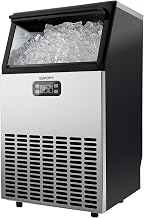
EUHOMY Nugget Ice Maker, 35 lbs/24H
This is the sensible default in the category: stainless housing, first ice in about seven minutes, and a self-cleaning cycle that’s genuinely one-touch rather than a menu dive. The included scoop and basket are better than the usual throwaway accessories, and the 35 lb daily rate covers a family without overrunning the bin.
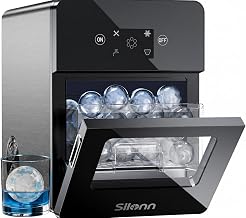
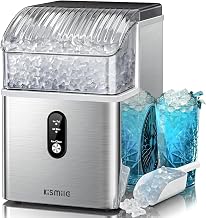
Kismile Nugget Ice Maker, 43 dB
The quietest unit here by a measurable margin, which makes it the pick for open-plan kitchens and home offices where a grinding auger would be distracting. Output matches the EUHOMY at 35 lbs per day, and the stainless finish holds up to fingerprints better than most brushed panels.
EUHOMY 44 lbs/24H Nugget Ice Maker
The highest-capacity machine on this list, and the right call if you’re keeping coolers stocked or running drinks for a crowd. It gives up the carry handle in exchange for that throughput, so plan on a permanent counter home rather than seasonal moves.
40 lbs/Day Nugget Ice Maker with Handle
Five-minute first ice is the fastest spin-up in this group, and pairing 40 lbs of daily output with an integrated handle is a genuinely useful combination. Auto-cleaning is standard, and the soft nugget texture holds up well in tall glasses without collapsing into slush.
EUHOMY Nugget Ice Maker with Handle (Black)
My pick for anyone who moves their machine. The removable top cover plus the handle makes it the easiest unit here to actually maintain, and the black finish suits RV galleys and darker kitchens where stainless looks out of place.
Frequently Asked Questions
Why does my nugget ice melt so fast?
Nugget ice is compressed flakes with air trapped between them, so it has far more surface area than a solid cube. That’s exactly why it chills drinks quickly and absorbs flavor well — the tradeoff is a shorter life in the glass. Pre-chilling your tumbler helps more than anything else.
Can I use tap water, or should I filter it?
Tap water works, but filtered water dramatically extends the interval between descaling cycles. Hard water leaves scale on the evaporator and auger, which is the most common cause of reduced output over time.
How often should I run the self-clean cycle?
Every one to two weeks with normal use, and always after the machine has sat unused for more than a few days. Follow the automated cycle with a manual wipe of the reservoir and basket, since flushing alone won’t lift residue from the corners.
Do these need a plumbed water line?
No — every unit here is a manual-fill countertop design with an internal reservoir. That’s what makes them viable for apartments, RVs, and rentals where tapping a supply line isn’t an option.
Final Thoughts
For most kitchens, the EUHOMY 35 lbs/24H hits the right balance of build quality, cleaning access, and price. Choose the Kismile 43 dB if noise is your main concern, or step up to the EUHOMY 44 lbs/24H when you need volume for entertaining. All three are serviceable enough to keep running with basic descaling, which is ultimately what separates a five-year appliance from a one-season novelty.