Key takeaways
- Thermostat versus delta-T: A unit with digital temperature control and a display can be commanded to a target. A basic thermoelectric cooler only offers “cool” and will drift with the room, so it belongs in an air-conditioned space or a short-hold role.
- Verify with your own thermometer: Never trust the front panel alone. Drop a $10 fridge thermometer or a probe logger inside, run it 24 hours empty, then again loaded, and log the swing. CDC guidance is 40°F or below for refrigerated milk.
- Usable interior geometry: Measure your storage bags or bottles first. Six-can cavities are tall and narrow, which suits standing 5 oz bottles but fights flat-laid bags. A wider 20L box with a shelf handles both.
- Noise and heat rejection: Thermoelectric units use a small fan, so listen for bearing whine and give the vented side three to four inches of clearance. Boxed into a cabinet, the hot side can’t dump heat and interior temps climb.
- Power flexibility: AC/DC models with a 12V cord double as car coolers for the commute home or daycare runs, which is genuinely useful. USB-only power is convenience cooling, not storage cooling.
What's inside
Storing pumped milk shouldn’t require a trek down the hallway at 3 a.m., and it shouldn’t mean burying bags behind last week’s leftovers where the door swing warms them every time someone hunts for cheese. Parents want a small, quiet, dedicated cooler that lives beside the glider or the nursery dresser. The catch is that most compact “mini fridges” in this size class are thermoelectric units, and thermoelectric cooling works by pulling a fixed number of degrees below ambient rather than holding a set temperature. In a 78°F bedroom, “20 degrees below ambient” is not 39°F, and that gap is where milk quietly loses shelf life.
So this guide treats temperature as the spec that matters and everything else as secondary. Below are six popular compact fridges parents actually buy for this job, plus the selection criteria I’d use, the practical shop-bench tweaks that make a marginal cooler perform better, and honest notes on where each unit fits: true storage duty, or short-term holding between the pump and the kitchen freezer.
As an Amazon Associate we earn from qualifying purchases.


How to Choose a Mini Fridge For Breast Milk (2026)
- Thermostat versus delta-T: A unit with digital temperature control and a display can be commanded to a target. A basic thermoelectric cooler only offers “cool” and will drift with the room, so it belongs in an air-conditioned space or a short-hold role.
- Verify with your own thermometer: Never trust the front panel alone. Drop a $10 fridge thermometer or a probe logger inside, run it 24 hours empty, then again loaded, and log the swing. CDC guidance is 40°F or below for refrigerated milk.
- Usable interior geometry: Measure your storage bags or bottles first. Six-can cavities are tall and narrow, which suits standing 5 oz bottles but fights flat-laid bags. A wider 20L box with a shelf handles both.
- Noise and heat rejection: Thermoelectric units use a small fan, so listen for bearing whine and give the vented side three to four inches of clearance. Boxed into a cabinet, the hot side can’t dump heat and interior temps climb.
- Power flexibility: AC/DC models with a 12V cord double as car coolers for the commute home or daycare runs, which is genuinely useful. USB-only power is convenience cooling, not storage cooling.
The Best Mini Fridges For Breast Milk (2026) Reviewed
Cooluli 20L Glass Front with Digital Temperature Control
This is the one I’d point a pumping parent toward first, because digital temperature control and a real display mean you’re setting a target rather than hoping the room cooperates. The 20L cavity with a shelf fits bottles upright and bags flat, and the glass door lets you rotate oldest-first stock without opening it.
CROWNFUL 4 Liter Portable Cooler and Warmer
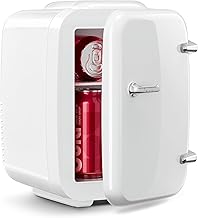
A tidy, ETL-listed 4L box that runs quietly and holds six bottles comfortably, making it a solid bedside unit for a cooled, stable room. Treat it as short-term holding rather than multi-day storage unless your thermometer proves otherwise.
Cooluli Mini Fridge 4L with USB Option
Cooluli’s small model earns its reputation on build quality and the AC/DC/USB flexibility, which makes it the most travel-ready pick here for car seats and desk drawers. The USB mode is the weakest cooling path, so reserve it for transport, not overnight duty.
BEICHEN 4L Portable Small Refrigerator
Cooling pull-down is noticeably brisk for this class and fan noise stays low enough for a nursery, which is a fair combination at the price. Like its 4L peers, performance tracks room temperature, so pair it with a thermometer and a cool bedroom.
Antarctic Star 4L/6 Can Personal Compact Refrigerator
A no-frills, honestly priced compact cooler with clean lines and dual AC/DC power for the car. It’s the budget slot on this list: fine as a dedicated bedside holding box, not a substitute for a thermostat-controlled unit.
Frequently Asked Questions
Can a thermoelectric mini fridge legitimately store breast milk?
Only if it verifiably holds 40°F or below. In a 68–72°F room many of these units get there; in a warm summer bedroom they often don’t. Measure before you commit anything valuable to it.
How long does refrigerated milk keep?
Standard guidance is up to four days at 40°F or below, with earlier freezing preferred for best quality. Follow your pediatrician’s advice for preterm or medically fragile infants.
What DIY tweaks actually improve performance?
Add self-adhesive foam weatherstrip if the door gasket is thin, shim the unit level so the door seats fully, keep four inches of rear clearance, and store two frozen water bottles inside as thermal mass to blunt door-open spikes.
Is the warming function worth having?
Not for milk. Warming stored milk in the same box you cool it in is an easy way to cycle through the temperature danger zone. Use a bottle warmer or a bowl of warm water instead.
Final Thoughts
For genuine storage, the Cooluli 20L with digital temperature control is the clear pick, since it’s the only unit here that lets you set and confirm a target temperature. If you want a quiet bedside holding box for the stretch between pumping and the kitchen freezer, the CROWNFUL 4L and the Cooluli 4L are the two I’d trust, both paired with an inexpensive thermometer you actually read.