Key takeaways
- Insulated bin vs. bare basket: Run your hand along the inside wall of the storage bin. Double-wall construction with an air gap holds ice noticeably longer than single-layer plastic. Units with a lid that seals rather than just rests on top buy you another hour or two.
- Meltwater recirculation: Nearly every countertop unit drains melt back to the reservoir and refreezes it. That’s fine and actually efficient, but it means the machine will cycle whenever the bin sensor reads low. Look for models with a pre-cooling stage so those refill cycles don’t waste energy warming the plate first.
- Production speed over bin size: A machine that makes 9 cubes in 3 minutes beats a machine with a huge bin that takes 15. Fast recovery is the practical workaround for the fact that nothing here is a freezer.
- Water tank access and volume: Top-fill is worth paying for. Side tanks and removable reservoirs are convenient too, but bottom-loading trays mean you’re sliding the whole unit forward every time. A 1.8 L tank is the realistic floor; anything smaller means constant refills.
- Cleaning cycle you’ll actually use: Mineral scale kills these machines. One-touch self-clean plus descaler compatibility matters more than any other feature for long-term ownership, because a scaled evaporator makes cloudy, slow-forming ice that melts faster.
What's inside
Here’s the thing nobody tells you when you unbox your first countertop ice maker: most of them don’t actually keep ice frozen. They’re ice producers, not freezers. Drop 3 lbs of nugget ice into the bin at 8 a.m., come back at noon, and you’ll find a slushy puddle with a few sad pellets floating in it. The machine recycles that meltwater into the next batch, which sounds clever until you realize it means your unit is running cycles all day just to keep pace with its own losses. I’ve had one sitting on my workbench-turned-coffee-station for two years now, and the difference between a well-insulated bin and a thin plastic tub is night and day.
So this roundup looks at the models that actually hold ice the longest, or at least make it fast enough that a melt-down doesn’t matter. I dug into bin insulation, recirculation behavior, production speed, and how each unit handles being left alone. Below you’ll find the picks, a straightforward buying checklist based on what I’ve learned tearing into these things, and answers to the questions people ask me most.
As an Amazon Associate we earn from qualifying purchases.


How to Choose a Countertop Ice Maker That Keeps Ice Frozen (2026)
- Insulated bin vs. bare basket: Run your hand along the inside wall of the storage bin. Double-wall construction with an air gap holds ice noticeably longer than single-layer plastic. Units with a lid that seals rather than just rests on top buy you another hour or two.
- Meltwater recirculation: Nearly every countertop unit drains melt back to the reservoir and refreezes it. That’s fine and actually efficient, but it means the machine will cycle whenever the bin sensor reads low. Look for models with a pre-cooling stage so those refill cycles don’t waste energy warming the plate first.
- Production speed over bin size: A machine that makes 9 cubes in 3 minutes beats a machine with a huge bin that takes 15. Fast recovery is the practical workaround for the fact that nothing here is a freezer.
- Water tank access and volume: Top-fill is worth paying for. Side tanks and removable reservoirs are convenient too, but bottom-loading trays mean you’re sliding the whole unit forward every time. A 1.8 L tank is the realistic floor; anything smaller means constant refills.
- Cleaning cycle you’ll actually use: Mineral scale kills these machines. One-touch self-clean plus descaler compatibility matters more than any other feature for long-term ownership, because a scaled evaporator makes cloudy, slow-forming ice that melts faster.
The Best Countertop Ice Makers That Keep Ice Frozen (2026) Reviewed
GE Profile Opal MINI PRO Nugget Ice Maker
The Opal line still sets the standard for nugget texture, and the MINI PRO’s side tank plus top-fill design means you can run it most of a day without touching it. At 36 lbs/day it recovers quickly, and the included descaler pack tells you GE knows scale is the real enemy here.
GoveeLife Smart Countertop Ice Maker 2 Pro
The smart pre-cooling feature is the standout: it chills the plate before the cycle starts, so ice forms faster and the machine isn’t fighting itself. Nine cubes in three minutes at 47 lbs/day makes this the fastest recovery on the list, and app control means you can start a batch before you get home.
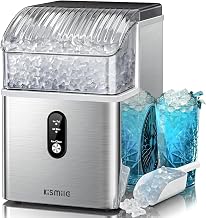
Kismile Nugget Ice Maker Countertop
First ice in seven minutes and a genuinely quiet 43 dB, which matters if this lives in a kitchen you spend time in. The stainless housing feels considerably more solid than the plastic-shell competition, and the one-touch self-clean is about as painless as these get.
EUHOMY Nugget Ice Maker Countertop
A solid value play in the nugget category at 35 lbs/day with the same seven-minute first-ice timing as pricier units. The included scoop and basket are basic but functional, and the stainless finish holds up better than you’d expect at this price point.
Antarctic Star Nugget Ice Maker Countertop
The auto ice drop and dispenser setup is the differentiator, letting you fill a glass directly rather than digging with a scoop. At 33 lbs/day with a 1.8 L tank it’s the most compact of the nugget options, which suits smaller counters and RV galleys.
Frequently Asked Questions
Do countertop ice makers actually keep ice frozen?
Not indefinitely. None of these are freezers, so ice in the bin will slowly melt and recirculate. The best-insulated models will hold usable ice for three to five hours with the lid closed; after that you’re relying on the machine’s recovery speed.
Why does my ice maker smell or taste off?
Almost always stagnant water in the reservoir. Empty the tank when you’re not using it for more than a day, and run a descaling cycle every two to four weeks depending on your water hardness. Filtered water helps considerably.
Is nugget ice worth the extra cost over cube?
If you drink a lot of iced coffee or cocktails, yes. Nugget ice chews soft, chills fast, and absorbs flavor. It also melts faster than solid cubes, so it’s the wrong choice if long-term bin storage is your priority.
Can I plumb one of these into a water line?
Most countertop models are manual-fill only, and adding a line yourself means bypassing the float sensor, which risks overflow. If you want plumbed-in convenience, that’s an under-counter unit, not a countertop one.
Final Thoughts
If you want the best nugget ice with the least fuss, the GE Profile Opal MINI PRO earns its price through texture quality and the convenience of top-fill plus a side tank. The GoveeLife Ice Maker 2 Pro is the smarter buy if fast recovery matters more than nugget texture, since pre-cooling and 47 lbs/day mean the bin refills before you notice it’s low. And for anyone who wants stainless build quality and quiet operation without the premium markup, the Kismile is the pick I’d hand to a friend setting up their first ice station.