Key takeaways
- Leg material and joinery: Solid rubberwood and steel both hold up well, but check how legs mount. Bolts threaded into metal inserts stay tight; screws driven straight into softwood will loosen. Keep an Allen key in the kitchen drawer and re-torque every few months.
- Fabric weave, not just color: Chenille feels plush and hides crumbs; flat-woven linen looks crisper but shows abrasion sooner. Look for a rub-count rating if the listing gives one, and treat anything under 15,000 double rubs as light-duty seating.
- Cushion thickness and foam recovery: Press the seat and watch it rebound. Thin foam over a hard board goes numb after twenty minutes. Two to three inches of high-resilience foam is the sweet spot for meals that run long.
- Seat height and table clearance: Aim for 10 to 12 inches between seat top and tabletop underside. Measure your table first — a 19-inch seat under a 28-inch table leaves knees pinched, especially with an apron rail in the way.
- Repairability: Removable seat pads are the difference between a stain and a replacement. If the seat lifts off with four screws, you can re-cover it in an afternoon with a yard of fabric and a staple gun.
What's inside
Anyone who has flipped a dining chair upside down to check the joinery knows the frustration: the showroom pieces look great until you spot four staples holding a seat pan to a frame that will wobble by spring. Fabric dining chairs sit in a strange middle ground — soft enough to invite long dinners, structural enough that a bad build shows up fast. Add kids, pets, and a Sunday roast, and the upholstery becomes a wear surface rather than a decorative detail.
This guide takes a maker’s view. Rather than judging chairs on styling alone, it looks at how they go together: leg material and attachment method, foam density, cover weave, and whether the parts can be replaced or re-covered instead of tossed. Below are six fabric dining chairs worth considering in 2026, with notes on what each one gets right and where you may want to reach for a screwdriver.
As an Amazon Associate we earn from qualifying purchases.




How to Choose a Fabric Dining Chairs (2026)
- Leg material and joinery: Solid rubberwood and steel both hold up well, but check how legs mount. Bolts threaded into metal inserts stay tight; screws driven straight into softwood will loosen. Keep an Allen key in the kitchen drawer and re-torque every few months.
- Fabric weave, not just color: Chenille feels plush and hides crumbs; flat-woven linen looks crisper but shows abrasion sooner. Look for a rub-count rating if the listing gives one, and treat anything under 15,000 double rubs as light-duty seating.
- Cushion thickness and foam recovery: Press the seat and watch it rebound. Thin foam over a hard board goes numb after twenty minutes. Two to three inches of high-resilience foam is the sweet spot for meals that run long.
- Seat height and table clearance: Aim for 10 to 12 inches between seat top and tabletop underside. Measure your table first — a 19-inch seat under a 28-inch table leaves knees pinched, especially with an apron rail in the way.
- Repairability: Removable seat pads are the difference between a stain and a replacement. If the seat lifts off with four screws, you can re-cover it in an afternoon with a yard of fabric and a staple gun.
The Best Fabric Dining Chairs (2026)s Reviewed
VKNOW Wooden Dining Chairs Set of 4, Curved Backrest
The curved backrest here does real ergonomic work, spreading pressure across the lumbar instead of digging in at one point, and the thickened chenille cushion holds shape better than the thin pads common at this price. Rubberwood legs bolt on cleanly, though I’d recommend snugging the hardware after the first week of use once the joints settle.
VKNOW Modern Dining Chairs, Linen, Set of 4
A more restrained take from the same maker — flat linen-look upholstery over padded seats, with the same rubberwood leg system that assembles in under ten minutes per chair. The tighter weave suits households that want something easy to spot-clean, and the neutral tone plays well against both oak and painted tables.
Linen Fabric Dining Chair Set of 8, Tufted with Nailhead Trim
Buying eight matched chairs at once is usually where budgets break, and this set solves that without resorting to plastic shells. The nailhead trim and button tufting read as traditional, and the light wood legs are solid stock rather than veneer — just plan on tightening the trim tacks if you have curious kids.
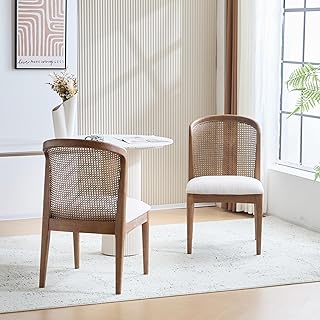
Christopher Knight Home Lilia Dining Chairs, Set of 2
The cane webbing back is the standout detail, giving visual lightness that upholstered slabs can’t match while cutting weight for easy repositioning. Rubberwood frames and beige-on-walnut finishing make these a strong choice as head chairs or overflow seating, though the woven cane deserves a gentler cleaning routine than fabric.
UVV Dining Chairs Set of 4, Metal Frame
Powder-coated steel legs mean these stay rigid indefinitely — no seasonal wood movement, no re-gluing joints down the road. The upholstered seats are generous and the frame geometry stacks nicely against a wall, making this a practical pick for rentals, apartments, or anywhere chairs get shuffled often.
Frequently Asked Questions
How do I clean fabric dining chairs without wrecking the upholstery?
Blot spills immediately with a dry cloth, then treat with a mild upholstery cleaner tested on a hidden section first. Vacuum weekly with a brush attachment — most fabric wear comes from grit abrading fibers, not from stains.
Are fabric chairs practical with young children?
Yes, if you choose textured weaves like chenille that disguise marks, and consider a fabric protector spray applied before first use. Removable seat pads make the biggest difference, since one seat can be re-covered without touching the rest.
Can I re-cover these seats myself?
Usually, yes. Flip the chair, remove the four screws holding the seat pan, then staple new fabric over the existing foam, pulling corners in neat folds. A yard of upholstery fabric and a manual staple gun handles most single-chair jobs.
Wood legs or metal legs?
Metal wins on long-term rigidity and works well in high-traffic homes. Wood offers warmth and can be sanded and refinished if scuffed. Both are sound choices, so let your table and floor finish guide the call.
Final Thoughts
For most dining rooms, the VKNOW Wooden Dining Chairs with curved backrest offer the best balance of comfort, buildability, and price across a set of four. Large households should look hard at the eight-piece tufted linen set, while the Christopher Knight Lilia earns its place if you want cane detailing and a frame that repays a little upkeep with years of service.