Key takeaways
- Abrasion resistance: Look for 15,000 double rubs minimum for family dining, 30,000+ if the chairs get daily use. Vendors don’t always publish this, so weight matters as a proxy — heavier hand almost always means longer service life.
- Weave tightness: Hold the fabric up to a window. If light pours through the gaps, crumbs and liquid will too. Tight plain weaves and faux linens outperform loose basketweaves on eating surfaces.
- Yardage math: Budget half a yard per standard seat pad, plus 25% for pattern matching and corner waste. A 57-inch width gets you two pads side by side; narrower goods force wasteful single-file cuts.
- Cleanability: Decide upfront between removable-and-washable or wipe-clean. Water-resistant polyester lets you blot a spill in seconds; cotton-blend covers need the machine but come out genuinely fresh.
- Stretch recovery: For slipcovers, spandex content is the whole ballgame. Cheap knits go baggy at the seat by month three. Check that the cover has elastic or a drawcord at the underside, not just stretch fabric.
What's inside
Dining chairs take more abuse than almost any seat in the house. Gravy drips, kids’ juice cups, dog hair worked into the weave, and the slow polish that develops where forearms rest on the top rail. Most people discover the problem the same way: you flip a chair over, see a staple line from 1998, and realize the seat pad underneath has gone the color of weak tea. From there it’s a fork in the road — recover the pads with real yardage, or throw a stretch cover over the whole thing and move on with your weekend.
This guide splits the difference honestly. I’ve stapled a lot of seat pads and washed a lot of slipcovers, so below you’ll find both routes: upholstery yardage worth cutting into, and covers that hold their shape after a dozen laundry cycles. Expect notes on rub counts, water resistance, stretch recovery, and the small stuff nobody mentions — like how much fabric you actually waste on a curved seat corner.
As an Amazon Associate we earn from qualifying purchases.



How to Choose a Fabric For Dining Room Chairs (2026)
- Abrasion resistance: Look for 15,000 double rubs minimum for family dining, 30,000+ if the chairs get daily use. Vendors don’t always publish this, so weight matters as a proxy — heavier hand almost always means longer service life.
- Weave tightness: Hold the fabric up to a window. If light pours through the gaps, crumbs and liquid will too. Tight plain weaves and faux linens outperform loose basketweaves on eating surfaces.
- Yardage math: Budget half a yard per standard seat pad, plus 25% for pattern matching and corner waste. A 57-inch width gets you two pads side by side; narrower goods force wasteful single-file cuts.
- Cleanability: Decide upfront between removable-and-washable or wipe-clean. Water-resistant polyester lets you blot a spill in seconds; cotton-blend covers need the machine but come out genuinely fresh.
- Stretch recovery: For slipcovers, spandex content is the whole ballgame. Cheap knits go baggy at the seat by month three. Check that the cover has elastic or a drawcord at the underside, not just stretch fabric.
The Best Fabric For Dining Room Chairs (2026)s Reviewed
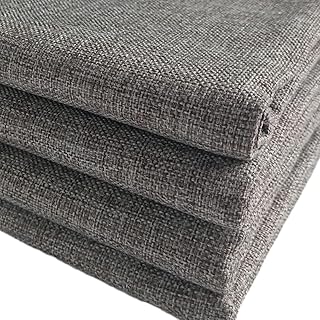
TinaKim Thick Chair Upholstery Fabric
This is the one I reach for when reupholstering seat pads, because the faux linen has enough body to pull taut over foam without telegraphing every staple. Two yards at 57 inches covers four to six standard pads, and the flaxen tone reads like real linen under warm dining light without linen’s wrinkle habit.
K-Musculo 600D Water Resistant Fabric
The 600D polyester is the practical choice for households with toddlers or messy eaters — spills bead on the surface long enough to grab a towel. It’s stiffer than upholstery fabric, so pre-crease your corners with an iron before stapling, and expect it to look more contemporary than classic.
Faux Linen Needlework Fabric, 3.3 Yards
At 3.3 yards you can cover a full six-chair set and still have scraps for cushion piping or a matching runner. The grey blue is a genuinely useful neutral, and the fabric takes a needle cleanly whether you’re hand-sewing a boxed cushion or running it through a machine.
Seat Covers for Dining Room, Set of 6
For anyone who’d rather not touch a staple gun, these stretch seat slipcovers wrap just the cushion and pull snug underneath, so they read as upholstery rather than a cover-up. They shed pet hair in the wash and dry fast, which matters when you’re doing this every few weeks.
Stretch Chair Covers for Parsons Chairs, Set of 4
Parsons chairs are awkward to recover because of the full-height back, so a full-body stretch cover is the sane answer. Installation takes under a minute per chair, and the knit hides the original fabric completely — useful for rentals or dated inherited sets.
Frequently Asked Questions
How much fabric do I need for six dining chairs?
For simple drop-in seat pads, plan on roughly 3 yards of 54–57 inch goods. Chairs with fully upholstered backs or skirts can push that to 6–8 yards, so measure and add a 25% buffer before buying.
Can I use outdoor fabric on indoor dining chairs?
Absolutely, and it’s an underrated move. Water-resistant polyester like the K-Musculo 600D cleans up faster than any indoor fabric; the tradeoff is a slightly firmer, less inviting hand against bare legs.
Do I need to strip the old fabric first?
Not always. If the existing layer is flat and dry, you can staple over it, which adds a bit of padding. Strip it if there’s mildew, lumps, or you’d end up with a third or fourth layer fighting your staples.
Will slipcovers slide around during meals?
Well-designed ones don’t. Look for elastic hems or ties at the underside, and consider small non-slip foam pads between the cover and cushion if you’ve got a particularly slick seat surface.
Final Thoughts
If you’re doing the work properly, the TinaKim Thick Chair Upholstery Fabric gives the most convincing result for the effort, with the Faux Linen Needlework Fabric worth the upgrade when you need enough yardage to cover a full set in one go. For families who need spills gone in seconds, the K-Musculo 600D earns its place — and if the staple gun stays in the drawer, the six-pack stretch seat covers are a legitimate fix rather than a compromise.