Key takeaways
- Measure the room, not the table: Budget 36 inches of walkway behind every chair you plan to pull out, and 24 inches of edge per diner. A 60-inch top seats six snugly; 70-plus inches gives elbow room without upgrading to a bigger room.
- Read the material list literally: “Solid wood” sometimes means only the legs. Rubberwood and acacia are legitimate hardwoods; MDF substrates under veneer are fine structurally but unforgiving of water and impossible to sand back.
- Check the fasteners before you commit: Threaded steel inserts with bolts hold torque far better than screws driven straight into engineered panels. If a set uses cam locks at load-bearing corners, plan on adding glue blocks during assembly.
- Test the extension mechanism logic: Butterfly and self-storing leaves stay with the table; drop-in leaves need closet space. Either way, look for metal slides rather than wood-on-wood runners, which swell and bind in humid rooms.
- Match the seat to your household: Upholstered chairs are quieter and warmer but absorb spills. Wipe-clean wood or faux-leather seats are the practical call with young kids, and you can always add a cushion later.
What's inside
Six chairs is where dining sets start getting honest. Four-seaters forgive a lot of design shortcuts, but stretch a top past 60 inches and every weak joint, undersized apron, and thin substrate starts announcing itself within a month. If you’ve ever flipped a table over to add corner blocks because it racked sideways when someone leaned on it, you already know the failure points aren’t in the marketing photos. They’re in the hardware bag, the leg-to-apron connection, and whether the top is solid stock or a veneer skin over particleboard.
I put this guide together from a builder’s perspective rather than a showroom one. Below you’ll find the sets worth your money in 2026, judged on the things that actually determine whether a table survives a decade of homework, holiday spreads, and kids swinging on the chair backs: substrate quality, fastener type, seat construction, and how easily you can repair or refinish what you own instead of replacing it.
As an Amazon Associate we earn from qualifying purchases.
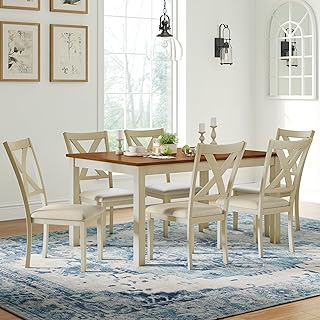


How to Choose a Dining Table Set For 6 (2026)
- Measure the room, not the table: Budget 36 inches of walkway behind every chair you plan to pull out, and 24 inches of edge per diner. A 60-inch top seats six snugly; 70-plus inches gives elbow room without upgrading to a bigger room.
- Read the material list literally: “Solid wood” sometimes means only the legs. Rubberwood and acacia are legitimate hardwoods; MDF substrates under veneer are fine structurally but unforgiving of water and impossible to sand back.
- Check the fasteners before you commit: Threaded steel inserts with bolts hold torque far better than screws driven straight into engineered panels. If a set uses cam locks at load-bearing corners, plan on adding glue blocks during assembly.
- Test the extension mechanism logic: Butterfly and self-storing leaves stay with the table; drop-in leaves need closet space. Either way, look for metal slides rather than wood-on-wood runners, which swell and bind in humid rooms.
- Match the seat to your household: Upholstered chairs are quieter and warmer but absorb spills. Wipe-clean wood or faux-leather seats are the practical call with young kids, and you can always add a cushion later.
The Best Dining Table Sets For 6 (2026) Reviewed
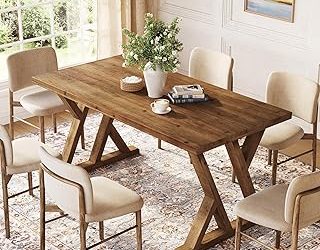
AMERLIFE 7-Piece Farmhouse Solid Wood Set
The 60-inch solid wood top is the star here, with enough thickness to sand and re-oil years from now instead of tossing the whole thing. Assembly is straightforward, though I’d run a bead of wood glue into the leg mortises and re-torque the apron bolts after the first month of use.
St.Mandyu 71-Inch Dining Table & Chairs Set
At 71 inches this is the one to pick if you regularly squeeze in seven or eight, and the wooden leg splay keeps knees clear of the corners. The generous top-to-frame overhang makes it easy to clamp on a temporary leaf extender or a table saw sled if you’re the type who borrows the dining table for projects.
Miereirl 59″–77″ Extendable Farmhouse Set
A genuinely useful 18 inches of expansion makes this the smartest small-apartment buy on the list, and the walnut finish hides scuffs better than lighter tones. Extend it fully once before guests arrive so you can level the slides and confirm the leaf sits flush.
Ashley Blondon 7-Piece Wood Set
Rubberwood solids and solid-wood chair frames put this a tier above the typical flat-pack build, and the hard seats wipe down in seconds. It’s the set I’d recommend to anyone tired of reupholstering chairs every few years.
Henf 63″–79″ Faux Marble Extendable Set
The double-column pedestal base frees up leg room that four-leg designs waste, and the faux marble top shrugs off heat and moisture better than veneered wood. Get a second pair of hands for the top install, since the stone-look panel is heavy and awkward to seat on the base alone.
Frequently Asked Questions
What table size do six people actually need?
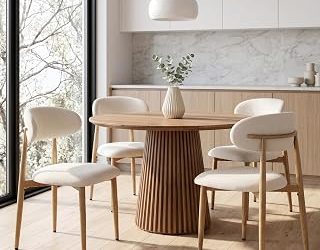
Sixty inches is the practical minimum for a rectangular top, and 66 to 72 inches is more comfortable. Round tables need roughly 54 to 60 inches of diameter to seat six without shoulder contact.
Are extendable tables less sturdy?
Not inherently, but the joint between halves is the weak point. Look for metal slides and a leaf that locks or pins in place, and avoid leaning on the seam.
Can I refinish a veneered or MDF table?
Veneer can be lightly scuff-sanded and recoated, but you can’t sand out deep gouges without cutting through. MDF cores tolerate paint well, which is often the better rescue plan.
How long does assembly take?
Plan on 60 to 90 minutes for a seven-piece set with two people, most of it chair legs. Keep a socket driver handy and finish-tighten everything only after all parts are loosely fitted and square.
Final Thoughts
For long-term durability and repairability, the AMERLIFE solid wood set and the Ashley Blondon are the two I’d put my own money behind. If square footage is the constraint, the Miereirl extendable delivers the most flexibility per inch, expanding for company and tucking back down the rest of the week.