Key takeaways
- Drain requirements: This decides your whole project. Gravity-drain models need a floor drain or a downhill run to a P-trap, which usually means cutting subfloor. Pump-equipped units push condensate upward into an existing sink drain, and drainless designs melt runoff back into the reservoir. Confirm before you buy the cabinet hardware.
- Rough opening and clearances: Most undercounter units want a 15-inch wide bay, but the depth and the front-breathing ventilation matter more. Leave the manufacturer’s recommended air gap at the top and rear, or the compressor will short-cycle and your ice output will fall off a cliff in summer.
- Daily output versus bin size: A 100 lb/day machine with a 30 lb bin is built for continuous use, not storage. If you entertain in bursts, bin capacity is what you actually feel. If you host all afternoon, production rate wins.
- Ice format: Crescent and cube ice chill fast and last in a glass. Nugget and pellet ice is chewable, absorbs flavor, and melts quicker. Pick the one your household will actually reach for, since no amount of installation quality fixes the wrong ice.
- Self-cleaning and access: Scale is the number one killer of these machines. Choose a unit with a self-clean cycle, and plan your cabinet so you can pull it forward without dismantling toe-kick trim.
What's inside
Anyone who has cut an opening for an undercounter appliance knows the hard part is not the cabinetry. It’s the moment you realize the unit needs a drain line, the nearest supply is fifteen feet away behind a run of finished trim, and the spec sheet buried the words “gravity drain required” in a footnote. Built-in ice makers are the appliance most likely to surprise you mid-project, because ice production is only half the equation. Water in, water out, and heat rejected somewhere it won’t cook your cabinet interior.
This guide is written for people holding a jigsaw, not a catalog. Below you’ll find the units worth building into a kitchen island, a bar cabinet, or a garage beverage station in 2026, along with what each one actually demands from your plumbing and framing. There are also honest picks for anyone who wants nugget ice without opening a wall, because sometimes the smartest install is the one you skip.
As an Amazon Associate we earn from qualifying purchases.


How to Choose a Built-In Ice Maker (2026)
- Drain requirements: This decides your whole project. Gravity-drain models need a floor drain or a downhill run to a P-trap, which usually means cutting subfloor. Pump-equipped units push condensate upward into an existing sink drain, and drainless designs melt runoff back into the reservoir. Confirm before you buy the cabinet hardware.
- Rough opening and clearances: Most undercounter units want a 15-inch wide bay, but the depth and the front-breathing ventilation matter more. Leave the manufacturer’s recommended air gap at the top and rear, or the compressor will short-cycle and your ice output will fall off a cliff in summer.
- Daily output versus bin size: A 100 lb/day machine with a 30 lb bin is built for continuous use, not storage. If you entertain in bursts, bin capacity is what you actually feel. If you host all afternoon, production rate wins.
- Ice format: Crescent and cube ice chill fast and last in a glass. Nugget and pellet ice is chewable, absorbs flavor, and melts quicker. Pick the one your household will actually reach for, since no amount of installation quality fixes the wrong ice.
- Self-cleaning and access: Scale is the number one killer of these machines. Choose a unit with a self-clean cycle, and plan your cabinet so you can pull it forward without dismantling toe-kick trim.
The Best Built-In Ice Maker (2026)s Reviewed
Mojgar 15″ Undercounter Ice Maker (30 lb Bin)
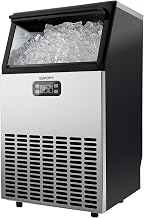
This is the straightforward choice for a proper built-in job: ETL-listed, 100 lbs per day, and sized to a standard 15-inch bay with freestanding flexibility if plans change. The self-cleaning cycle earns its keep, though budget for a gravity drain path before you commit to the cabinet layout.
VEVOR Under Counter Ice Maker with Drain Pump
The integrated drain pump is the feature that saves weekends. At 80 lbs per day with a 26 lb bin and a reversible door, it can go into a bar cabinet where the only available drain is above floor level, which rules out most of its competition.
EdgeStar 15 Inch Built-In Ice Maker
No drain required, and that changes the math entirely for island installs and finished basements. Output is modest at 15 lbs per day with a 12 lb bin, so treat it as a two-person household or home-office unit rather than a party machine.
Mojgar Commercial Ice Maker (33 lb Storage)
Effectively the same 100 lb/day platform with slightly more bin capacity and a stainless exterior that holds up to a busy wet bar. Worth choosing over its sibling if your buffer capacity matters more than shaving an inch off the footprint.
GE Profile Opal MINI PRO Nugget Ice Maker
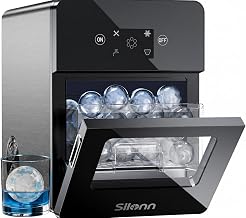
Not a built-in, but the honest answer for anyone whose ice priority is nugget texture rather than volume. The side tank stretches the run time between fills, and it slots neatly into a countertop alcove or an appliance garage with no plumbing at all.
Frequently Asked Questions
Can I install a built-in ice maker without a drain?
Yes, if you buy a drainless model like the EdgeStar or a pump-equipped unit like the VEVOR. Never install a gravity-drain machine without a functioning drain path, since meltwater will find your subfloor instead.
Does it need a dedicated water line?
Undercounter machines do. Run 1/4-inch tubing from a cold supply with its own shutoff valve, and add an inline filter to slow scale buildup. Countertop nugget makers like the Opal Mini fill by hand.
Why is my ice production lower than advertised?
Almost always heat or airflow. Rated output assumes cool ambient temperature and unobstructed front ventilation, so a blocked grille or a hot garage cuts production significantly.
How often should I clean it?
Run the self-clean or descaling cycle every three to six months, more often on hard water. Skipping this is the fastest route to cloudy ice and a stalled compressor.
Final Thoughts
For a full built-in with proper capacity, the Mojgar 15″ undercounter unit is the most complete package, while the VEVOR with its drain pump is the smarter pick when your plumbing situation is less than ideal. If you want to skip the plumbing entirely, the EdgeStar’s drainless design or the GE Profile Opal MINI PRO will get cold drinks on the counter this weekend instead of next month.