Key takeaways
- Fill method: Top-fill reservoirs let you pour from a pitcher without moving the machine, which matters if you’re working under a 16-inch cabinet clearance. Side tanks add capacity but need elbow room, so measure your counter depth and the gap beside the unit before you commit.
- Daily output vs. bin size: Nearly every model advertises 33 to 44 lbs per day, but the storage bin usually holds only 2 to 3 lbs. Nugget ice melts fast and most bins aren’t refrigerated, so treat output as your real number and plan to bag surplus in the freezer.
- Cleaning cycle access: A self-clean button saves time, but you still want a drain plug you can reach and a reservoir you can wipe by hand. Machines that hide their water path behind sealed panels are the ones that eventually smell.
- Parts and consumables: Check whether descaler packets, filters, and scoops are sold separately or bundled, and whether the maker publishes replacement part numbers. Long-term ownership hinges on being able to swap a pump or a filter instead of replacing the whole unit.
- Noise and heat clearance: The auger grind and compressor cycle land somewhere around a dishwasher in volume. Leave 4 to 6 inches of ventilation on all sides, and keep it off a resonant surface like a hollow butcher block cart if you want it quieter.
What's inside
If you’ve ever chewed through a cup of nugget ice from a drive-thru soda fountain and then tried to replicate it at home with a tray of cubes, you already know the problem. Standard ice is dense, loud in the glass, and slow to take on flavor. Pellet ice is the opposite: soft, porous, and chewable, which is exactly why it disappears so fast once there’s a machine on the counter. The catch is that countertop pellet makers are the fussiest small appliance in most kitchens. They involve a pump, a rotating auger, a compressor, and standing water, all crammed into a footprint the size of a bread box. Buy the wrong one and you’re descaling a gurgling brick every other week.
This guide comes at it from a tinkerer’s perspective: what’s actually serviceable, what clogs, which reservoirs are easy to drain, and which models let you refill without pulling the unit out from under the upper cabinets. Below are six countertop pellet ice makers worth considering in 2026, followed by a buying checklist, short reviews of the top performers, and answers to the questions that come up after the first month of ownership.
As an Amazon Associate we earn from qualifying purchases.


How to Choose a Pellet Ice Maker Countertop (2026)
- Fill method: Top-fill reservoirs let you pour from a pitcher without moving the machine, which matters if you’re working under a 16-inch cabinet clearance. Side tanks add capacity but need elbow room, so measure your counter depth and the gap beside the unit before you commit.
- Daily output vs. bin size: Nearly every model advertises 33 to 44 lbs per day, but the storage bin usually holds only 2 to 3 lbs. Nugget ice melts fast and most bins aren’t refrigerated, so treat output as your real number and plan to bag surplus in the freezer.
- Cleaning cycle access: A self-clean button saves time, but you still want a drain plug you can reach and a reservoir you can wipe by hand. Machines that hide their water path behind sealed panels are the ones that eventually smell.
- Parts and consumables: Check whether descaler packets, filters, and scoops are sold separately or bundled, and whether the maker publishes replacement part numbers. Long-term ownership hinges on being able to swap a pump or a filter instead of replacing the whole unit.
- Noise and heat clearance: The auger grind and compressor cycle land somewhere around a dishwasher in volume. Leave 4 to 6 inches of ventilation on all sides, and keep it off a resonant surface like a hollow butcher block cart if you want it quieter.
The Best Countertop Pellet Ice Makers of 2026, Reviewed
GE Profile Opal Mini Nugget Ice Maker
The Opal Mini is the benchmark for a reason: nugget texture is genuinely close to commercial soft ice, and the top-fill reservoir plus bundled descaler pack means you can maintain it properly from day one. At 36 lbs per day with a 2 lb bin, it suits a household that grazes ice throughout the day rather than filling a cooler.
GE Profile Opal MINI PRO with Side Tank
The MINI PRO adds a side reservoir to the Mini’s proven auger system, which cuts your refill trips down dramatically during a long weekend of entertaining. The stainless finish also wipes cleaner than painted plastic, though the added tank means you need to budget extra counter width.
Silonn Nugget Ice Maker Countertop
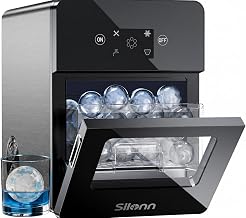
Silonn’s chewable pellet machine matches the 36 lbs/24H class at a noticeably lower entry price, and the self-cleaning cycle handles routine flushing without a manual teardown. It’s the sensible pick if you want to test whether nugget ice earns permanent counter space before spending more.
EUHOMY 44 lbs Sonic Ice Maker
This is the volume option in the lineup, and the extra 8 to 11 lbs per day over the competition is real if you’re feeding a family of iced-drink drinkers. Self-cleaning plus an included scoop and basket makes daily handling straightforward.
COWSAR Nugget Countertop Ice Maker
The COWSAR’s measured dispensing is the standout feature here, letting you push a glass under the chute instead of digging through a bin with a scoop. Output sits at 33 lbs/day, so it trades a little capacity for the convenience of a proper dispenser.
Frequently Asked Questions
Why does my pellet ice melt so quickly?
Nugget ice is compacted from shaved flakes, so it’s full of air pockets that trap flavor and give it that chewable bite. That same structure means it melts faster than a solid cube. Most countertop bins aren’t refrigerated either, so transfer surplus to a freezer bag if you’re stockpiling for a party.
How often should I descale the machine?
Every four to six weeks with typical use, sooner if you’re on hard water. Scale builds on the auger and evaporator first, and the early symptom is slower production rather than an error light. Running filtered water between descales stretches the interval considerably.
Can I plumb one of these into a water line?
These are all reservoir-fed countertop units, not plumbed appliances. Some owners rig a gravity feed or float valve into the tank, but that voids the warranty and risks overflow onto your counter. Stick with manual fills or a dedicated pitcher.
Do they need a dedicated circuit?
No. A standard 15-amp kitchen outlet is fine, but avoid sharing with a microwave or toaster oven on the same run, since the compressor draws a startup surge that can trip a loaded breaker.
Final Thoughts
For most kitchens, the GE Profile Opal Mini delivers the best ice quality with the easiest maintenance routine, and the Opal MINI PRO with side tank is the upgrade worth paying for if you host often. If you want high output without the premium, the EUHOMY 44 lbs model is the practical workhorse of the group.