Key takeaways
- Measure your gap first: Subtract your chair seat height from your table’s underside clearance, then aim for a booster that lands your child’s elbows just above the tabletop. Most add 4 to 7 inches, so knowing your number keeps you from buying one that jams their knees against the apron.
- Two-point anchoring, minimum: A booster needs straps that cinch around both the seat bottom and the chair back. Single-strap designs pivot forward when a child leans, and that shift is exactly what causes tip-offs. Look for ratcheting or cam-buckle hardware over plain plastic side-release clips.
- Wipeable surfaces over fabric: Molded PU leather and hard plastic shells clean with one pass of a damp cloth. Woven fabric traps yogurt in the seams and needs a wash cycle, which means you’re without a seat until it dries. Check whether seams are welded or stitched, since stitched channels hold moisture.
- Non-slip base texture: Flip the unit over. You want textured rubber pads or a grippy silicone layer, not smooth plastic. On a polished wood or upholstered chair, a slick bottom will creep forward over the course of a meal regardless of how tight the straps are.
- Weight for portability: If the booster travels between houses or into restaurants, keep it under about four pounds and check for a carry handle or a strap that doubles as one. Heavier molded seats are more stable but become a chore to haul.
What's inside
Anyone who has ever taken a tape measure to their dining setup knows the problem: a standard chair seat sits roughly 18 inches off the floor, the table apron hangs at 28 or 29, and a two-year-old’s chin lands somewhere below the plate rim. You end up with a kid kneeling on the seat, a stack of throw pillows that slide out from under them mid-meal, or a full-size high chair eating a third of your dining room. None of those are fixes. They’re workarounds, and they wear thin fast.
A booster seat solves the geometry properly by adding 4 to 7 inches of lift while staying strapped to the chair frame. I’ve spent a fair amount of time examining how these things actually attach, because the strap system is where cheap models fall apart. This guide breaks down what to inspect before you buy, then walks through the boosters that hold up to real use: daily oatmeal spills, grandparents’ houses, restaurant booths, and the inevitable toddler who tests every buckle.
As an Amazon Associate we earn from qualifying purchases.



How to Choose a Booster Seat For Dining Table (2026)
- Measure your gap first: Subtract your chair seat height from your table’s underside clearance, then aim for a booster that lands your child’s elbows just above the tabletop. Most add 4 to 7 inches, so knowing your number keeps you from buying one that jams their knees against the apron.
- Two-point anchoring, minimum: A booster needs straps that cinch around both the seat bottom and the chair back. Single-strap designs pivot forward when a child leans, and that shift is exactly what causes tip-offs. Look for ratcheting or cam-buckle hardware over plain plastic side-release clips.
- Wipeable surfaces over fabric: Molded PU leather and hard plastic shells clean with one pass of a damp cloth. Woven fabric traps yogurt in the seams and needs a wash cycle, which means you’re without a seat until it dries. Check whether seams are welded or stitched, since stitched channels hold moisture.
- Non-slip base texture: Flip the unit over. You want textured rubber pads or a grippy silicone layer, not smooth plastic. On a polished wood or upholstered chair, a slick bottom will creep forward over the course of a meal regardless of how tight the straps are.
- Weight for portability: If the booster travels between houses or into restaurants, keep it under about four pounds and check for a carry handle or a strap that doubles as one. Heavier molded seats are more stable but become a chore to haul.
The Best Booster Seat For Dining Table (2026)s Reviewed
Upseat Boost Ergonomic Toddler Booster
Designed alongside physical therapists, the Boost uses a contoured base that tips the pelvis slightly forward and encourages an upright spine rather than the slumped C-curve most flat cushions produce. The adjustable height and wipe-clean shell make it the pick for parents who care about posture during longer sit-down meals.
Ingenuity SmartClean Toddler Booster
The SmartClean earns its name with a seamless one-piece shell that rinses off under a tap in seconds, and at just a few pounds it’s genuinely easy to carry to a restaurant or in-law’s kitchen. The 3-point harness is straightforward to thread, though the low profile means it suits taller toddlers better than younger ones.
Toddler Booster with Backrest & 3-Point Harness
The added backrest is the differentiator here: it gives smaller children lateral support so they aren’t relying on the harness alone to stay centered. Combined with the PU exterior and non-slip underside, it’s a solid pick for kids transitioning out of a high chair who still need some containment.
PU Washable Booster with Double Safety Straps (Grey)
Two independent strap systems, one horizontal and one vertical, lock this cushion to the chair frame far more securely than the single-belt designs in the same price range. The neutral grey PU reads as furniture rather than baby gear, which matters if it lives on your dining chair permanently.
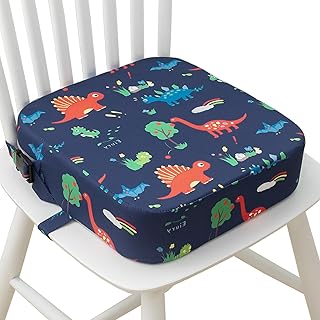
Eiury Portable Booster with Safety Buckles (Blue Dinosaur)
Lightweight and genuinely packable, the Eiury folds down for a diaper bag or car footwell without much fuss. The dinosaur print buys cooperation from reluctant toddlers, and the non-slip bottom holds position well on smooth wooden seats.
Frequently Asked Questions
At what age can a child use a dining table booster seat?
Most children are ready between 18 months and two years, but age matters less than ability. They need to sit upright unassisted for the length of a meal and have solid trunk control. If they still slump sideways, keep them in a high chair a while longer.
Will a booster seat damage my dining chairs?
It can, if you’re careless. Rubber-backed bases and tightly cinched straps can leave pressure marks on finished wood or compress upholstery over time. Cutting a piece of thin felt to sit between the booster and the chair seat solves it for pennies.
How do I clean a booster seat that’s really gone downhill?
For PU and molded plastic, a spray of diluted white vinegar and a soft brush lifts dried food out of the corners. Skip bleach and abrasive pads, which dull PU and etch plastic. Remove the straps if possible and hand-wash them separately, then let everything air dry fully before reassembly.
Are these safe to use on a bar stool or backless chair?
No. Boosters need a chair back to anchor the vertical strap and a broad, flat seat for the base. Backless stools give the harness nothing to pull against, and the elevated height turns a slip into a serious fall.
Final Thoughts
For everyday use at home where posture and long-term comfort matter, the Upseat Boost is the one worth the extra spend, thanks to its therapist-informed contour and height adjustment. If cleaning speed and grab-and-go portability rank higher, the Ingenuity SmartClean is hard to beat for its rinse-and-done shell. And for younger toddlers who still need some side support, the model with the backrest and 3-point harness bridges the gap between high chair and open dining chair better than a flat cushion ever will.