Key takeaways
- Seat-to-counter math: Subtract 10 to 12 inches from your counter height to find your seat height. A standard 36-inch counter wants a 24- to 26-inch stool; a 42-inch bar needs 29 to 30. Measure from the floor to the underside of the overhang, not the countertop surface, if you have thick stone.
- Frame joinery over frame material: Metal isn’t automatically stronger than wood. Look for cross-braced legs, welded joints rather than bolted plates, and threaded inserts in wood frames instead of screws driven straight into end grain. A 450-pound rating means the engineering was tested, not guessed.
- Swivel mechanism quality: A good 360-degree plate uses a ball-bearing race and returns smoothly without gritty resistance. Cheap ones use stamped steel washers that develop a grinding noise within a season. Spin the seat before you commit to keeping it.
- Upholstery serviceability: Linen and woven fabric breathe better and feel warmer in winter, but they absorb spills. Faux and bonded leather wipe clean in seconds — ideal near a stovetop. Check whether the seat cushion unbolts from the frame; a replaceable seat pad doubles the stool’s life.
- Footprint and stacking: Armed and barrel-back stools eat 20 to 22 inches of counter width each. Backless saddles tuck fully underneath, which matters in a galley kitchen or a walkway under 36 inches wide.
What's inside
Counter stools look like a simple purchase until you’re standing in the aisle with a tape measure and a sinking feeling. The overhang on your island is 12 inches, the seat you liked is 26 inches tall, and nobody told you those two numbers have to talk to each other. Then there’s the swivel that clunks, the footrest that scuffs your baseboards, and the bolt hole that doesn’t quite line up because the frame was welded a hair off square. I’ve assembled enough of these to know that the difference between a stool you love and one you resent usually shows up in the first ten minutes of putting it together.
This guide comes from a builder’s perspective: what the hardware actually feels like, whether the upholstery is stapled or sewn, how the leg geometry holds up under a 200-pound adult leaning back to laugh. I’ve sorted through the current crop of counter-height options for 2026 and pulled the ones that earn their keep — upholstered barrel seats, saddle wood, bonded leather, and adjustable swivels — plus the measurements and material notes you’ll want before anything ships.
As an Amazon Associate we earn from qualifying purchases.




How to Choose a/an Kitchen Counter Stools (2026)
- Seat-to-counter math: Subtract 10 to 12 inches from your counter height to find your seat height. A standard 36-inch counter wants a 24- to 26-inch stool; a 42-inch bar needs 29 to 30. Measure from the floor to the underside of the overhang, not the countertop surface, if you have thick stone.
- Frame joinery over frame material: Metal isn’t automatically stronger than wood. Look for cross-braced legs, welded joints rather than bolted plates, and threaded inserts in wood frames instead of screws driven straight into end grain. A 450-pound rating means the engineering was tested, not guessed.
- Swivel mechanism quality: A good 360-degree plate uses a ball-bearing race and returns smoothly without gritty resistance. Cheap ones use stamped steel washers that develop a grinding noise within a season. Spin the seat before you commit to keeping it.
- Upholstery serviceability: Linen and woven fabric breathe better and feel warmer in winter, but they absorb spills. Faux and bonded leather wipe clean in seconds — ideal near a stovetop. Check whether the seat cushion unbolts from the frame; a replaceable seat pad doubles the stool’s life.
- Footprint and stacking: Armed and barrel-back stools eat 20 to 22 inches of counter width each. Backless saddles tuck fully underneath, which matters in a galley kitchen or a walkway under 36 inches wide.
The Best Kitchen Counter Stools (2026)s Reviewed
Swivel Counter Stools with Linen Padded Back (Set of 2, 24″)
The 24-inch seat height makes these a safe bet for standard 36-inch counters, and the full linen back gives real lumbar support rather than the token strip you find on cheaper swivels. Assembly is straightforward — four legs, a footrest ring, and a pre-mounted swivel plate — though I’d add felt pads to the feet before the first drag across tile.
26″ Barrel Counter Stools with Backrest and Arms
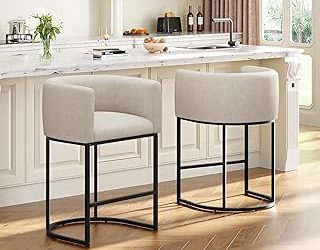
The barrel silhouette wraps around your back and ribs, which turns a quick coffee into a place people actually linger. The 450-pound rating tells you the internal frame is a genuine hardwood or steel skeleton rather than foam over cardboard, and the beige linen reads as neutral enough to survive a kitchen repaint.
Raynesys 24″ Bonded Leather Counter Stools (Curved, Set of 2)
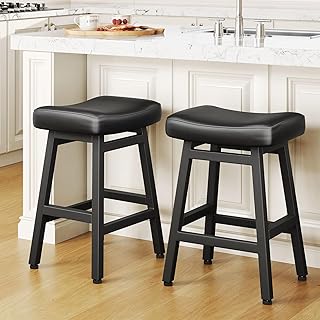
Bonded leather is the pragmatic choice for a working kitchen — flour, olive oil, and toddler fingerprints all wipe off with a damp cloth. The curved seat pan is scooped enough to stop you sliding forward, and the heavy-gauge metal legs arrive with the crossbrace pre-welded, so assembly really is four bolts and done.
PrimeZone 26″ Solid Wood Saddle Backless Stools
Solid wood and a scooped saddle seat make these the most durable option here, and the nailhead trim is genuinely hand-set rather than a printed strip. Backless means they slide fully under the overhang, which is the right call for tight kitchens — just know you’re trading long-sit comfort for footprint.
FSC Certified Faux Leather Barstools (Set of 3, 27″)
A set of three is the value play if you’re seating a longer island, and the FSC-certified wood content is a rare bit of supply-chain transparency at this price. The 27-inch seat height splits the difference between counter and bar, so measure carefully — it suits counters running 37 to 39 inches.
Frequently Asked Questions
How many stools fit at my island?
Allow 26 to 30 inches of counter width per stool measured center to center, and leave at least 6 inches of clearance at each end. A 72-inch island comfortably seats three; squeezing in a fourth means elbows meet.
Are swivel stools worth the extra cost?
For daily use, yes. Swiveling lets you get in and out without dragging the stool, which protects both the floor and the joints. Skip it only if you have small kids who will treat the seat like a carnival ride.
Do I need a footrest?
If your seat sits 24 inches or higher, a footrest meaningfully reduces leg fatigue by supporting the thighs. Backless saddle stools often skip it, which is fine for short sits but noticeable over an hour.
Can I tighten a wobbly stool myself?
Almost always. Wobble usually comes from bolts that were snugged in the wrong sequence. Loosen everything, sit the stool on a flat floor, then tighten in a crisscross pattern in two passes. A drop of threadlocker on the footrest bolts prevents it recurring.
Final Thoughts
For most kitchens, the 26-inch barrel stools with arms deliver the best comfort-to-durability ratio, with a 450-pound frame rating that justifies the counter space they occupy. If you cook messy, the Raynesys bonded leather set wipes clean in seconds and assembles in under fifteen minutes; if your kitchen is tight, the PrimeZone solid wood saddle stools tuck away completely and will outlast everything else on this list.