Key takeaways
- Fitting size and adapters: Check whether the unit ships with both 1/4″ and 1/2″ connectors. A 1/4″ push-fit matches standard refrigerator supply tubing, while 1/2″ typically means you are tapping a faucet supply or a filtered undersink line. Mismatched threads mean a hardware store trip before you make any ice.
- Hose length and routing: Ten feet sounds generous until you route around a cabinet base, up a wall, and behind the machine. Measure the actual path, not the straight-line distance, and leave slack for a drip loop so nothing kinks against the inlet valve.
- Manual fill as a fallback: Dual-mode units let you pour into a reservoir when the line is disconnected. That flexibility matters for renters, RV owners, and anyone who may move the machine to a counter without plumbing nearby.
- Ice shape and output: Bullet ice comes fast and works for everyday drinks. Nugget or pebble ice chews soft and holds flavor but usually runs slower per cycle. Match the daily rating to your household rather than the headline number.
- Drainage and self-cleaning: Every unit needs somewhere for meltwater to go. Confirm the drain plug location before you build a shelf around it, and favor models with a one-touch clean cycle so descaling does not become a manual chore.
What's inside
Anyone who has hauled a pitcher back and forth to refill a countertop ice maker knows the routine gets old by day three. The reservoir empties faster than you expect, the machine beeps for water mid-batch, and you end up babysitting an appliance that was supposed to save you effort. Plumbing one into a water line solves it outright, but the market makes that harder than it should be: most countertop units are reservoir-only, and the ones advertising a hookup vary wildly in how they actually connect, what fittings ship in the box, and whether the pump can handle line pressure at all.
This guide covers countertop ice makers that accept a direct water line connection, plus a few strong reservoir-fed models worth knowing about if a hookup turns out to be impractical in your space. I looked at fitting compatibility, hose length, daily ice output, noise under load, and how each unit handles self-cleaning. If you are comfortable with a saddle valve, a compression tee, or a spare fridge line, several of these can be running in under an hour.
As an Amazon Associate we earn from qualifying purchases.



How to Choose a Countertop Ice Maker With Water Line Connection (2026)
- Fitting size and adapters: Check whether the unit ships with both 1/4″ and 1/2″ connectors. A 1/4″ push-fit matches standard refrigerator supply tubing, while 1/2″ typically means you are tapping a faucet supply or a filtered undersink line. Mismatched threads mean a hardware store trip before you make any ice.
- Hose length and routing: Ten feet sounds generous until you route around a cabinet base, up a wall, and behind the machine. Measure the actual path, not the straight-line distance, and leave slack for a drip loop so nothing kinks against the inlet valve.
- Manual fill as a fallback: Dual-mode units let you pour into a reservoir when the line is disconnected. That flexibility matters for renters, RV owners, and anyone who may move the machine to a counter without plumbing nearby.
- Ice shape and output: Bullet ice comes fast and works for everyday drinks. Nugget or pebble ice chews soft and holds flavor but usually runs slower per cycle. Match the daily rating to your household rather than the headline number.
- Drainage and self-cleaning: Every unit needs somewhere for meltwater to go. Confirm the drain plug location before you build a shelf around it, and favor models with a one-touch clean cycle so descaling does not become a manual chore.
The Best Countertop Ice Maker With Water Line Connection (2026)s Reviewed
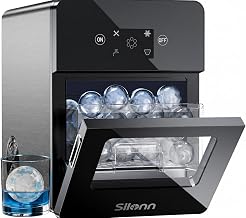
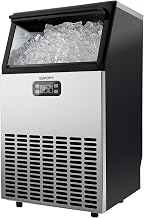
Whynter IMC-491DC Direct Connection Ice Maker
This is the pick for anyone who wants a proper plumbed appliance rather than a reservoir unit with a hose bolted on, and the stainless housing holds up to daily use without picking up fingerprints the way painted shells do. The self-cleaning cycle and genuinely quiet operation make it the easiest of this group to live with on an open kitchen counter.
3-in-1 Water Dispenser Ice Maker Combo, 44lb Daily
Hot and cold dispensing plus ice from one footprint is a real win in a small kitchen, and the included 10ft hose gives you room to reach an undersink connection. At 45dB it stays conversational, though the 300W draw means it runs warmer than dedicated ice-only machines.
3-in-1 Countertop Ice Maker With Manual or Line Fill
The dual 1/2″ and 1/4″ connectors make this the most adapter-friendly unit here, so it usually plumbs in without a parts run. At 160W it is the efficiency pick of the combo units, and the 4lb bin keeps up with normal household demand.
VEVOR 3-in-1 Water Dispenser With Ice Maker
Twelve cubes in seven minutes is genuinely quick, and the bullet-or-crushed option covers everything from iced coffee to a cooler for a backyard gathering. Output tops out at 35 lbs a day, so treat it as a household machine rather than an entertaining workhorse.
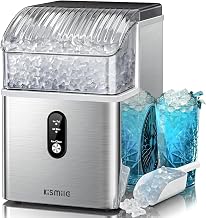
Kismile Nugget Ice Maker Countertop
If chewable pebble ice is the whole point, this is the one to get, and at 43dB it is the quietest unit in the roundup by a clear margin. Note that it runs from its reservoir rather than a plumbed line, so factor in the refill routine before committing.
Frequently Asked Questions
Can I connect any countertop ice maker to a water line?
No. The unit needs a dedicated inlet valve designed for line pressure. Adding a hose to a reservoir-only machine will flood your counter.
Do I need a plumber to install one?
Usually not. Tapping an existing cold supply with a compression tee or reusing a fridge line is a straightforward DIY job, though you should shut off the supply and pressure-test the joint before walking away.
Should I add a filter?
Yes, if your water is hard. An inline sediment or carbon filter keeps mineral buildup off the evaporator and noticeably extends the interval between descaling cycles.
How often do these need cleaning?
Every two to four weeks with regular use. Run the self-clean cycle, then wipe the bin and leave the lid open to dry so nothing grows in the standing moisture.
Final Thoughts
For a true plumbed setup that disappears into a kitchen, the Whynter IMC-491DC is the most refined option and the one I would install first. The 3-in-1 dispenser with dual 1/2″ and 1/4″ connectors is the smarter buy if you want hot and cold water from the same footprint and the least fuss at the fitting stage, while the Kismile nugget maker earns its spot for anyone who cares more about ice texture than plumbing it in.