Key takeaways
- Cooling system: Compressor models hold a set temperature regardless of room heat and reach the 34–40°F range that soda and lager actually need. Thermoelectric units run quieter and cost less, but they are relative coolers, not true refrigerators. For a garage, sunroom, or any space above 75°F, insist on a compressor.
- Real capacity versus rated capacity: A “130 can” rating assumes standard 12 oz cans stacked with no wasted space. Tall boys, 16 oz craft cans, and wine bottles cut that number substantially. Measure shelf height and interior depth rather than trusting the headline figure.
- Venting and clearance: Most of these are freestanding units that exhaust heat out the back or sides. They need two to three inches of breathing room on the hot side. If you want a flush built-in look, you must buy a front-venting model or leave the back of your cabinet open — no exceptions, or the compressor will short-cycle and burn out.
- Noise and placement: Anything under roughly 40 dB disappears into background room noise. Compressor units cycle audibly, so keep them out of bedrooms and home offices unless the spec sheet is explicit about sound. Solid, level footing on a hard floor also kills a surprising amount of buzz and rattle.
- Glass door and interior finish: Double-pane glass resists condensation far better than single-pane, which matters in humid rooms. Look for a reversible door hinge, adjustable chrome shelving, and interior LED lighting you can switch off so the unit doubles as clean-looking furniture.
What's inside
Anyone who has hosted a game night in a small house knows the drill: the main refrigerator becomes a Tetris board of cans, the crisper drawer gets sacrificed to seltzer, and someone’s leftovers end up warm on the counter. A dedicated beverage fridge fixes that, but the category is full of traps. Plenty of cheap units are thermoelectric rather than compressor-driven, which means they can only pull the interior about 20°F below whatever the room is doing. Park one in a 78°F den in August and your “cold” beer lands at a disappointing 58°F.
This guide approaches the problem the way a builder would: with a tape measure, a thought about airflow, and a healthy skepticism about capacity claims. Below are the mini beverage fridges worth your money in 2026, plus the specs that actually determine whether a unit thrives tucked under a bar top or slowly cooks itself to death. If you plan to frame one into cabinetry or a rolling bar cart, pay close attention to the venting section — it is the single most common reason these units fail early.
As an Amazon Associate we earn from qualifying purchases.


How to Choose a Mini Beverage Fridge (2026)
- Cooling system: Compressor models hold a set temperature regardless of room heat and reach the 34–40°F range that soda and lager actually need. Thermoelectric units run quieter and cost less, but they are relative coolers, not true refrigerators. For a garage, sunroom, or any space above 75°F, insist on a compressor.
- Real capacity versus rated capacity: A “130 can” rating assumes standard 12 oz cans stacked with no wasted space. Tall boys, 16 oz craft cans, and wine bottles cut that number substantially. Measure shelf height and interior depth rather than trusting the headline figure.
- Venting and clearance: Most of these are freestanding units that exhaust heat out the back or sides. They need two to three inches of breathing room on the hot side. If you want a flush built-in look, you must buy a front-venting model or leave the back of your cabinet open — no exceptions, or the compressor will short-cycle and burn out.
- Noise and placement: Anything under roughly 40 dB disappears into background room noise. Compressor units cycle audibly, so keep them out of bedrooms and home offices unless the spec sheet is explicit about sound. Solid, level footing on a hard floor also kills a surprising amount of buzz and rattle.
- Glass door and interior finish: Double-pane glass resists condensation far better than single-pane, which matters in humid rooms. Look for a reversible door hinge, adjustable chrome shelving, and interior LED lighting you can switch off so the unit doubles as clean-looking furniture.
The Best Mini Beverage Fridges (2026) Reviewed
Electactic 130 Can Beverage Refrigerator, 3.2 Cu. Ft.
The most versatile pick here: 3.2 cubic feet of compressor-cooled space with digital control that holds temperature reliably even in a warm basement or shop. The adjustable shelves come out easily, so you can reconfigure for wine bottles or mixer bottles without fighting the frame.
hOmeLabs 120 Can Beverage Cooler
A well-sorted, no-drama unit with a mechanical thermostat and genuinely removable shelves, which makes it the easiest of the group to load with odd-sized bottles. The tempered glass door and clean trim read as intentional furniture rather than dorm equipment.
EUHOMY 130 Can Beverage Refrigerator
EUHOMY’s black-cabinet version pairs a strong compressor with a digital temperature readout, so you can dial in 36°F for lagers or hold 50°F for reds without guesswork. It runs cold and consistent, which is exactly what you want if it lives in a home bar.
1.4 Cu. Ft. Stainless Steel Countertop Beverage Cooler
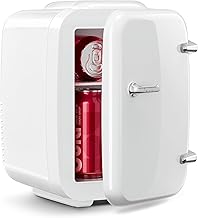
The right answer when floor space is nonexistent. At 1.4 cubic feet it sits happily on a countertop or credenza, and the stainless-trimmed glass door lets it blend with existing appliances instead of clashing with them.
Feelfunn 24 Can Mini Fridge
Rated at 38 dB or below with a 40–61°F range, this is the one to put in a bedroom, nursery-adjacent office, or reading nook where compressor cycling would drive you crazy. Small, quiet, and honest about what it does.
Frequently Asked Questions
Can I build one of these into a cabinet or bar?
Only if it vents from the front. Freestanding rear-vent models need open air behind them, so leave the cabinet back panel off and cut a toe-kick vent to let hot air escape. Trapped heat is what kills these units.
What temperature should I set?
Aim for 36–38°F for soda and light beer, 45–50°F for ales, and 50–55°F for red wine. If you store mixed drinks and wine together, split the difference around 45°F and accept a compromise.
Will one work in an unheated garage?
A compressor model handles summer heat, but most stop cooling correctly below about 50°F ambient and none are rated for freezing temperatures. In a cold climate garage, expect seasonal problems.
How much do they cost to run?
Typically $3 to $7 per month, depending on ambient temperature and how often the door opens. Keeping it out of direct sunlight and away from a heat register makes a measurable difference.
Final Thoughts
For most homes, the Electactic 130 Can is the best overall balance of capacity, temperature control, and value, with the EUHOMY 130 Can a close second if you prefer its all-black cabinet and digital display. If you are working with a countertop, a hallway nook, or a quiet room, the 1.4 cu. ft. stainless countertop cooler and the whisper-quiet Feelfunn 24 Can are the smarter fits — measure your opening, plan your venting, and buy once.