Key takeaways
- Interlocking tiles snap together over the slab with no adhesive, tolerate uneven concrete better than anything else, and let you pull a single damaged square instead of redoing a whole floor. Open-grid designs like the SnapLock RaceDeck Free-Flow let meltwater and wash runoff drain straight through to the concrete — a real advantage in salt-belt winters. Solid-top tiles such as the Swisstrax Ribtrax PRO give you a flatter, easier-to-roll surface for creepers and tool carts, and the larger 15.75-inch format cuts your install time noticeably.
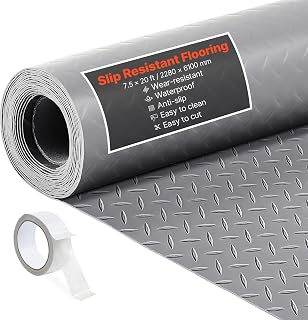
- PVC rolls are the fastest path to a clean-looking floor. A diamond-plate roll like the VEVOR 7.5 x 20 ft or a thicker 8 x 20 ft 2.8mm option unrolls in minutes, sticks down with double-sided tape at the seams and perimeter, and reads as one continuous surface. Rolls need reasonably flat concrete and they trap moisture, so run that plastic-sheet test first.
- Absorbent parking mats are containment tools rather than flooring. The oversize 8.8 x 22 ft absorbent mat with a waterproof backing is built to soak up snowmelt, drips, and slush under one vehicle and keep it off the slab. Great as a targeted solution, not a whole-garage answer.
What's inside
Your garage slab is probably the hardest-working surface you own. It takes hot tires, dropped sockets, road salt, brake fluid, and the occasional dragged engine hoist — and unlike the floors inside your house, it almost never gets a second thought until it starts flaking, staining, or dusting up every time you sweep. The good news is that covering a slab is one of the few weekend projects where the payoff is immediate and obvious. You lay something down on Saturday, and by Sunday afternoon the space reads like a finished room instead of a storage bay.
This guide walks through what actually separates good garage flooring from the stuff that curls at the corners by month three. We’ll cover how to read your slab before you spend a dime, the real differences between interlocking tiles, PVC rolls, and absorbent parking mats, how load ratings work (they’re more confusing than they should be), and the installation details that determine whether your floor looks sharp in five years or looks tired by next spring.
As an Amazon Associate we earn from qualifying purchases.




🛒 Best Price Today on Amazon
Prime members get fast, free shipping on everything above, plus member-only deals. New members get a 30-day free trial — cancel anytime.
Start With the Slab, Not the Product
Before shopping, spend twenty minutes on diagnostics. Tape a two-foot square of clear plastic sheeting to the concrete, seal all four edges, and leave it overnight. Condensation underneath means moisture is wicking up through the slab — that rules out coatings and sealed roll goods, and points you toward tiles that let the concrete breathe. Next, drag a long level or a straight 2×4 across the floor in several directions. Dips deeper than about a quarter inch over eight feet will telegraph through thin rolls and can make rigid tiles rock underfoot. Finally, note where water goes. If your slab pitches toward the door, good. If it puddles in the middle, you want a drainage-friendly surface.
Tiles vs. Rolls vs. Mats
These three categories solve genuinely different problems, and picking the wrong one is the most common mistake I see.
- Interlocking tiles snap together over the slab with no adhesive, tolerate uneven concrete better than anything else, and let you pull a single damaged square instead of redoing a whole floor. Open-grid designs like the SnapLock RaceDeck Free-Flow let meltwater and wash runoff drain straight through to the concrete — a real advantage in salt-belt winters. Solid-top tiles such as the Swisstrax Ribtrax PRO give you a flatter, easier-to-roll surface for creepers and tool carts, and the larger 15.75-inch format cuts your install time noticeably.
- PVC rolls are the fastest path to a clean-looking floor. A diamond-plate roll like the VEVOR 7.5 x 20 ft or a thicker 8 x 20 ft 2.8mm option unrolls in minutes, sticks down with double-sided tape at the seams and perimeter, and reads as one continuous surface. Rolls need reasonably flat concrete and they trap moisture, so run that plastic-sheet test first.
- Absorbent parking mats are containment tools rather than flooring. The oversize 8.8 x 22 ft absorbent mat with a waterproof backing is built to soak up snowmelt, drips, and slush under one vehicle and keep it off the slab. Great as a targeted solution, not a whole-garage answer.
Reading Load Ratings Honestly
Spec sheets throw around big numbers, and they’re not measuring the same thing. A figure like 40,000 lbs on a budget tile pack is typically a static compression rating — how much dead weight a tile takes before it deforms. Rolling load, quoted at 80,000 lbs on the RaceDeck tiles, describes weight moving across the surface on a jack or a wheel, which is the harsher test. For a daily driver, either rating is overkill. What matters more is whether the tile survives a floor jack’s small steel caster and a two-post lift’s base plate. If you plan on serious lifting, put steel plates under jack points regardless of what the box promises.
Installation Details That Decide Longevity
Acclimate everything. Let tiles or rolls sit in the garage for 24 to 48 hours before installing so the material expands or contracts to your actual conditions — skip this and a tight roll will bubble on the first hot day. For tiles, dry-fit a full row along your longest wall, then measure the leftover gap at both ends and split the difference so you don’t finish with a two-inch sliver. Leave roughly a half inch of expansion space at walls, and cut border tiles with a fine-tooth jigsaw blade or a sharp utility knife scored several times. For rolls, unroll, let them relax overnight, then tape the seams from the center outward, pressing with a J-roller or a rolling pin as you go.
Matching the Floor to How You Actually Use the Space
A garage that doubles as a gym wants thickness and shock absorption. A woodshop benefits from a solid, sweepable top where a dropped chisel doesn’t disappear into a grid. A space that sees welding or grinding needs something that won’t melt from sparks — most polypropylene tiles handle stray sparks better than PVC rolls, but neither is a substitute for a welding blanket. And if you park a work truck that comes home wet and gritty, the drainage of an open-grid tile or a dedicated absorbent mat will save you hours of mopping.
Tips
- Order 8 to 10 percent extra material. Border cuts eat product, and having spare tiles on hand means an oil-soaked square gets swapped instead of tolerated.
- Degrease before you cover. Old oil stains keep releasing residue that softens tape adhesive and PVC backing. Scrub with a concrete degreaser and rinse thoroughly.
- Add edge ramps at the door opening. They keep tires from catching the tile edge and stop dirt from packing underneath.
- Rotate your parking position a few inches every season. Hot tires sitting on the exact same spot year-round can leave a permanent print in vinyl surfaces.
Frequently Asked Questions
Will hot tires damage tiles or rolls?
Quality polypropylene tiles are essentially immune to hot-tire pickup. PVC rolls are more sensitive — look for products rated as hot-tire resistant, park after the tires have cooled if you can, and avoid parking in the same spot for months on end.
Can I install over cracked concrete?
Yes, and this is where tiles shine. Interlocking tiles bridge hairline cracks and minor spalling without any patching. Fill anything wider than about a quarter inch with concrete repair caulk first so the tile has continuous support.
How much does a two-car garage take?
Plan for around 400 to 440 square feet. That’s roughly nine 48-tile packs of 12-inch tiles, or three to four large rolls depending on width. Measure your actual footprint rather than trusting the “two-car” label.
How do I clean it?
Sweep or blow debris out, then mop with a mild degreaser. Open-grid tiles can be hosed down in place. Avoid solvent-based cleaners on PVC, and lift a few tiles once a year to check for trapped moisture underneath.
Conclusion
The best garage flooring is the one that matches your slab’s condition and your daily habits: interlocking tiles for uneven or damp concrete and easy repairs, PVC diamond-plate rolls for a fast and sleek transformation on flat slabs, and absorbent parking mats when your real problem is one wet vehicle. Test your slab, measure twice, buy a little extra, and give the material a day to settle before you commit — those four steps do more for the finished result than any spec on the box.