Key takeaways
- Measure the swing zone, not the tabletop: Add 36 inches of clearance on every side for pulled-out chairs, then 48 inches where someone needs to walk past. A 63-inch oval in a 10-by-12 room works; a 78-inch one will have you turning sideways every trip to the kitchen.
- Read the base before the finish: A wide strip or slat pedestal distributes weight across a bigger contact patch than a single narrow column, which means less rocking when someone rests an elbow on the edge. Check whether the base bolts into a steel plate or straight into engineered board — the former survives being moved.
- Know what “solid wood” covers: Many tables pair a solid rubberwood or oak top with an MDF-core skirt, which is fine structurally but behaves differently when humidity swings. Ask about a reinforced center beam if the top exceeds 60 inches; unsupported spans are where sag shows up in year three.
- Test the extension mechanism mentally: Removable leaves that drop into place with alignment pins are simpler and more repairable than butterfly mechanisms hidden under the top. Fewer moving parts means fewer things to shim when the seasons shift the wood.
- Match the edge profile to your habits: Thickened or fluted edges hide small dings and give a substantial look, while thin bullnose edges read lighter but show chips sooner. If kids and homework are in the picture, thicker wins.
What's inside
Anyone who has ever squeezed a rectangular table into a narrow dining nook knows the problem: sharp corners bruise hips, chairs at the ends never quite tuck in, and the whole footprint eats more floor than it deserves. Oval tables solve the geometry, but shopping for one is its own headache. Spec sheets blur together, “solid wood” sometimes means a veneered particleboard core, and pedestal bases range from rock-steady to alarmingly wobbly once you actually lean on them. If you have ever flipped a table over to inspect the hardware before assembly, you already know that the underside tells the real story.
This guide comes from that same instinct. I have looked at these tables the way a maker would: how the aprons and beams are joined, whether the base spreads load or concentrates it, how extension leaves seat and lock, and what the edge profile does to the finish over years of wiping. Below you will find the standout oval dining tables worth considering in 2026, a practical checklist for matching one to your room, and honest notes on where each pick shines and where it asks for compromise.
As an Amazon Associate we earn from qualifying purchases.


How to Choose a/an Oval Dining Table (2026)
- Measure the swing zone, not the tabletop: Add 36 inches of clearance on every side for pulled-out chairs, then 48 inches where someone needs to walk past. A 63-inch oval in a 10-by-12 room works; a 78-inch one will have you turning sideways every trip to the kitchen.
- Read the base before the finish: A wide strip or slat pedestal distributes weight across a bigger contact patch than a single narrow column, which means less rocking when someone rests an elbow on the edge. Check whether the base bolts into a steel plate or straight into engineered board — the former survives being moved.
- Know what “solid wood” covers: Many tables pair a solid rubberwood or oak top with an MDF-core skirt, which is fine structurally but behaves differently when humidity swings. Ask about a reinforced center beam if the top exceeds 60 inches; unsupported spans are where sag shows up in year three.
- Test the extension mechanism mentally: Removable leaves that drop into place with alignment pins are simpler and more repairable than butterfly mechanisms hidden under the top. Fewer moving parts means fewer things to shim when the seasons shift the wood.
- Match the edge profile to your habits: Thickened or fluted edges hide small dings and give a substantial look, while thin bullnose edges read lighter but show chips sooner. If kids and homework are in the picture, thicker wins.
The Best Oval Dining Table (2026)s Reviewed
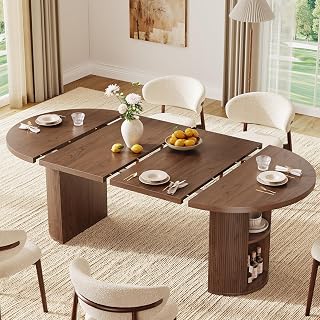
41–78 Inch Extendable Walnut Table with Storage Shelf
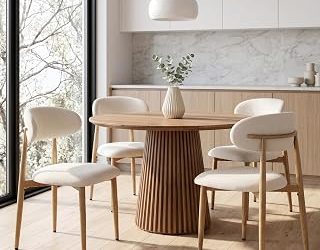
This is the most adaptable table on the list, stretching from a tight two-person breakfast setup to a genuine eight-seat dinner, with a lower storage shelf that earns its keep for serving pieces or linens. The fluted base gives it visual heft without a bulky footprint, though I would plan on periodically checking the leaf hardware after heavy use.
43in–59in Extendable Oval Table in Black
The removable-leaf design here is refreshingly straightforward, and the heavy-duty base handles the extended span better than the compact retracted footprint suggests. Best suited to small-space dining where you need capacity on demand rather than every day.
63″ Solid Wood Rustic Farmhouse Table in Honey Oak
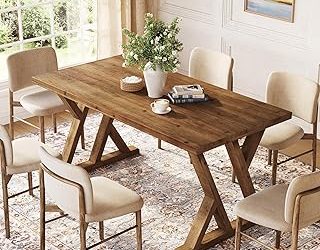
Chunky legs and a reinforced beam make this the most structurally honest pick of the group, and natural honey oak takes a refresh with oil or wax beautifully years down the line. Fixed-length, so measure carefully, but for a family of four to six it is the one I would expect to still be solid in a decade.
T4TREAM 63″ Fluted Oval Table in Walnut
The thickened edge and strip pedestal base give this mid-century design real stability, and the fluting adds texture that disguises everyday scuffs. A strong pick for open-plan spaces where the table doubles as a work surface.
70.8″ Oval Table with Wood Strip Base
That wide slatted base is the standout feature, spreading load across a broad span so the generous top does not tip when weight shifts to one end. Choose this if you regularly seat six and want the visual lightness of a pedestal without the instability.
Frequently Asked Questions
How many people actually fit at a 63-inch oval table?
Comfortably four to six, allowing roughly 24 inches of elbow room per person. Oval ends are more forgiving than rectangular corners, so you can often squeeze in an extra chair for a holiday meal without anyone eating with their arms pinned.
Are extendable oval tables stable when fully open?
It depends entirely on the base geometry and whether the leaf locks positively. Look for wide-footprint bases and alignment pins; a well-designed extendable table at full length should feel no different from a fixed one.
Do I need felt pads or a rug underneath?
Felt pads under the base are worth adding regardless — they prevent the base from scoring hardwood when the table shifts. A rug is optional, but if you use one, size it so chair legs stay on the rug even when pulled out.
How do I care for a walnut or oak finish?
Wipe with a barely damp cloth, dry immediately, and keep the table out of direct afternoon sun to avoid uneven fading. For oiled or waxed surfaces, a light refresh once or twice a year restores depth and reseals against spills.
Final Thoughts
If you want maximum flexibility without giving up looks, the 41–78 Inch Extendable Walnut Table with its storage shelf covers the widest range of situations. For buyers who prioritize longevity over adjustability, the 63″ Solid Wood Farmhouse Table in honey oak is the most repairable, most substantial option here. And if you regularly seat six and want a stable pedestal at a generous size, the 70.8″ Oval with the wood strip base strikes the best balance of footprint and steadiness.