Key takeaways
- Flow over pressure: GPM does the rinsing, PSI does the cutting. For siding, 1.5–2.5 GPM at moderate pressure clears a wall faster and safer than a high-PSI, low-flow unit that leaves wand stripes.
- Electric or gas: Electric starts with a switch, runs quiet, and handles siding, fences, and cars. Gas is the call if you’ve got a long driveway, a big deck, or no outlet within 50 feet of the work.
- Pump type: Axial cam pumps are sealed, affordable, and fine for a few weekends a year. Triplex plunger pumps are rebuildable and survive hundreds of hours, which matters if you’re washing more than one property.
- Detergent delivery: An onboard soap tank or downstream injector lets you apply cleaner through the machine at low pressure. Skip units that only accept detergent through the high-pressure line, since that dilutes the mix and can damage the pump.
- Chemistry that suits your siding: Sodium percarbonate cleaners lift mold and mildew from vinyl, stucco, brick, and painted wood without the bleach smell or plant kill. Check compatibility before you spray anything near cedar or anodized aluminum.
What's inside
Siding grime creeps up on you. One spring you notice the north-facing wall has gone a shade darker than the rest of the house, there’s a chalky film on the vinyl under the gutters, and green fuzz is working its way up the shady corner behind the hydrangeas. Most homeowners reach for a garden hose and a scrub brush, spend a Saturday on a ladder, and end up with a streaky wall and a sore shoulder. The problem isn’t effort. It’s that mold, mildew, and oxidized dirt bond to siding at a level plain water can’t break, and blasting harder just drives water behind the lap joints.
The fix is a two-part system: a pressure washer with enough flow to rinse a wall evenly, and a dedicated house-wash concentrate that does the chemical work so the water doesn’t have to. This guide walks through both sides of that equation, covering electric units for weekend siding and deck work, gas machines for driveways and whole-house jobs, and the detergent that makes either one actually clean instead of just wet. Below you’ll find picks tested against real-world DIY use, plus a rundown of the specs that matter and the ones that are mostly marketing.
As an Amazon Associate we earn from qualifying purchases.


🛒 Best Price Today on Amazon
Prime members get fast, free shipping on everything above, plus member-only deals. New members get a 30-day free trial — cancel anytime.
How to Choose a Pressure Washer House Cleaner (2026)
- Flow over pressure: GPM does the rinsing, PSI does the cutting. For siding, 1.5–2.5 GPM at moderate pressure clears a wall faster and safer than a high-PSI, low-flow unit that leaves wand stripes.
- Electric or gas: Electric starts with a switch, runs quiet, and handles siding, fences, and cars. Gas is the call if you’ve got a long driveway, a big deck, or no outlet within 50 feet of the work.
- Pump type: Axial cam pumps are sealed, affordable, and fine for a few weekends a year. Triplex plunger pumps are rebuildable and survive hundreds of hours, which matters if you’re washing more than one property.
- Detergent delivery: An onboard soap tank or downstream injector lets you apply cleaner through the machine at low pressure. Skip units that only accept detergent through the high-pressure line, since that dilutes the mix and can damage the pump.
- Chemistry that suits your siding: Sodium percarbonate cleaners lift mold and mildew from vinyl, stucco, brick, and painted wood without the bleach smell or plant kill. Check compatibility before you spray anything near cedar or anodized aluminum.
The Best Pressure Washer House Cleaners (2026) Reviewed
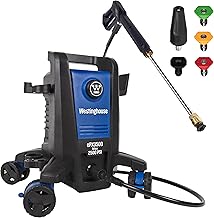
Westinghouse ePX3500 Electric Pressure Washer
At 2500 max PSI and 1.76 GPM, this is the sweet spot for siding work, and the anti-tipping base is a genuinely useful touch when you’re dragging a unit across an uneven lawn. The onboard soap tank and steel wand feel a class above the plastic hardware you get at this size, though you’ll want to upgrade the stock hose if you’re working around a two-story house.
Oxy Solve House and Siding Cleaner
This is the piece most people skip, and it’s the reason their siding still looks dingy after two hours of washing. The percarbonate concentrate breaks the bond between mildew and vinyl or stucco, so you can drop your pressure to a safe 40-degree fan and let dwell time do the work. One gallon mixes far enough to cover an average house twice.
DeWalt DXPW3300-S Gas Pressure Washer
A well-balanced homeowner gas unit at 3300 PSI and 2.4 GPM, with an AAA axial cam pump that shrugs off the occasional dry start. The ergonomic gun and 25-foot hose make longer sessions bearable, and it has the muscle for concrete without being so aggressive that you can’t dial it back for a soft wash.
Greenworks 3000 PSI Brushless Electric
The brushless motor is the story here, running cooler and quieter than brushed electrics while pushing 3000 PSI at 2.0 GPM. It’s the closest an electric gets to gas-class performance, and a smart buy if you want driveway capability without storing fuel or pulling a starter cord.
Simpson ALH3425 Aluminum Series
The Honda GX200 paired with an AAA triplex plunger pump is the combination pros specify, and the aluminum frame keeps it manageable to load into a truck bed. At 3600 PSI and 2.5 GPM with a 35-foot hose, this is more machine than most houses need, but it’s rebuildable and will outlast three consumer units.
Frequently Asked Questions
What pressure is safe for vinyl siding?
Stay between 1300 and 1600 PSI at the surface using a 25- or 40-degree nozzle, held about 18 inches back. Let the detergent handle the cleaning and use water only to rinse. Always spray slightly downward so water doesn’t get pushed up under the laps.
Do I really need a dedicated house cleaner?
Yes, if you have mold or mildew. Water removes loose dust, but biological growth has roots in the surface texture and grows back within weeks unless you kill it chemically.
Is an electric unit enough for a whole house?
For siding, absolutely. Something like the Greenworks 2100 PSI handles a single-story wash fine. Gas becomes worthwhile when concrete, long runs, or multiple properties enter the picture.
How often should I wash my siding?
Once a year for most climates, twice if you’re in a humid region or have heavy tree shade on one elevation.
Final Thoughts
For most homeowners, the Westinghouse ePX3500 paired with Oxy Solve concentrate is the practical answer: enough flow for a full house wash, an onboard tank for the detergent, and no fuel to manage. Step up to the Greenworks 3000 PSI brushless if you want driveway power on electric, or the Simpson ALH3425 if you’d rather buy a rebuildable machine once and be done with it.