Key takeaways
- Measure the path, not just the alcove: Note your narrowest doorway, stair turn, and hallway width. Most French doors need 36 inches of clear passage with handles removed, and a counter-depth model at 28 to 30 inches deep will usually spare you from ripping out cabinet trim.
- Clearance and airflow: Plan on half an inch on each side, an inch at the rear, and a full inch above for heat rejection. Undersized gaps make the compressor run longer, which shows up as higher energy bills long before it shows up as a failure.
- Door reversibility: On compact and top-freezer units, a reversible door lets you flip the hinge to suit a tight galley or a corner install. Confirm the hinge kit ships in the box rather than as a paid accessory.
- Capping the old line: If you are replacing a dispenser model, shut the supply, cut back the tubing, and cap it properly with a compression stop instead of leaving a crimped line behind the fridge. A five-dollar cap prevents a drywall repair.
- Serviceability: Look for a removable toe-kick grille and an accessible condenser coil. Vacuuming coils twice a year is a ten-minute job that quietly adds years of compressor life.
What's inside
Anyone who has ever pulled a fridge out to chase a slow drip knows the truth: the water dispenser is the first thing to fail and the most annoying thing to fix. Cracked poly tubing behind the toe kick, a sticking solenoid valve, a filter housing that weeps every time the pressure spikes, an ice chute that frosts shut in August. Add the swept-out door space where a dispenser housing lives, and you lose roughly a full shelf’s worth of gallon storage on the left door. For anyone renovating a kitchen without a supply stub nearby, or living in a rental where drilling a saddle valve is a lease violation, a dispenser is a liability dressed up as a feature.
This guide covers dispenser-free refrigerators worth installing in 2026, from 7-cubic-foot apartment units that slide under a countertop to 26 and 27 cubic foot French doors that anchor a full remodel. I have focused on cabinet fit, door-swing flexibility, coil access for maintenance, and how much usable door storage you actually gain when the dispenser housing disappears. Measurements and clearances are included where they matter most, because a fridge that fits on paper but not through the doorway is nobody’s bargain.
As an Amazon Associate we earn from qualifying purchases.


How to Choose a Refrigerator Without Water Dispenser (2026)
- Measure the path, not just the alcove: Note your narrowest doorway, stair turn, and hallway width. Most French doors need 36 inches of clear passage with handles removed, and a counter-depth model at 28 to 30 inches deep will usually spare you from ripping out cabinet trim.
- Clearance and airflow: Plan on half an inch on each side, an inch at the rear, and a full inch above for heat rejection. Undersized gaps make the compressor run longer, which shows up as higher energy bills long before it shows up as a failure.
- Door reversibility: On compact and top-freezer units, a reversible door lets you flip the hinge to suit a tight galley or a corner install. Confirm the hinge kit ships in the box rather than as a paid accessory.
- Capping the old line: If you are replacing a dispenser model, shut the supply, cut back the tubing, and cap it properly with a compression stop instead of leaving a crimped line behind the fridge. A five-dollar cap prevents a drywall repair.
- Serviceability: Look for a removable toe-kick grille and an accessible condenser coil. Vacuuming coils twice a year is a ten-minute job that quietly adds years of compressor life.
The Best Refrigerators Without Water Dispenser (2026) Reviewed
Winia WRFS26ABTD French Door, 26.1 Cu. Ft.
The most fridge you can buy without a single plumbing connection: a full-width 26.1 cubic foot French door with a bottom freezer drawer and clean stainless panels. Because the left door carries no dispenser housing, you get deep gallon bins on both sides, which is the practical win over a comparably priced dispenser model.
LG LRFLC2706S 27 Cu. Ft. French Door Smart Refrigerator
A counter-depth footprint that flushes with 24-inch cabinets while still holding 27 cubic feet, plus an inverter linear compressor that runs quietly and sips power. Smart diagnostics let you pull fault codes from your phone, which turns a service call into an informed conversation instead of a guess.
Upstreman 20.2 Cu. Ft. Top Freezer Refrigerator
The straightforward pick for a rental unit, garage, or first kitchen: ENERGY STAR certified, reversible door, mechanical thermostat, and no electronics to fail. Top-freezer designs put the compressor and coils where you can reach them, making this one of the easiest large fridges to maintain yourself.
Frigidaire 2-Door Apartment Size, 7.5 Cu. Ft. Platinum Series
At 21.5 inches wide and 55.5 inches tall, this slots into a studio nook or a basement bar without dominating the room, and the stainless finish reads far more expensive than it costs. The separate freezer door means the fresh food side stays cold when you dig for the frozen peas.
Upstreman 7.1 Cu. Ft. Bottom Freezer (BM71)
Bottom-freezer layout puts everyday food at eye level, a small ergonomic detail that matters more in a compact fridge than a large one. Energy-efficient, quiet enough for a dorm or home office, and light enough for one person to set and level without a dolly.
Frequently Asked Questions
Do dispenser-free fridges actually hold more?
Inside the cabinet, capacity is similar. The gain is in the door: removing the dispenser housing typically frees up one to two gallon-height bins, which is the space most households run out of first.
Can I still get ice?
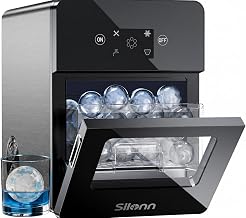
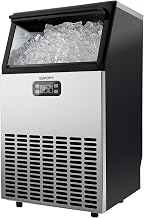
Yes. Some non-dispenser models accept an internal icemaker with a water line, and standalone trays or a countertop ice machine cover the rest without putting plumbing inside the door.
What should I do with the existing water line?
Turn off the supply valve, drain the line, and cap it with a proper compression fitting. Do not rely on a kinked tube, and consider swapping any old saddle valve for a quarter-turn stop while the fridge is out.
Are these harder to resell or less desirable?
Not in practice. Landlords and property managers often prefer non-dispenser units specifically because there is one less component to service between tenants.
Final Thoughts
For a full kitchen, the Winia WRFS26ABTD delivers the most dispenser-free storage per dollar, while the LG LRFLC2706S is the better choice if you need a counter-depth profile and quiet, efficient operation. In smaller spaces, the Upstreman 20.2 Cu. Ft. top freezer is the low-maintenance workhorse that will keep running long after a dispenser model would have needed its first repair.