Key takeaways
- Weight and thickness: Aim for something in the 10–12 oz range or around 1mm+ thick. Anything lighter telegraphs the foam texture and wears thin at the front lip of the seat where legs rub every single meal.
- Weave tightness: Hold the fabric to a window. If you see pinholes of light through the weave, crumbs and liquid will find their way in too. Tight, flat weaves clean up with a damp cloth; loose ones trap everything.
- Stretch behavior: You want a little give on the bias so the fabric eases around rounded corners, but not so much that it relaxes and sags after a few weeks. Polyester blends hold tension better than pure linen.
- Yardage math: A standard 17″ square slip seat needs roughly a 22″ square of fabric to allow for wrap and staple margin. On 57″-wide goods, that’s two seats across, so one yard covers four chairs with a bit of margin. Buy an extra half yard for pattern matching or a mistake.
- Pattern scale and repeat: Large-scale damask or jacquard looks stunning but forces you to center the motif on every seat, which burns yardage. Solids and subtle textures are far more forgiving for a first project.
What's inside
Recovering a set of dining chairs is one of the few weekend projects where the payoff is instant and the skill floor is low. The hard part isn’t the staple gun, it’s standing in front of a wall of fabric swatches trying to figure out which one won’t pill after six months of jeans sliding across it, or wick up a spilled glass of red like a paper towel. Dining seats take a specific kind of abuse: concentrated weight, constant friction at the front edge, food, and the occasional kid with sticky hands. A gorgeous drapery weave that drapes beautifully will look tired on a seat pan by spring.
This guide is written from the workbench, not the showroom. Below are the fabrics I keep coming back to for seat pans and slip seats, chosen for weight, weave tightness, and how they behave when you pull them over a foam edge and staple. I’ve also included what to look for on the spec sheet, how much yardage a typical four-chair set eats up, and answers to the questions that come up mid-project when the old fabric is already off and there’s no going back.
As an Amazon Associate we earn from qualifying purchases.



How to Choose a/an Upholstery Fabric For Dining Chairs (2026)
- Weight and thickness: Aim for something in the 10–12 oz range or around 1mm+ thick. Anything lighter telegraphs the foam texture and wears thin at the front lip of the seat where legs rub every single meal.
- Weave tightness: Hold the fabric to a window. If you see pinholes of light through the weave, crumbs and liquid will find their way in too. Tight, flat weaves clean up with a damp cloth; loose ones trap everything.
- Stretch behavior: You want a little give on the bias so the fabric eases around rounded corners, but not so much that it relaxes and sags after a few weeks. Polyester blends hold tension better than pure linen.
- Yardage math: A standard 17″ square slip seat needs roughly a 22″ square of fabric to allow for wrap and staple margin. On 57″-wide goods, that’s two seats across, so one yard covers four chairs with a bit of margin. Buy an extra half yard for pattern matching or a mistake.
- Pattern scale and repeat: Large-scale damask or jacquard looks stunning but forces you to center the motif on every seat, which burns yardage. Solids and subtle textures are far more forgiving for a first project.
The Best Upholstery Fabric For Dining Chairs (2026)s Reviewed
TinaKim Thick Upholstery Fabric (Faux Linen)
This is my default recommendation for anyone doing their first set of chairs — the two-yard cut covers a full four-chair set with margin, and the faux linen has enough body to hide foam irregularities without fighting you at the corners. The grey-blue reads as a warm neutral in most dining rooms, and it takes a staple cleanly without fraying back from the edge.
Faux Linen Needlework Fabric, 3.3 Yards
The generous 3.3-yard cut is the selling point here: enough for six chairs, or four chairs plus a matching bench or table runner. It’s slightly softer in hand than the TinaKim, which makes it pleasant to work with on curved seat pans, though I’d add a layer of batting under it on older frames.
LaSilk Premium Upholstery Fabric by the Yard
Sold by the single yard, which makes it the smart pick when you’re doing a pair of chairs or replacing one damaged seat and don’t want leftover fabric filling a closet. The thickened faux linen in navy is dense and dark enough to be genuinely practical in a household that actually eats at the table.
11oz Polyester Blend Upholstery Fabric, Khaki
At 11 oz this is the most straightforwardly durable option on the list, and the polyester content means it resists the pilling and relaxation that catches out natural fibers on high-friction seats. Khaki is the workhorse neutral — unexciting in the roll, but it disappears into a room and hides crumbs better than anything pale.
Heavy Linen Fabric, 1.2mm Thickness
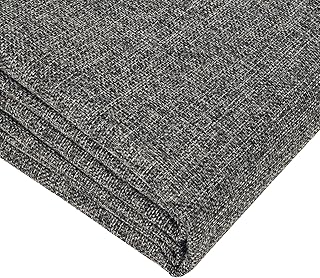
The 1.2mm thickness gives this a substantial, almost canvas-like feel that’s excellent for chairs with thin or aging foam, since the fabric itself contributes structure. The dark grey is nearly bulletproof visually, though be aware heavy linen creases in transit and benefits from a steam before you cut.
Frequently Asked Questions
How much fabric do I need for four dining chairs?
For standard drop-in slip seats, one to one and a half yards of 57″-wide fabric handles four chairs. Measure your seat, add 4″ on every side for wrap and staple room, and lay out your cuts on paper before you touch the scissors.
Do I need to replace the foam too?
If the foam crumbles when you press it or has a permanent dent, yes — new fabric over dead foam is wasted effort. Otherwise, adding a layer of polyester batting over existing foam refreshes the shape and gives you a smoother surface to pull fabric across.
Should I treat the fabric with a stain guard?
It’s worth doing on lighter colors, and it’s easiest before you install the fabric. Spray the cut pieces flat, outdoors, let them dry fully, then upholster. Reapply every year or two.
Can I upholster over the old fabric?
You can, and on tight-fitting slip seats it sometimes helps by adding a hair of padding, but only if the old layer is clean and dry. If it smells, is stained, or is more than two layers deep, strip it down to the board.
Final Thoughts
For most dining sets, the TinaKim Thick Upholstery Fabric hits the best balance of yardage, weight, and workability, and it’s the one I’d hand to someone doing this for the first time. If durability is the priority — kids, dogs, daily dinners — the 11oz Polyester Blend in khaki will outlast the rest, while the LaSilk Premium by the yard is the right call for small repairs or a single pair of chairs.