Key takeaways
- Ambient temperature range: Check the manual, not the listing. Anything rated only to 90°F will struggle in a hot garage. If your space swings below 55°F in winter, a beverage-only fridge without a freezer compartment is usually the safer bet, since there’s no ice cream to thaw when the thermostat idles.
- Compressor vs. thermoelectric: Compressor-driven units pull real heat out of the box and handle warm rooms. Thermoelectric coolers only manage a fixed number of degrees below ambient, which means a 95°F garage gets you 75°F drinks. Look for R600a refrigerant as a sign you’re getting a proper compressor.
- Capacity versus footprint: A 3.2 cu. ft. cabinet holds a serious amount of stock but eats about 19 inches of wall width. A 1.6 cu. ft. unit slides under a workbench. Measure your bench height first, then shop, because reversing that order leads to returns.
- Shelf construction: Wire shelves flex under a case of longnecks. Tempered glass holds weight better and wipes clean when something leaks, though it’s heavier to remove for cleaning. Slide-out shelves are genuinely useful when the fridge sits low and you’re reaching in at an angle.
- Clearance and ventilation: Give the condenser at least two to three inches at the back and sides. Building a tight cabinet around a mini fridge is the fastest way to kill it. If you’re framing an enclosure, add a vent at the top and bottom.
What's inside
A garage fridge lives a harder life than its kitchen cousin. Mine sits three feet from a table saw, gets covered in sawdust twice a week, and has to keep beer cold when the shop hits 95°F in August and drops near freezing by January. That temperature swing is the thing nobody warns you about: most compact refrigerators are rated for ambient conditions between roughly 60°F and 90°F, and outside that window the compressor either runs itself ragged or barely kicks on at all. The result is warm drinks in summer and, oddly enough, warm drinks in winter too, because the thermostat thinks the whole box is already cold enough.
This guide is built around what actually holds up in an uninsulated workspace. I’ve paid attention to compressor behavior in heat, door seal quality when the cabinet gets nudged by a rolling tool chest, whether the shelves survive being loaded with heavy glass bottles, and how much clearance each unit really needs when you tuck it against a stud wall. Below are six compact fridges worth considering in 2026, followed by the specs that separate a garage-capable unit from one that’ll quit by its second summer.
As an Amazon Associate we earn from qualifying purchases.



🛒 Best Price Today on Amazon
Prime members get fast, free shipping on everything above, plus member-only deals. New members get a 30-day free trial — cancel anytime.
How to Choose a Garage Mini Fridge (2026)
- Ambient temperature range: Check the manual, not the listing. Anything rated only to 90°F will struggle in a hot garage. If your space swings below 55°F in winter, a beverage-only fridge without a freezer compartment is usually the safer bet, since there’s no ice cream to thaw when the thermostat idles.
- Compressor vs. thermoelectric: Compressor-driven units pull real heat out of the box and handle warm rooms. Thermoelectric coolers only manage a fixed number of degrees below ambient, which means a 95°F garage gets you 75°F drinks. Look for R600a refrigerant as a sign you’re getting a proper compressor.
- Capacity versus footprint: A 3.2 cu. ft. cabinet holds a serious amount of stock but eats about 19 inches of wall width. A 1.6 cu. ft. unit slides under a workbench. Measure your bench height first, then shop, because reversing that order leads to returns.
- Shelf construction: Wire shelves flex under a case of longnecks. Tempered glass holds weight better and wipes clean when something leaks, though it’s heavier to remove for cleaning. Slide-out shelves are genuinely useful when the fridge sits low and you’re reaching in at an angle.
- Clearance and ventilation: Give the condenser at least two to three inches at the back and sides. Building a tight cabinet around a mini fridge is the fastest way to kill it. If you’re framing an enclosure, add a vent at the top and bottom.
The Best Garage Mini Fridge (2026)s Reviewed
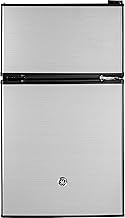
Igloo 3.2 Cu. Ft. Mini Fridge with Freezer
The most storage per dollar in this group, with glass shelves that take real weight and a separate freezer box for ice packs and shop-lunch burritos. Adjustable temperature control lets you dial it down as summer heat climbs, which is exactly the flexibility a garage needs.
Frigidaire Black Retro 1.6 Cu. Ft.
The side-mounted bottle opener is a gimmick that turns out to be genuinely handy when your hands are dirty and the church key is buried in a drawer. Compact enough to tuck under a bench, with a straightforward mechanical thermostat and no electronics to fail in a dusty environment.
BLACK+DECKER 2.5 Cu. Ft. Compact Refrigerator
My pick for the best balance of size and efficiency: Energy Star certified with R600a refrigerant, so it sips power even when the compressor cycles hard in the heat. The chiller compartment isn’t a true freezer, but it keeps ice packs solid and stays useful year-round.
Frigidaire EFR115 1.6 Cu. Ft.
Slide-out shelves make a real difference in a low-mounted fridge, letting you pull the whole row forward instead of groping around the back. A proven, no-frills design that’s been running in garages for years with a well-earned reputation for durability.
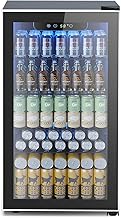
Electactic 3.2 Cu. Ft. Beverage Refrigerator
Purpose-built for cans and bottles, holding around 130 cans with no freezer compartment to worry about in cold weather. If your garage fridge is strictly a drink fridge, this is the smarter architecture, since there’s nothing inside that a winter cold snap can ruin.
Frequently Asked Questions
Will a mini fridge survive winter in an unheated garage?
Only if the room stays above the manufacturer’s minimum, typically 50–60°F. Below that, the thermostat reads the cold air and stops running the compressor, which means a freezer compartment thaws even though the fridge section stays cold. Beverage-only units sidestep this problem entirely.
How much clearance does a garage mini fridge need?
Two to three inches behind and on both sides, plus a few inches above. The condenser coils dump heat, and in an already-warm garage that heat needs somewhere to go. Enclosing one in a tight cabinet without vents is the most common cause of premature failure I’ve seen.
Can I run one on an extension cord?
Not ideally. Compressors draw a startup surge that thin cords can’t handle, and voltage drop makes the motor run hotter. If you must, use a 12-gauge cord as short as possible, and never a household lamp cord. A dedicated outlet is worth the afternoon it takes to add.
Does a garage fridge need a defrost drain?
Manual-defrost units, which is most of this category, collect frost you scrape off periodically. In a humid garage, expect to defrost more often than you would indoors. Keep a shop towel underneath and check the drip tray monthly.
Final Thoughts
For most garages, the BLACK+DECKER 2.5 Cu. Ft. hits the sweet spot: enough room for a weekend’s worth of drinks and leftovers, Energy Star efficiency that keeps the meter honest, and R600a cooling that holds up when the shop gets hot. If you want maximum capacity and a usable freezer, the Igloo 3.2 Cu. Ft. is the better value. And if your garage drops below freezing in winter, skip the freezer entirely and go with the Electactic beverage fridge, which has nothing inside that a cold snap can spoil.