A noisy compressor can turn a quick furniture repair into a garage-wide interruption. Many compact models also trade quiet operation for slow recovery, while larger shop units may be awkward to move or excessive for occasional nailing, inflation, and finish work.
This guide focuses on the practical details that matter in a home garage: sound level, tank capacity, oil-free maintenance, portability, pressure, airflow, and the tools each compressor can realistically support. The picks below cover everything from trim-nail touch-ups to heavier-duty workshop jobs.
Our top picks



As an Amazon Associate we earn from qualifying purchases at no extra cost to you.
🛒 Best Price Today on Amazon
Prime members get fast, free shipping on everything above, plus member-only deals. New members get a 30-day free trial — cancel anytime.
How to Choose a Quiet Air Compressor For Home Garage (2026)
- Noise level: Look for a published decibel rating, but remember that intake noise, vibration, and the garage’s walls also affect how loud a compressor feels in use. Models near 60 dB are generally easier to live with.
- Tank size: A larger tank provides a useful reserve for brief bursts of air and reduces how often the motor starts. One- and two-gallon tanks suit inflation and brad nailing, while six- to 20-gallon tanks are better for repeated work.
- Airflow: Compare CFM at 90 PSI rather than relying only on horsepower or maximum PSI. Higher CFM is important for tools such as grinders, impact wrenches, and some spray guns.
- Maintenance: Oil-free pumps are convenient for home workshops because they avoid oil changes and reduce the risk of contaminating air lines. They can, however, run warmer and may be less repairable than traditional cast-iron pumps.
- Garage fit: Check the compressor’s footprint, wheel design, cord length, and drain access. A tall vertical unit saves floor space, while a lighter horizontal model is easier to pull toward a project.
The Best Quiet Air Compressor For Home Garage (2026)s Reviewed
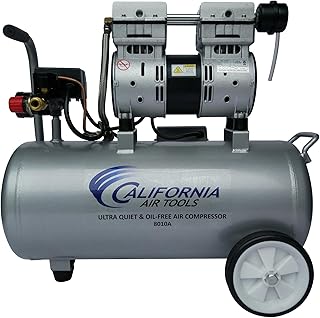
California Air Tools 8010A
The California Air Tools 8010A is a particularly well-rounded choice for furniture makers who need a quiet, mobile compressor without giving up useful reserve capacity. Its eight-gallon aluminum tank and 60 dBA rating make it suitable for trim nailers, staplers, inflation, and intermittent cleaning, while the oil-free pump keeps routine upkeep simple.
Stealth 20-Gallon Ultra Quiet Compressor
This Stealth 20-gallon model is the practical step-up for a garage that regularly runs pneumatic tools. Its 1.8 HP oil-free motor, 150 PSI maximum pressure, and published airflow around 5 CFM at 90 PSI offer better recovery than compact units, though the larger tank and footprint make it more of a semi-permanent shop fixture.
Stealth 2-Gallon Air Compressor
For small furniture repairs, tire inflation, and occasional brad-nail work, the Stealth 2-gallon compressor is an appealing middle ground. It stays below 60 dB according to its specification and is easier to store than a full-size machine, but its limited tank means it is not intended for continuous high-demand tools.
Klutch 20-Gallon Air Compressor
The Klutch 20-gallon compressor is built for makers who value recovery and working time over minimum noise. Its vertical oil-free design conserves floor space, while the 175 PSI rating, 2 HP motor, large wheels, and 75% duty cycle make it a capable choice for shop air tools and repeated fastening jobs.
Ultra Quiet 6.4-Gallon Air Compressor
This 6.4-gallon oil-free compressor offers a useful balance for a home garage that occasionally crosses into spray painting, automotive work, or more demanding woodworking. The listed 6.71 CFM at 115 PSI is promising for a compact machine, but verify the manufacturer’s operating requirements and use an appropriate moisture separator before spraying finishes.
Frequently Asked Questions
What is a good noise level for a garage air compressor?
A compressor rated around 60 dB is usually much more comfortable than a conventional shop unit, especially in an attached garage. The actual experience depends on vibration, flooring, wall construction, and whether the motor is running under load.
Is an oil-free compressor best for furniture projects?
For most home furniture work, yes. Oil-free models start easily and require less maintenance, making them convenient for nailers, staplers, inflation, and light cleaning. If you plan to run demanding tools for long periods, a heavier-duty pump may offer better longevity.
How much tank capacity do I need for a nail gun?
A one- or two-gallon tank is generally enough for a brad nailer or finish nailer used intermittently. Choose six gallons or more if you want steadier operation during extended fastening, or if several tools may share the compressor.
Can a quiet compressor run a spray gun?
Some can, but the compressor must meet the spray gun’s CFM requirement continuously, not merely reach its maximum PSI. A larger tank helps smooth short bursts, while a regulator, water separator, and suitable hose are essential for clean results.
Final Thoughts
For the broadest range of home-garage furniture work, the California Air Tools 8010A is a strong quiet-and-portable pick. Choose the Stealth 20-gallon model or the Klutch 20-gallon compressor when recovery matters more, while the Stealth 2-gallon unit is a sensible space-saving option for lighter DIY tasks.