Key takeaways
- Match the mounting first: Before anything else, measure your saw’s front rail bolt pattern and rear guide. A universal fence is only universal within a range, and a fence built for a Delta rail geometry won’t drop onto a hybrid saw without drilling. Check the model list, then check your table’s thickness.
- Rip capacity you’ll actually use: A 30-inch fence handles full sheet goods with a helper and an outfeed table. Going to 50 inches means committing bench space and extending your rails. Most furniture builders find 30 to 36 inches is the sweet spot between capability and shop footprint.
- Lock geometry over lock force: The good designs clamp front and rear simultaneously so the fence pulls itself square as it locks. Front-only cams rely on the head being tight against the rail, and that tightness degrades as the wear pads compress.
- T-track and accessory mounting: Extruded fence bodies with integral T-slots let you add featherboards, stop blocks, and sacrificial faces without drilling. If you build repeat parts, this feature earns its keep in the first afternoon.
- Adjustability after the fact: Look for accessible set screws or shim points for squaring the face to the table and correcting parallelism. Sealed designs with no adjustment path become disposable the moment they drift.
What's inside
The fence that came bolted to your table saw is probably the weakest link in your whole shop. Stamped steel, a single lever at the front, and enough flex that a hard push against it will walk the far end out of parallel by a few thousandths. You notice it first in glue-ups: joints that should close with hand pressure need clamps cranked down, and the panel comes out of the clamps with a hollow in the middle. Then you notice it in burn marks on the back half of a rip, which is the fence quietly telling you it’s toed in toward the blade.
A better fence fixes more of your woodworking than almost any other upgrade at the same price. This guide covers full replacement fence systems for cabinet and contractor saws, bolt-on assemblies for specific jobsite models, and auxiliary T-track fences that ride on top of what you already own. I’ve broken down what actually matters when you’re comparing them, reviewed the standouts, and answered the questions that come up most when people start shopping.
As an Amazon Associate we earn from qualifying purchases.


🛒 Best Price Today on Amazon
Prime members get fast, free shipping on everything above, plus member-only deals. New members get a 30-day free trial — cancel anytime.
How to Choose a Table Saw Fences (2026)
- Match the mounting first: Before anything else, measure your saw’s front rail bolt pattern and rear guide. A universal fence is only universal within a range, and a fence built for a Delta rail geometry won’t drop onto a hybrid saw without drilling. Check the model list, then check your table’s thickness.
- Rip capacity you’ll actually use: A 30-inch fence handles full sheet goods with a helper and an outfeed table. Going to 50 inches means committing bench space and extending your rails. Most furniture builders find 30 to 36 inches is the sweet spot between capability and shop footprint.
- Lock geometry over lock force: The good designs clamp front and rear simultaneously so the fence pulls itself square as it locks. Front-only cams rely on the head being tight against the rail, and that tightness degrades as the wear pads compress.
- T-track and accessory mounting: Extruded fence bodies with integral T-slots let you add featherboards, stop blocks, and sacrificial faces without drilling. If you build repeat parts, this feature earns its keep in the first afternoon.
- Adjustability after the fact: Look for accessible set screws or shim points for squaring the face to the table and correcting parallelism. Sealed designs with no adjustment path become disposable the moment they drift.
The Best Table Saw Fences (2026)s Reviewed
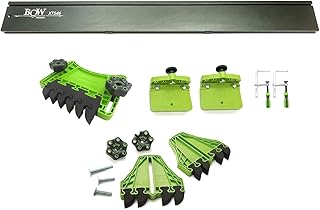
BOW Products Ultimate Table Saw XTENDER & Safety Kit
This is the complete package: the 46-inch XT XTENDER fence plus support feeds, T-track clamps, and both the FeatherPRO and FencePRO featherboards. If you’re upgrading a portable saw and want stock control sorted in one purchase, it’s the most sensible way to buy in, and the featherboards mount straight into the extrusion with no drilling.
BOW Products 46″ XT XTENDER Fence System
The same aluminum fence and hardware without the featherboard bundle, which makes it the pick if you already own hold-downs. What sells me on it is the versatility: the T-track body mounts to router tables, band saws, and contractor saws, so one fence covers three stations in a small shop.
Delta 36-T30T3 T3 Fence System
Delta’s T3 is the reference point for cast-and-extruded fence design, with a 30-inch capacity and a lock action that seats front and rear together. The face is genuinely straight out of the box and the tape and cursor let you cut to a dimension without measuring twice.
36″ Professional Advanced Table Saw Fence
A self-aligning T-square fence at a friendlier price than the name-brand systems, with 36 inches of rip capacity that clears a half sheet comfortably. Budget an hour for careful setup and dialing in the parallelism, and it performs well above what you paid.
Table Saw Rip Fence Assembly (RTS10G, RTS10NS)
Purpose-built replacement for those Ryobi jobsite saws, which is exactly what you want when the original fence has been dropped or the cam has worn out. It’s a repair part rather than an upgrade, so expect factory performance restored, not improved.
Frequently Asked Questions
Will a replacement fence fit my saw?
Only if the rail mounting matches. Universal systems cover common bolt spacings and table thicknesses, but always confirm your saw against the compatibility list. Aftermarket rails sometimes need new holes drilled in the front casting.
Should the fence be perfectly parallel to the blade?
Parallel, or with a hair of clearance at the rear, roughly two to three thousandths. Never toe the fence toward the blade at the back, since that traps the offcut and invites kickback.
Are auxiliary T-track fences a real upgrade?
They add accessory mounting, a taller reference face, and better support for narrow rips, all bolted to your existing fence. What they can’t do is fix a stock fence that won’t hold parallel, since they inherit whatever alignment sits underneath.
How much rip capacity do I need for furniture work?
Thirty inches handles most casework once you break sheets down with a track saw first. Go to 50 inches only if you regularly rip full plywood on the saw and have the outfeed support to do it safely.
Final Thoughts
For a serious cabinet or contractor saw, the Delta T3 is the fence to beat on accuracy and long-term adjustability. If you’re working off a portable saw or want one fence serving multiple stations, the BOW Products Ultimate XTENDER Kit delivers the fence and the stock control together, and the standalone 46″ XT XTENDER covers the same ground if you’re already stocked on featherboards.