Key takeaways
- Measure the alcove, not the fridge: Grab the actual footprint you have available, then subtract two to three inches on the back and sides for airflow. Compressor fridges shed heat through coils; box one in tightly and it runs hotter, louder, and shorter-lived. Under-desk nooks are the usual culprit here.
- Check your housing’s wattage and appliance rules first: Many residence halls cap fridge size around 4 to 4.5 cubic feet, and some restrict combined draw per outlet. A five-minute email to housing beats a confiscated appliance during move-in week.
- Decide whether you need real freezing or just cold: Single-door units with an interior chill box will keep ice cream soft-serve soft at best. If frozen meals are part of your plan, you need a separate freezer compartment with its own door and its own seal.
- Treat noise as a hard requirement: Anything under roughly 40 dB reads as ambient in a quiet room. Above that, you’ll hear the compressor cycle on at 3 a.m. Thermoelectric coolers are near-silent but only pull temps down about 30°F below the room.
- Confirm the door reverses: Reversible hinges cost nothing and solve everything. A door that opens into a bed frame or blocks a walkway makes an otherwise good fridge miserable to live with, and dorm layouts rarely cooperate on the first try.
What's inside
Dorm shopping has a particular kind of frustration to it: you’re buying furniture for a room you’ve never measured, sharing with someone you’ve never met, under rules you half-remember from a PDF. The mini fridge is where that uncertainty bites hardest. Buy too small and you’re stacking yogurt on top of soda cans. Buy too big and you’ve eaten the only floor space between the desk and the closet, or worse, tripped a wattage limit in the housing agreement. And because most of these units live under a lofted bed six feet from your pillow, compressor noise stops being a spec sheet number and becomes a sleep problem.
I approached this the way I’d approach any build-out in a tight space: tape measure first, then power draw, then how the thing actually behaves once it’s wedged into a corner. This guide covers what capacity ranges make sense for real dorm layouts, why freezer design matters more than freezer size, the door-swing detail almost nobody checks before ordering, and honest reviews of the units worth your money in 2026 — from a 4-liter desktop cooler to a 4.5 cubic foot two-door setup that pushes right up against what a single room can hold.
As an Amazon Associate we earn from qualifying purchases.


How to Choose a Mini Fridge For Dorm Rooms (2026)
- Measure the alcove, not the fridge: Grab the actual footprint you have available, then subtract two to three inches on the back and sides for airflow. Compressor fridges shed heat through coils; box one in tightly and it runs hotter, louder, and shorter-lived. Under-desk nooks are the usual culprit here.
- Check your housing’s wattage and appliance rules first: Many residence halls cap fridge size around 4 to 4.5 cubic feet, and some restrict combined draw per outlet. A five-minute email to housing beats a confiscated appliance during move-in week.
- Decide whether you need real freezing or just cold: Single-door units with an interior chill box will keep ice cream soft-serve soft at best. If frozen meals are part of your plan, you need a separate freezer compartment with its own door and its own seal.
- Treat noise as a hard requirement: Anything under roughly 40 dB reads as ambient in a quiet room. Above that, you’ll hear the compressor cycle on at 3 a.m. Thermoelectric coolers are near-silent but only pull temps down about 30°F below the room.
- Confirm the door reverses: Reversible hinges cost nothing and solve everything. A door that opens into a bed frame or blocks a walkway makes an otherwise good fridge miserable to live with, and dorm layouts rarely cooperate on the first try.
The Best Mini Fridge For Dorm Rooms (2026)s Reviewed
4.5 Cu. Ft. 2-Door Mini Fridge Freezer
This is the most capable unit here and the one I’d pick if your housing allows the footprint: a genuinely separate freezer door, a 7-level thermostat, and adjustable shelves that let you build around tall bottles instead of fighting them. The 38 dB rating is the standout spec — quiet enough to sleep beside, which is the whole ballgame in a single room.
Midea 3.1 Cu. Ft. Mini Fridge with Freezer
The Energy Star certification is the reason this one earns a spot: over a nine-month lease it’s the cheapest of the compressor units to run, and Midea’s build quality on gaskets and hinges holds up better than most in this price bracket. A sensible default if you want cold storage plus a small freezer and don’t want to think about it again.
Upstreman 3.2 Cu. Ft. Mini Fridge (BR321)
Nearly the same capacity as the Midea with a reversible door and a manual thermostat that gives you finer control over the cold zone. Noise levels sit low enough for shared rooms, and the interior layout wastes less vertical space than you’d expect from a 3.2 cubic foot box.
Upstreman 1.7 Cu. Ft. Mini Fridge (FR17)
The right answer for genuinely cramped rooms or a second fridge on your side of a shared space — it slides under most desks and still includes a usable freezer shelf. Capacity is tight, so plan on drinks, condiments, and a few days of lunches rather than a week of groceries.
Cooluli 4L Portable Cooler & Warmer
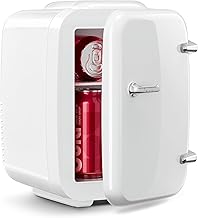
Not a fridge replacement, and it isn’t trying to be. This thermoelectric 6-can unit runs on AC, 12V DC, or USB, cools quietly enough for a nightstand, and also warms — which makes it the natural pick for skincare, medication, or a desk-side drink stash that doesn’t justify a compressor.
Frequently Asked Questions
What size mini fridge is allowed in most dorms?
Most schools cap out somewhere between 3.5 and 4.5 cubic feet, often with an amperage limit attached. Check your specific housing agreement before ordering, since the rules vary by building even on the same campus.
Can I put a mini fridge inside a closet or cabinet?
Not without leaving clearance. Compressor units vent heat from the rear and sides, and enclosing them traps that heat, forcing longer run cycles and shortening compressor life. Leave a few inches on all sides and never block the back.
Will a mini fridge freezer actually freeze food?
A separate freezer compartment with its own door will hold frozen meals reliably. The small interior chill boxes in single-door models keep things partly frozen at best, and they frost over quickly if you open the fridge often.
How much does one add to an electric bill?
An Energy Star certified 3 cubic foot unit typically runs somewhere in the range of $20 to $35 per year in electricity. In most dorms that cost is bundled into housing fees, so the practical concern is outlet capacity rather than dollars.
Final Thoughts
If your housing rules allow it, the 4.5 Cu. Ft. 2-Door model is the one to get — the separate freezer and 38 dB operation solve the two problems that make dorm fridges annoying. For a more conservative footprint, the Midea 3.1 Cu. Ft. hits the best balance of capacity and efficiency, and the Cooluli 4L is a smart, silent companion for a nightstand or desk when you just need a few things cold and close.