Key takeaways
- Cooling method: Compressor units hold a tight 36–46 °F regardless of room heat. Thermoelectric (Peltier) models cool relative to ambient, typically 30–40 °F below it, which means a hot car trunk will beat them. Match the technology to where you’ll actually use it.
- Verify with your own thermometer: Drop a cheap digital probe or a Bluetooth logger inside and run it empty for 12 hours before you trust it with a vial. Built-in displays read the air near the sensor, not the temperature at your pens.
- Battery runtime and recharge path: Look for swappable cells and USB-C input so a standard power bank can extend a travel day. Two batteries beats one big one — you can charge while you cool.
- Alarms and lockout: An audible out-of-range alert matters more than any other feature. Also check whether the unit can be set below freezing; insulin ruined by ice is not salvageable, so a floor around 36 °F is a feature, not a limitation.
- Interior fit and insulation: Measure your longest pen or vial before buying. Foam inserts keep glass from rattling and add thermal mass, which smooths out temperature swings every time the lid opens.
What's inside
Anyone who has stared at a hotel minibar wondering whether it actually holds 40 °F knows the problem: insulin is a temperature-sensitive protein, and the gear built to protect it is wildly inconsistent. Full-size dorm fridges freeze the back wall. Gel-pack pouches drift warm after six hours. Cheap thermoelectric boxes advertise a range they only reach in a 70 °F room. If you have ever taped a probe thermometer inside a cooler just to see what was really happening in there, you already understand why this category needs a closer look.
This guide approaches the problem the way a maker would: measure first, trust the label second. Below are the compact coolers and mini fridges worth considering for insulin and other refrigerated medications in 2026, along with the specs that actually predict real-world performance — compressor versus thermoelectric cooling, battery runtime, alarm behavior, and how forgiving the unit is when ambient temperature climbs. Always confirm your specific insulin’s storage range with the package insert or your pharmacist, since brands differ.
As an Amazon Associate we earn from qualifying purchases.


How to Choose a Mini Fridge For Insulin (2026)
- Cooling method: Compressor units hold a tight 36–46 °F regardless of room heat. Thermoelectric (Peltier) models cool relative to ambient, typically 30–40 °F below it, which means a hot car trunk will beat them. Match the technology to where you’ll actually use it.
- Verify with your own thermometer: Drop a cheap digital probe or a Bluetooth logger inside and run it empty for 12 hours before you trust it with a vial. Built-in displays read the air near the sensor, not the temperature at your pens.
- Battery runtime and recharge path: Look for swappable cells and USB-C input so a standard power bank can extend a travel day. Two batteries beats one big one — you can charge while you cool.
- Alarms and lockout: An audible out-of-range alert matters more than any other feature. Also check whether the unit can be set below freezing; insulin ruined by ice is not salvageable, so a floor around 36 °F is a feature, not a limitation.
- Interior fit and insulation: Measure your longest pen or vial before buying. Foam inserts keep glass from rattling and add thermal mass, which smooths out temperature swings every time the lid opens.
The Best Mini Fridges for Insulin (2026), Reviewed
ZSWCBRT Mini Medical Fridge / Insulin Cooler Travel Case
A straightforward travel case with a Fahrenheit readout and a working band of 32–47 °F, which lines up neatly with typical insulin storage guidance without any unit conversion in your head. The wide range means you’ll want to dial it in and verify with a second thermometer, but as a grab-and-go case it’s an easy recommendation.
Electric Insulin Cooler Travel Case (32 ℉–64 ℉, Dual Battery)
The dual rechargeable batteries are the headline here — you can rotate cells on a long travel day instead of hunting for an outlet. The upper end of its range runs warmer than you’d want for storage, so set your target near the bottom of the scale and confirm it before loading.
Upgraded Insulin Cooler Case (2–8 ℃, Alarm & USB)
This is the one I’d hand to someone who wants the tightest spec on paper: a stated 2–8 ℃ window, an out-of-range alarm, USB charging, and a carry handle. The single-layer Celsius interior is snug, so measure your pens first.
Cooluli 4L Mini Fridge (AC/DC/USB)
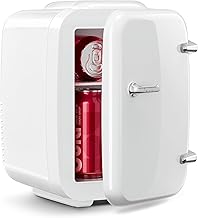
Not a purpose-built medical unit, but the most versatile pick on the list: 4 liters, three power inputs including 12V for the car, and cool-or-warm operation. Because it’s thermoelectric, treat a warm room as its limiting factor and monitor it — plenty of users run one as a bedside backup with a logger inside.
PeptiCool Peptide Cooler
Rechargeable, touchscreen-controlled, TSA-friendly, and sized for both pens and vials, this one feels the most engineered of the travel-focused options. The touch interface is genuinely easier to set precisely than the two-button designs elsewhere in this roundup.
Frequently Asked Questions
What temperature should insulin be stored at?
Unopened insulin is generally refrigerated between 36 and 46 °F (2–8 ℃), and freezing ruins it permanently. In-use pens often have different guidance. Check your specific product’s insert or ask your pharmacist rather than relying on a generic number.
Are thermoelectric coolers good enough?
For indoor use and short trips, often yes. They cool a fixed amount below ambient, so performance drops in heat. If you travel through hot climates or leave gear in vehicles, a compressor-based unit is the safer engineering choice.
Can I use a regular dorm mini fridge?
You can, with monitoring. The risk is cold spots near the evaporator that dip below freezing. Keep medication toward the door, add a bottle of water as thermal mass, and run a min/max thermometer for a week before committing.
How do I keep insulin cool during a flight?
Carry it in the cabin, never checked baggage, since cargo holds can freeze. A battery-powered cooler plus a topped-off power bank covers most itineraries, and letters from your prescriber smooth security conversations.
Final Thoughts
For most people the PeptiCool Peptide Cooler is the best all-around choice, with precise control and travel-ready design. The Upgraded Insulin Cooler Case is the pick if a tight 2–8 ℃ spec and an audible alarm top your list, while the Cooluli 4L Mini Fridge is the flexible, budget-friendly option for home and car use — just pair it with your own thermometer.