Key takeaways
- Drive type first: A 1/2″ round shank needs a keyless or keyed 1/2″ chuck — most 18V/20V drills qualify. A 3/8″ hex drive fits impact drivers and standard chucks alike, which is more forgiving but transmits less torque smoothly. Check your drill’s chuck capacity before you click buy.
- Blade material: SK-5 high carbon steel takes and holds a keen edge in freezing conditions. Tungsten carbide-tipped edges last longer between sharpenings but cost more. Avoid unspecified “alloy steel” listings.
- Flotation matters more than you think: Buoyant foam collars or floating designs mean a dropped auger stays retrievable instead of sinking 30 feet. Cheap insurance on an expensive bit.
- Diameter versus battery life: A 6″ hole drills roughly twice as fast as an 8″ and drains far less charge. Unless you’re targeting pike or lake trout, 6″ is plenty and your 5.0Ah pack will thank you.
- Included spares: Replacement blades and a blade guard should come in the box. Blades chip on gravel and shell ice, and a protector keeps them sharp in the sled.
What's inside
Hauling a gas auger across a mile of lake ice makes sense if you’re punching forty holes a day. For the rest of us — the weekend crowd, the guys who drill six holes and then sit down with a thermos — a drill-driven auger bit is the smarter tool. You already own the powerhead. That 20V brushless drill sitting in your shop, the one you use for deck screws and cabinet pulls, will spin a 6″ nylon auger through a foot of ice without complaint. The catch is that the auger market is a mess of near-identical listings, mismatched adapters, and blades that arrive dull enough to polish rather than cut.
This guide sorts the genuinely useful from the merely cheap. We look at chuck compatibility (1/2″ round versus 3/8″ hex — get this wrong and nothing else matters), blade steel, flotation, and the practical difference between a fishing auger and a garden bit that’s been relabeled for ice. Below you’ll find picks that hold up in real cold, plus a short checklist for matching an auger to the drill you already have.
As an Amazon Associate we earn from qualifying purchases.


🛒 Best Price Today on Amazon
Prime members get fast, free shipping on everything above, plus member-only deals. New members get a 30-day free trial — cancel anytime.
How to Choose a/an Ice Auger For Cordless Drill (2026)
- Drive type first: A 1/2″ round shank needs a keyless or keyed 1/2″ chuck — most 18V/20V drills qualify. A 3/8″ hex drive fits impact drivers and standard chucks alike, which is more forgiving but transmits less torque smoothly. Check your drill’s chuck capacity before you click buy.
- Blade material: SK-5 high carbon steel takes and holds a keen edge in freezing conditions. Tungsten carbide-tipped edges last longer between sharpenings but cost more. Avoid unspecified “alloy steel” listings.
- Flotation matters more than you think: Buoyant foam collars or floating designs mean a dropped auger stays retrievable instead of sinking 30 feet. Cheap insurance on an expensive bit.
- Diameter versus battery life: A 6″ hole drills roughly twice as fast as an 8″ and drains far less charge. Unless you’re targeting pike or lake trout, 6″ is plenty and your 5.0Ah pack will thank you.
- Included spares: Replacement blades and a blade guard should come in the box. Blades chip on gravel and shell ice, and a protector keeps them sharp in the sled.
The Best Ice Auger For Cordless Drill (2026)s Reviewed
Eyoyo 6-8″ Nylon Ice Auger Bit
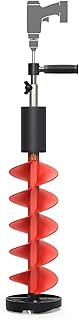
This one earns its spot on versatility — a nylon flight body with a 1/2″ chuck adapter, spare blade set, and blade protector included, which is rare at this price. The nylon shaft sheds slush better than painted steel and weighs little enough that a compact drill handles it without wrist strain.
FUJIWARA 8″ Ice Auger with Buoyant Foam
The SK-5 high carbon blade is the standout here; it bites clean rather than skating on hard ice, and the buoyant foam collar is genuine peace of mind when you’re leaning over a fresh hole. At 8″ it asks more from your battery, so bring a spare pack.
Lounsweer 6″ Floating Ice Auger
A floating 6″ design with twin blades that cuts fast and forgiving — the sweet spot for panfish and walleye anglers who want speed over hole diameter. The nylon attachment keeps overall weight down, which matters on a long walk out.
16″ x 4″ Carbide-Tipped Auger Bit
Tungsten steel cemented carbide on thickened blades makes this the durability pick, and the 3/8″ hex drive means it runs off an impact driver. It’s a dual-purpose bit: ice in winter, bulb planting and post holes come spring.
Upgraded Garden Auger Drill Bit 4 x 16″
A heavy-duty double-blade spiral on a 3/8″ hex drive, built primarily for soil but capable in thin to moderate ice. Buy this if you want one bit that plants 200 tulips and still opens a hole for a tip-up.
Frequently Asked Questions
Will my cordless drill actually handle an ice auger?
An 18V or 20V drill with at least 400 in-lbs of torque and a 4.0Ah battery will do it. Brushless motors run cooler and stretch runtime considerably. Underpowered 12V drills will stall in thick ice.
How thick of ice can I drill?
Most drill augers reach 12 to 18 inches depending on shaft length, and extensions are available. Sharp blades matter more than raw power once you pass a foot.
Do I need a drill adapter?
If the auger has a 1/2″ round shank, an adapter is usually included. Hex-drive models drop straight into most chucks and impact drivers with no adapter at all.
Can garden augers double as ice augers?
Sometimes, and several listings market them both ways. Dedicated ice augers have flatter cutting blades and slush-clearing flights, so they’ll always cut faster and cleaner on a lake.
Final Thoughts
For most anglers running a standard cordless drill, the Eyoyo 6-8″ nylon auger is the sensible starting point — spare blades, a proper adapter, and low weight for the money. Step up to the FUJIWARA 8″ if you fish bigger water and want SK-5 steel with flotation built in, or grab the Lounsweer 6″ floating auger when speed and portability outrank hole size. All three respect the fact that you already own the motor.