Key takeaways
- Tablets are the least fussy option for a single countertop machine. You drop one in the reservoir with water and run a cycle — no measuring cup, no spilled concentrate. The Ice Machine Cleaner Maker and Descaler 24 Tablets and the ACTIVE Ice Machine Cleaner 24 Clean Tablets both cover roughly a year of monthly cleanings, and the 36-Pack Descaler Tablets stretch further if you clean more often or run two units.
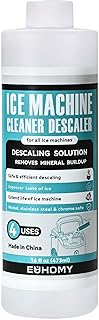
- Liquid concentrate gives you control over strength, which helps with heavy scale. Affresh Ice Machine Cleaner is the safe default for most brand-name refrigerator ice makers, and EUHOMY Ice Machine Cleaner Descaler is a 16 oz bottle good for four uses that also handles espresso machines — handy if you’d rather not stock two products.
- Bulk gallons make sense for commercial units, multiple machines, or hard-water households cleaning every few weeks. A Nickel Safe 1 gal Ice Maker & Machine Cleaner that meets Manitowoc spec GES-6 is the same class of product a service tech would carry.
What's inside
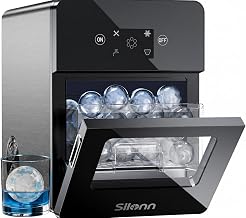
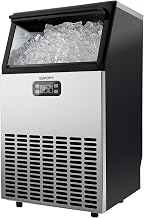
Ice makers get a strange pass in most kitchens. We scrub the coffee maker, wipe the microwave, run the dishwasher’s self-clean cycle, then reach into a bin of ice that’s been sitting in a damp plastic reservoir for three weeks and think nothing of it. Meanwhile, minerals from your tap water are quietly plating themselves onto the evaporator plate, the water pump is pushing that same water through a line that never fully dries, and somewhere behind the drip tray there’s a pink film forming. Cloudy cubes, ice that tastes faintly of the freezer, cycles that take longer than they used to, or a bin that smells musty even when it’s empty are all the same message: the machine needs a real cleaning, not a rinse.
The good news is that this is one of the easiest maintenance jobs in the house once you understand what you’re actually fighting. There are two separate problems here — mineral scale, which needs acid to dissolve, and biofilm, which needs a sanitizer to kill — and they get handled in that order. Below, I’ll walk through the full process I use on both countertop nugget machines and built-in units, explain how to choose between tablets, liquid concentrate, and bulk gallons, and cover the details that trip people up: what “nickel safe” actually means, why you never mix bleach into a descaling cycle, and how often to do this based on your water rather than a guess.
As an Amazon Associate we earn from qualifying purchases.




Understand What You’re Removing Before You Start
Scale is the chalky white or gray crust on the evaporator plate and inside the water lines. It’s calcium and magnesium left behind as water freezes and evaporates, and it insulates the plate so the machine works harder to make worse ice. Only a food-safe acid removes it — citric, phosphoric, or a blend, which is exactly what a purpose-made ice machine descaler is. Biofilm is the separate issue: a slick, sometimes pink or gray layer of bacteria and yeast in the reservoir, on the pump housing, and in the drain. Acid barely touches it, and scrubbing alone spreads it around. That’s why a complete clean is a two-stage job: descale first so the sanitizer can reach bare metal and plastic, then sanitize.
Choose Your Cleaner: Tablets, Liquid, or Bulk
All three work. The difference is dosing, storage, and how many machines you’re maintaining.
- Tablets are the least fussy option for a single countertop machine. You drop one in the reservoir with water and run a cycle — no measuring cup, no spilled concentrate. The Ice Machine Cleaner Maker and Descaler 24 Tablets and the ACTIVE Ice Machine Cleaner 24 Clean Tablets both cover roughly a year of monthly cleanings, and the 36-Pack Descaler Tablets stretch further if you clean more often or run two units.
- Liquid concentrate gives you control over strength, which helps with heavy scale. Affresh Ice Machine Cleaner is the safe default for most brand-name refrigerator ice makers, and EUHOMY Ice Machine Cleaner Descaler is a 16 oz bottle good for four uses that also handles espresso machines — handy if you’d rather not stock two products.
- Bulk gallons make sense for commercial units, multiple machines, or hard-water households cleaning every few weeks. A Nickel Safe 1 gal Ice Maker & Machine Cleaner that meets Manitowoc spec GES-6 is the same class of product a service tech would carry.
Check That It’s Nickel Safe
Many evaporator plates are nickel-plated. Aggressive acids — including straight vinegar left to sit, and most household descalers formulated for kettles — can etch that plating, and once it’s pitted, ice sticks to it and harvest cycles fail. Every product worth using on an ice maker says “nickel safe” on the label. Look for it, and don’t improvise with pool acid, CLR, or anything not rated for food contact. This is the one place in this job where the wrong bottle causes damage that a cleaning can’t undo.
Run the Clean, Step by Step
- Unplug the unit, empty the ice bin, and drain the reservoir completely through the drain plug.
- Mix your descaler per the label — tablet in the reservoir, or concentrate diluted with cool water. Plug in and run the clean cycle if your machine has one, or a normal ice cycle if it doesn’t.
- Drain the solution, then run two or three full cycles of plain water and discard that ice. Rinsing matters more than the cleaning itself.
- Now sanitize: a food-safe sanitizer solution in the reservoir, one cycle, drain, rinse twice more. Wipe the bin, lid, scoop, and gasket with the same solution on a soft cloth.
- Leave the lid open and the reservoir dry overnight before storing or restarting. Dry surfaces are what keep biofilm from coming back.
Set a Schedule Based on Your Water
Monthly is the general rule, but water hardness decides the real interval. A cheap test strip tells you where you stand: under 60 ppm and you can stretch to every six to eight weeks; above 180 ppm, plan on every three to four. Watch the machine too — smaller cubes, cloudy ice, longer cycles, or a faint mineral taste all mean you’re overdue regardless of the calendar.
Tips
- Photograph the reservoir and pump area before your first teardown so reassembly is obvious.
- Use a soft bottle brush and a foam swab for corners; never a scouring pad or metal pick on the evaporator.
- Filter the incoming water if you can. An inline carbon filter or filtered pitcher slows scale dramatically and improves ice taste.
- If you’re storing the machine for the season, clean it first, then dry it fully with the lid propped open — putting a damp unit in a closet guarantees a smell later.
Frequently Asked Questions
Can I just use vinegar?
Diluted vinegar handles light scale in a pinch, but it’s weak, slow, and its acidity varies bottle to bottle. It also does nothing for biofilm. For anything beyond a quick touch-up, a purpose-made descaler works faster and is verified safe for nickel plating.
Do I need to sanitize every time?
Yes, if the machine holds water between uses — which nearly all of them do. Descaling alone leaves the bacterial film behind, and that’s the source of most odor and taste complaints.
How much rinsing is enough?
At least two full water cycles after each stage, discarding all ice. If you can smell or taste anything in the ice afterward, run another. Never keep the first batch after a clean.
Can I mix cleaner and sanitizer to save a step?
No. Combining acid with a chlorine-based sanitizer can release chlorine gas. Keep the two stages fully separate, with a rinse in between.
Conclusion
Cleaning an ice maker properly takes about forty minutes of mostly waiting, and it’s the difference between clear, neutral-tasting ice and a machine you eventually replace because you assumed it wore out. Pick a nickel-safe descaler in whatever format suits your setup — tablets for simplicity, liquid for control, a gallon for volume — pair it with a food-safe sanitizer, rinse more than you think you need to, and let everything dry before it goes back into service. Do that on a schedule your water hardness dictates, and the machine will keep working the way it did on day one.