Key takeaways
- Verify the real interior temperature: Never trust the box. Drop a $10 digital probe thermometer inside with a small jar of water as thermal ballast, log it overnight, and confirm the unit holds a narrow band rather than oscillating. The water jar matters — it smooths readings and mimics how vials actually behave.
- Look for adjustable thermostats, not just on/off: Fixed-cooling thermoelectric units simply pull a set number of degrees below ambient, so a 68°F room and a 78°F room give you two totally different results. A dial or digital setpoint gives you something to tune against.
- Check the door seal and hinge: Most gasket failures on budget coolers are gaps at the corners. Run the dollar-bill test around the perimeter; if it slides out freely anywhere, a strip of adhesive weatherstrip foam fixes it in five minutes and measurably tightens the interior swing.
- Match capacity to your actual vial count: A 4L unit holds roughly six cans, which translates to plenty of small vials once you remove the wire shelf and add a shallow silicone tray. 10L makes sense if you’re also storing serums, ampoules, or want breathing room around the airflow vents.
- Plan for power interruptions: Thermoelectric fridges pull modest wattage, which means a small UPS or a 12V battery pack via the DC cord can carry one through an outage. Units with both AC and DC inputs give you that flexibility without an inverter.
What's inside
Anyone storing reconstituted peptides quickly learns the same lesson: the kitchen fridge is the worst possible place for them. Every door swing dumps warm air across your vials, the crisper drawer runs colder than the door shelf, and defrost cycles push the whole cabinet through temperature swings that no label on a peptide vial ever accounted for. Add roommates, leftovers, and a freezer compartment that occasionally frosts a bottle solid, and you’ve got a storage situation you can’t actually verify.
A dedicated thermoelectric mini fridge solves this by doing one job in one spot with nothing else competing for the cold. This guide comes from the tinkerer’s side of the bench: what to actually measure before you trust a unit, which builds hold a stable band instead of cycling wildly, and where a few dollars of foam tape or a probe thermometer turns a cheap cooler into something reliable. Below are six compact units worth considering, plus the practical checks I’d run on any of them during the first 48 hours.
As an Amazon Associate we earn from qualifying purchases.


How to Choose a Mini Fridge For Peptides (2026)
- Verify the real interior temperature: Never trust the box. Drop a $10 digital probe thermometer inside with a small jar of water as thermal ballast, log it overnight, and confirm the unit holds a narrow band rather than oscillating. The water jar matters — it smooths readings and mimics how vials actually behave.
- Look for adjustable thermostats, not just on/off: Fixed-cooling thermoelectric units simply pull a set number of degrees below ambient, so a 68°F room and a 78°F room give you two totally different results. A dial or digital setpoint gives you something to tune against.
- Check the door seal and hinge: Most gasket failures on budget coolers are gaps at the corners. Run the dollar-bill test around the perimeter; if it slides out freely anywhere, a strip of adhesive weatherstrip foam fixes it in five minutes and measurably tightens the interior swing.
- Match capacity to your actual vial count: A 4L unit holds roughly six cans, which translates to plenty of small vials once you remove the wire shelf and add a shallow silicone tray. 10L makes sense if you’re also storing serums, ampoules, or want breathing room around the airflow vents.
- Plan for power interruptions: Thermoelectric fridges pull modest wattage, which means a small UPS or a 12V battery pack via the DC cord can carry one through an outage. Units with both AC and DC inputs give you that flexibility without an inverter.
The Best Mini Fridge For Peptides (2026)s Reviewed
Classic Compact Portable Mini Fridge with Lock
The 37–64°F adjustable range and keyed smoked-glass door make this the most purpose-built option here — you set a target instead of hoping ambient cooperates, and the tinted panel cuts light exposure. Removable shelves mean you can reconfigure the interior around vial trays rather than working against fixed wire racks.
Antarctic Star 10L Compact Mini Fridge (Black)
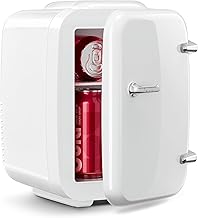
At 2.6 gallons, this is the roomiest pick, which is genuinely useful because it lets you keep contents away from the interior cooling plate where frost tends to form. The AC/DC pairing makes it easy to run off a battery bank during outages.
Cooluli 4L Mini Fridge
Cooluli’s long track record shows in the build quality, and the USB input alongside 12V and AC is the standout — three power paths means you’re never stranded. The cool/warm switch is worth taping over so nobody flips it by accident.
CROWNFUL 4L Portable Cooler and Warmer
ETL listing is the reason this one earns a spot; on a device running unattended for months, third-party electrical certification is not a small detail. Cooling depth is modest, so keep it in a climate-controlled room rather than a garage.
BEICHEN 4L Mini Refrigerator
The pull here is fast pulldown and genuinely low fan noise, which matters if it lives on a nightstand or desk. Give it three inches of rear clearance — thermoelectric units dump heat off a rear sink and choke badly when pushed against a wall.
Frequently Asked Questions
What temperature should the fridge hold?
Follow the storage range printed on your specific vial or supplied by the manufacturer. Most units in this class land in the high 30s to mid 40s°F, which is why an independent thermometer is non-negotiable rather than optional.
Do thermoelectric fridges freeze contents?
They rarely freeze a whole interior, but the cold plate itself can drop below freezing. Keep vials off the back wall and use a shelf or spacer to maintain an air gap.
How long do these units last?
Peltier modules have no compressor or refrigerant, so the fan is usually the first failure point. Vacuum the vents quarterly and most units run for years.
Is a lock worth the extra cost?
If there are children, guests, or housemates around, yes. It’s the cheapest form of access control you’ll find.
Final Thoughts
The Classic Compact with its adjustable thermostat and locking glass door is the strongest all-around pick for anyone who wants a verifiable setpoint. Choose the Antarctic Star 10L (available in black or white) if you need more room and airflow margin, or the Cooluli 4L if triple power inputs and a proven build matter more than raw capacity.